|
Around the world by bike
|

|
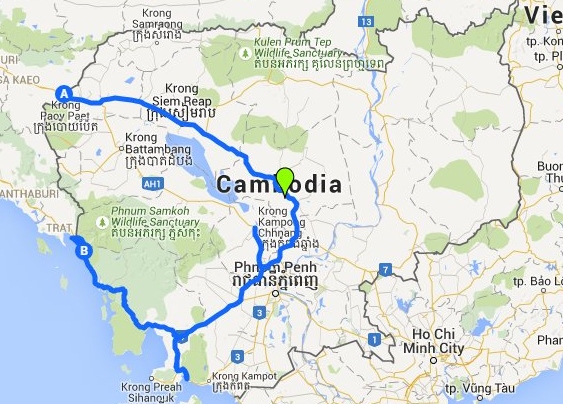
3 May - Sa Kaeo – Saophoan (Sisophon) - 107 kilometres
On reaching the border at Po Pet, one left organised Thailand and entered a slightly more chaotic Cambodia. The border crossing was made even more so as it formed part of the Border Market and one needed to weave your way through the thousands of stalls before reaching the immigration office.
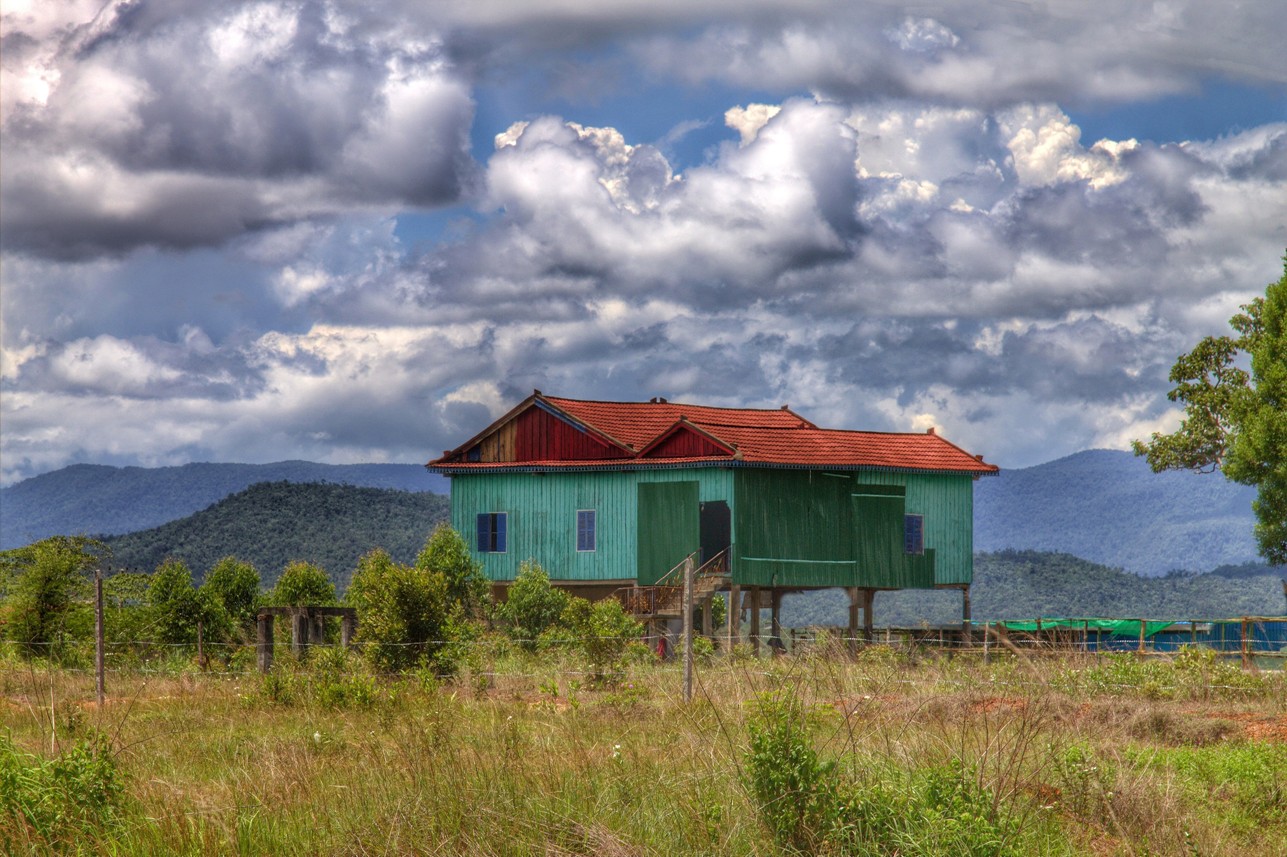
Once in Cambodia, the route headed east in the direction of Siem Reap. It was an excellent paved road but not very exciting running past stilted houses and dry rice paddies. I was going like the clappers, trying to out-cycle the approaching storm, wondering if it was possible to make it to Saophoan without getting soaked.
4 May - Saophoan – Siem Reap - 107 kilometres
The following day the route was
again mostly in good condition, except for the stretch being
resurfaced. The dust was bad enough to haul out the old buff,
luckily it
wasn’t the rainy season as one could
imagine it being a muddy affair. It was incredibly hot with the
mercury hovering around 40°C. From time to time, I would wet my
shirt to get some relief, but
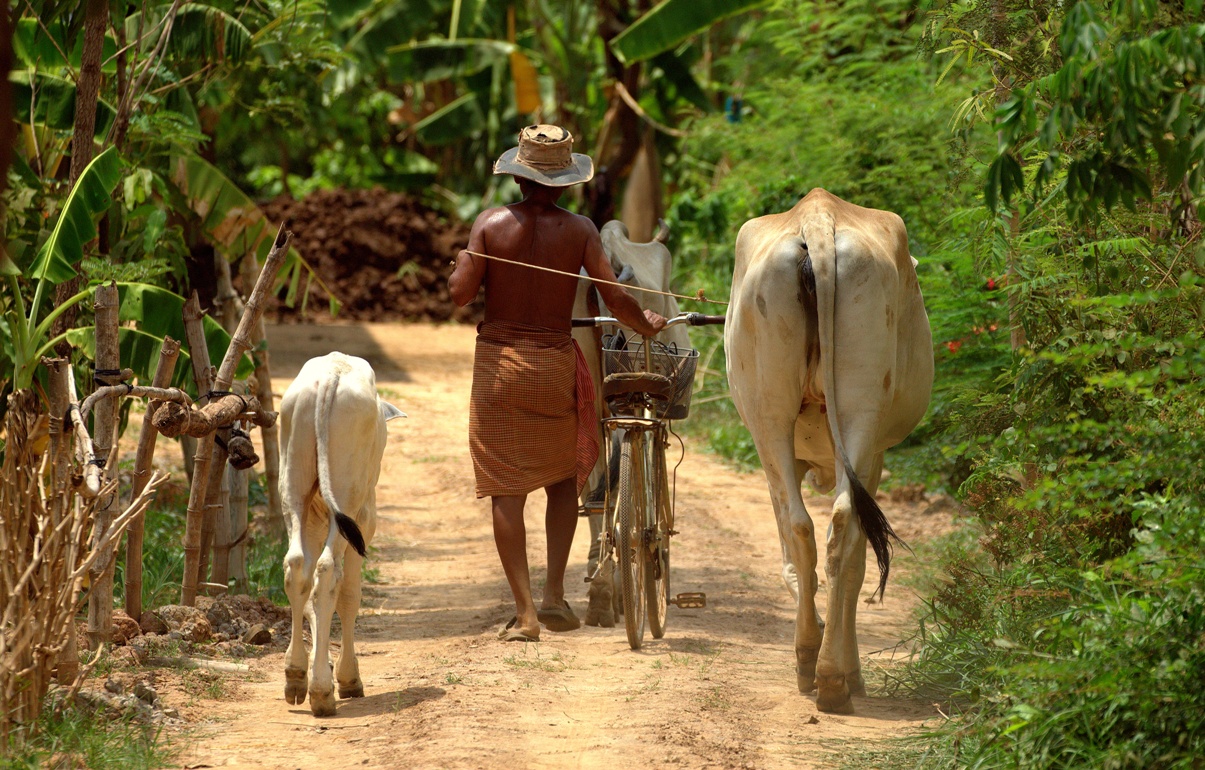
My route led past many rural communities and seemingly hundreds of school kids on bicycles. One can't knock a country where kids still have the freedom to go to school by bike.
Touristy Siem Reap was over-priced and where water in the rural areas was 500 Riel some places in Siam Reap charged 4000 Riel! The Ivy Guesthouse only had fan rooms, and the fan never made the slightest of difference. At 11 p.m., the weather bureau gave the temperature at 30°C, (felt like 35) and it was much cooler outside.
5 May - Siem Reap The next morning the search for better accommodation was on. There was a whole plethora of places to choose from, all roughly in the same price range of 12/15$ for an air-con room.
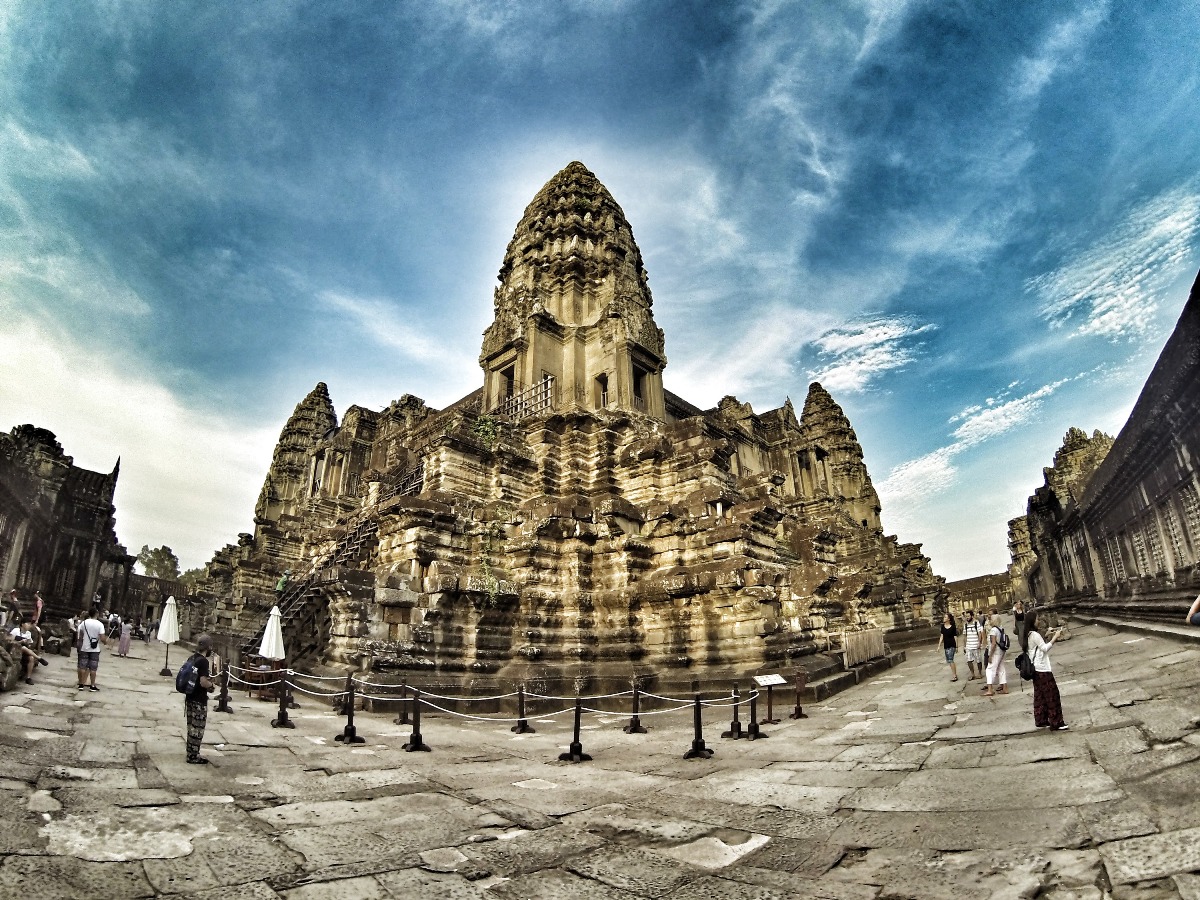
Then it was time to visit the temples of Angkor. After purchasing a 3-day ticket there was no hurry to go anywhere. My first stop was Angkor Thom, the last great capital of the Khmer Empire. On approaching the site, its magnificent entrance gates came into view - what a fantastic sight it was. The gates were flanked by 54 demons and 54 gods engaged in an epic tug of war.
Inside the gates was the old temple with 54 towers decorated with 216 enormous faces of Avalokiteshvara (“The Lord who looks in every direction”), which (is said) bears more than a passing resemblance to the great king himself.
6 May - Siem Reap
I was slightly unlucky with the sunsets and sunrises. The previous night there was no colour in the sky, and the sunrise wasn’t quite what one expected. I nevertheless, took a few pictures, as it wasn’t often I got up at 5h00.
After sunrise, it was on to the very photogenic Ta Prohm (the temple Lara Croft made famous). Sadly, for photographers, the Cambodians had started renovating the temple. Without that work, however, the temple wouldn’t have lasted another decade. Fortunately, there was still plenty to shoot and one half expected to meet a hobbit.
7 May - Siem Reap It was another brilliant day at the temples, visiting some of the ones further afield. With having a 3-day ticket, one could visit in the morning and then retreat to the comfort of your air-con abode in the middle of the day, only to emerge again once most of the heat had abated.
8 May - Siem Reap - Kampong Kdei - 61 kilometres
After three days of doing very
little, I should have been very energetic, but instead,
felt lethargic, and it was difficult
to get going. The
way led past typical Cambodian
houses on stilts where people seemed to live more under their
homes than inside. That was where they hid from the heat and
rain, where
The path was littered with stalls selling bamboo rice and dried fish. The rice was delicious. Cooked in bamboo stalks over an open fire it had a unique taste.
I also came upon an ancient bridge,
built around 1181 – 1220 AD. The bridge was located along the
old road which connected the capital of Angkor to the south. The
bridge measured 86m long, 16m wide and 10m high. It consisted of
21 arches, supported on 20 columns, and was
decorated with a 9-headed Naga balustrade.
The guesthouse next to the bridge made for a convenient overnight stop, albeit a bit early. It was always interesting to stay in these village guesthouses. Rooms came at a whopping $6 and had a fan en-suite bathroom with a squat toilet and a mandi (a large tub filled with water). The Cambodians were very diligent when it came to complimentary items such as toothbrushes and soap. Even the most basic of room would come with a toothbrush and soap as well as the ever-present communal hair comb. Who the heck uses a communal comb? Judged by the blackness of the teeth, it was a very well-used item!
9 May 2015 - Kampong Kdei – Kampong Thom - 90 kilometres
Feeling remarkably energetic after
the previous day’s tiredness I left much earlier than usual and
enjoyed cycling in the cooler morning air. The way was busy with
school kids on bicycles (on a
Saturday?). It struck me how most kids the world over goes to
school, but it’s the
The word falang (foreigner) appeared something of a code amongst the younger ones. Only one had to shout “Falang", and all the kids in the neighbourhood would come running, all shouting “falang, falang” while jumping up and down.
It was weekend, and wedding ceremonies were at the order of the day. It seemed these ceremonies mostly took place over weekends, in street-side yellow and pink marquees by the family home. My curiosity mostly bordered on rudeness as I often stopped and had a peek at what they were doing.
10 May - Kampong Thom
Rumour had it there were pre-Angkorian temples scattered in the forest about 30 kilometres from Kampong Thom. After hailing a tuk-tuk, we set off in the direction of the temples. It was a slow process and took the best part of an hour to get there.
Once there, small paths led into the woods, and it was fun trying to locate these old structures and quite exciting to locate these ancient temples. Apparently, there were more than 100 temples scattered throughout the forest. The information board stated it was once called Isanapura and served as the capital of Chena in the early 7th century. Fascinating stuff.
11-12 May - Kampong Thum – Kampong Cham - 113 kilometres
Shortly after leaving, I passed an
area where temple statues were made. They had them displayed
along the road; big ones, small ones, sitting Buddhas, reclining
Buddhas, name it, they had them all. For a while I watched them
work - what a dusty job it was, it surely couldn’t
The path was like one long, drawn-out village and each house had a plastic contraption with a fluorescent light for catching bugs. No one in Cambodia seemed to have wanted to run out of hors d’ oeuvres.
The roadside rubber plantation looked lush and green, and made me feel like lying down in the shade. The presence of the many snakes made me decide against such a move, especially after cycling over one earlier that day and I wasn’t going to take any more chances.
Harvesting the latex from a rubber
tree seemed very labour intensive. To me, it was a fascinating
process. A 25-centimetre cut was made in the bark, leaving the
bark to
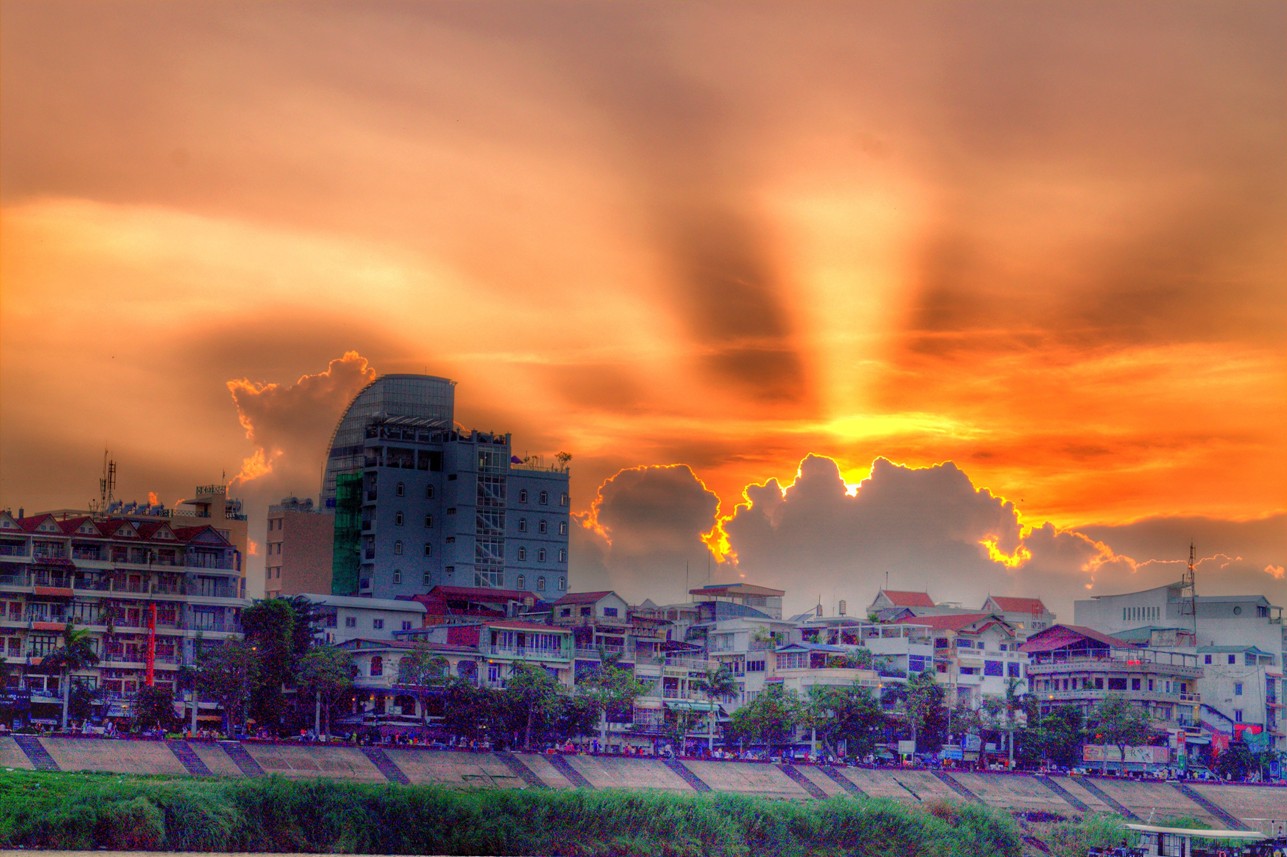
The small settlement of Kampong Cham situated on the Mekong River was my preferred overnight stop. It was a surprisingly charming town, and I found myself a place to stay with a view of the Mekong, bought a beer and sat gulping it down while watching the sunset over the river. Life was indeed good and I stayed the following day as well, not doing much, except to eat and watch the river.
13-17 May - Kampong Cham – Phnom Pehn - 107 kilometres
It was up early to see the sunrise
and to take a few pictures. I’m not exaggerating when saying I
snapped one shot and the next minute all the colour was gone.
It’s said when travelling by bicycle, even the most mundane trip
becomes an adventure, which
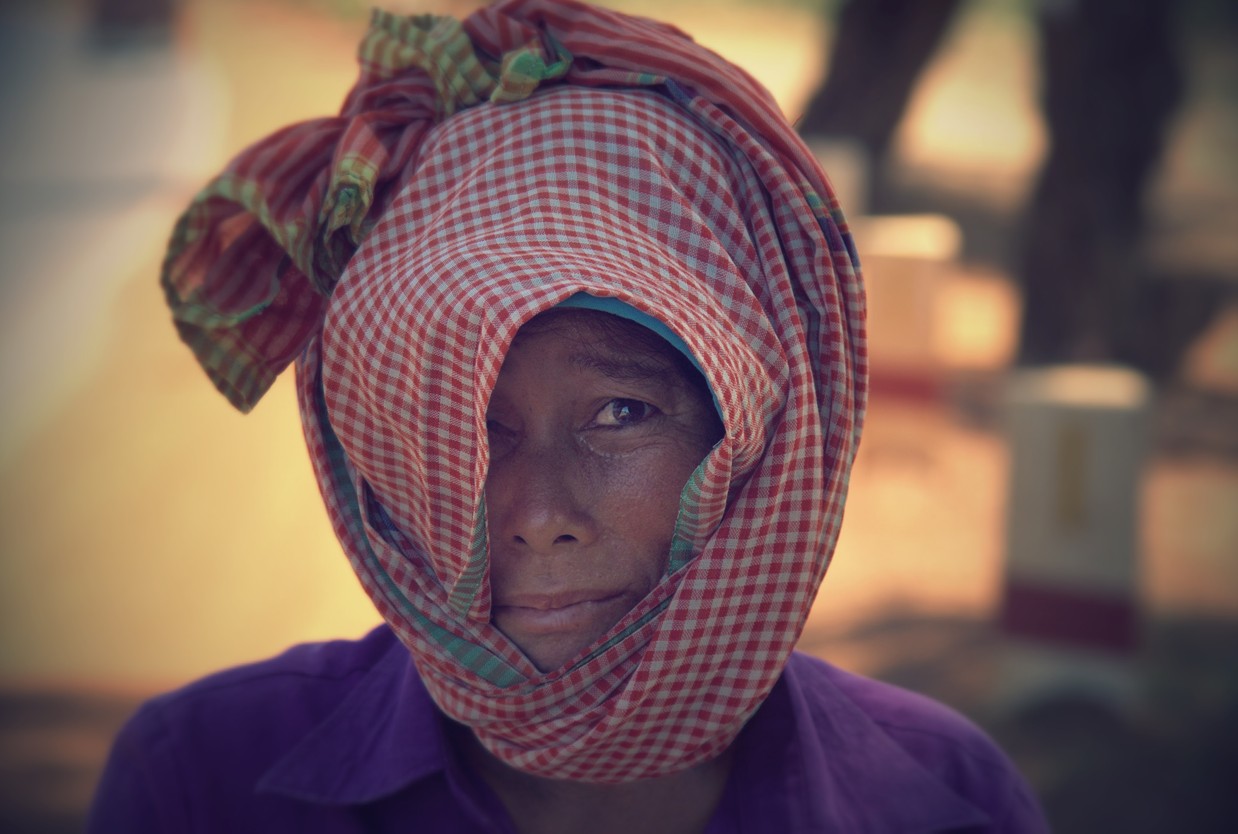
My first stopped was at the bamboo bridge, which was obviously strong enough to hold a car, but to me, it felt somewhat unstable and springy. Google was true to its word, and soon, the path petered out and became a mere sandy track. I bounced along a dusty road, past small settlements where villagers were as surprised to see me as I was to see them. Some laughed, some pointed, others just stared open-mouthed and the kids, as always, shouted: “Hello, Farang”.
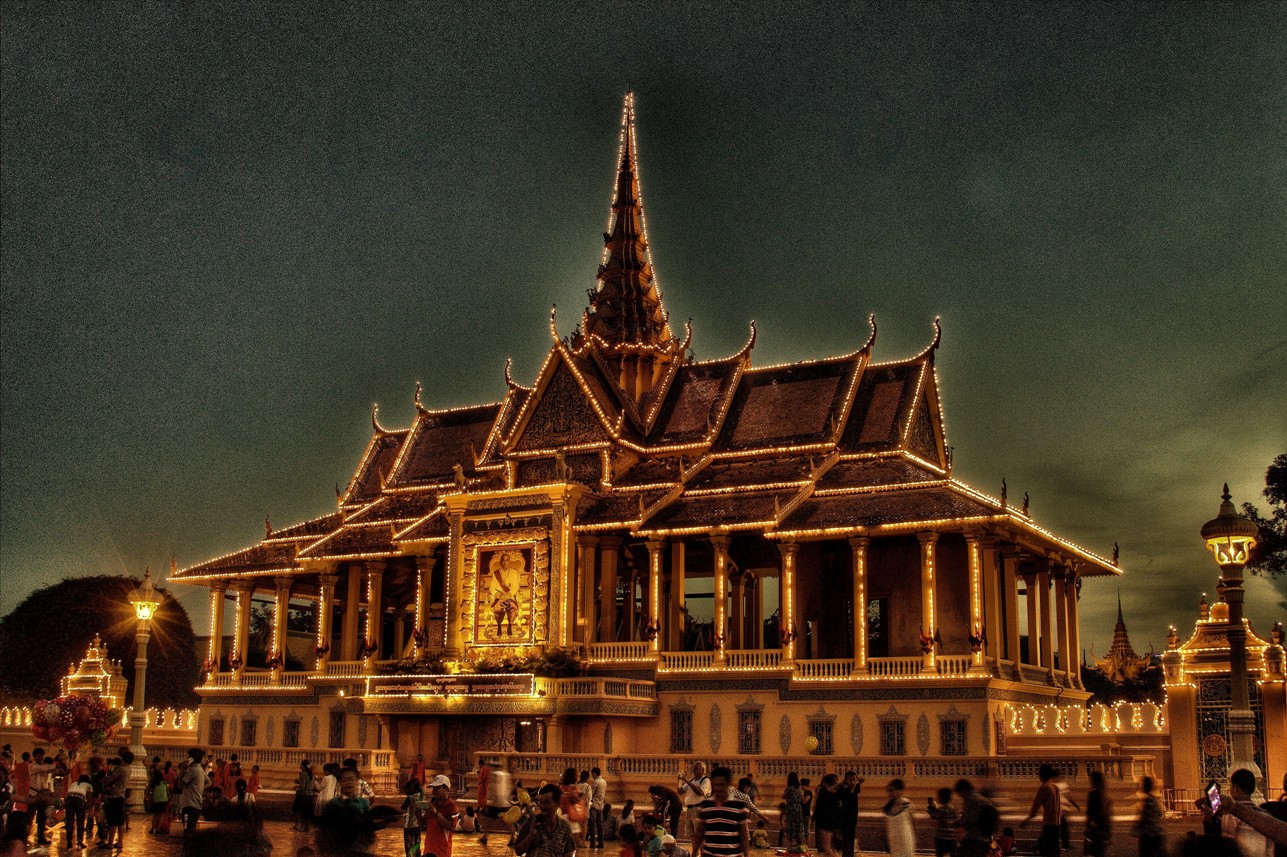
About 30 kilometres from Phnom Penh my path reached a brand new highway running all the way to the city centre. Once in Phnom Penh, the Royal Guesthouse made for a comfortable stay at a reasonable price. Rooms came with air-con, TV, a bar fridge and a bathroom with hot water (just in case a cold front came through, and the temperature dipped below 30°C), all for $13. Just there and then I decided to stay put for a whole five days. What I was going to do for five days, was a mystery, but it was nice not having to pack up and move on for a few days.
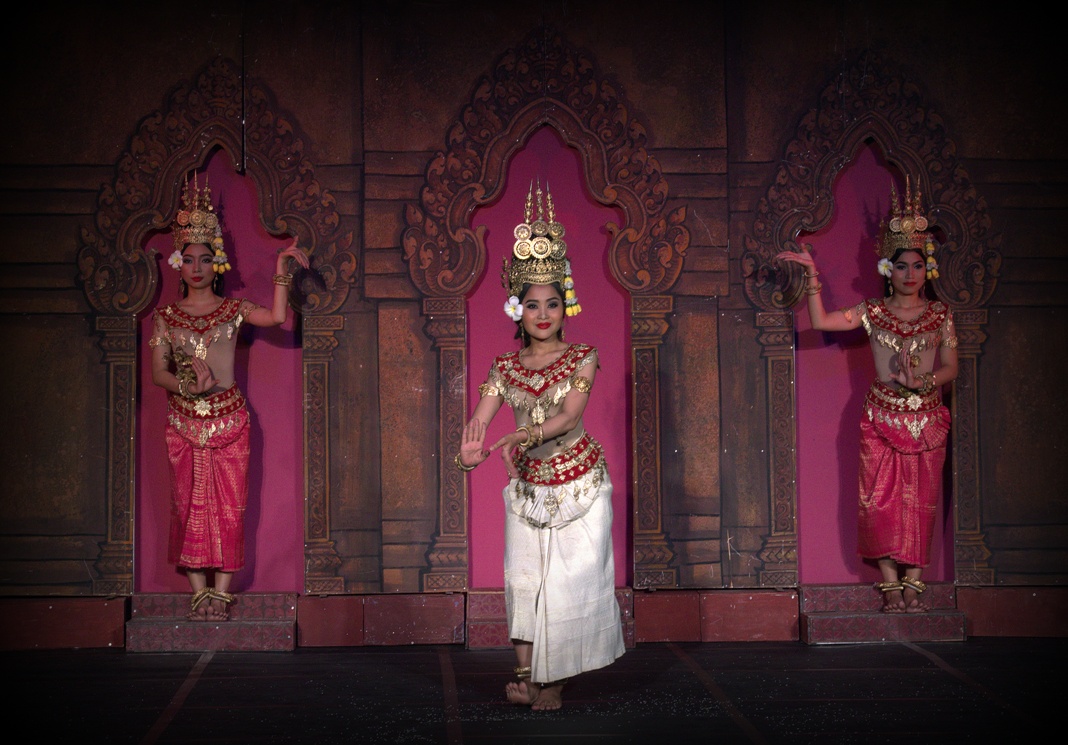
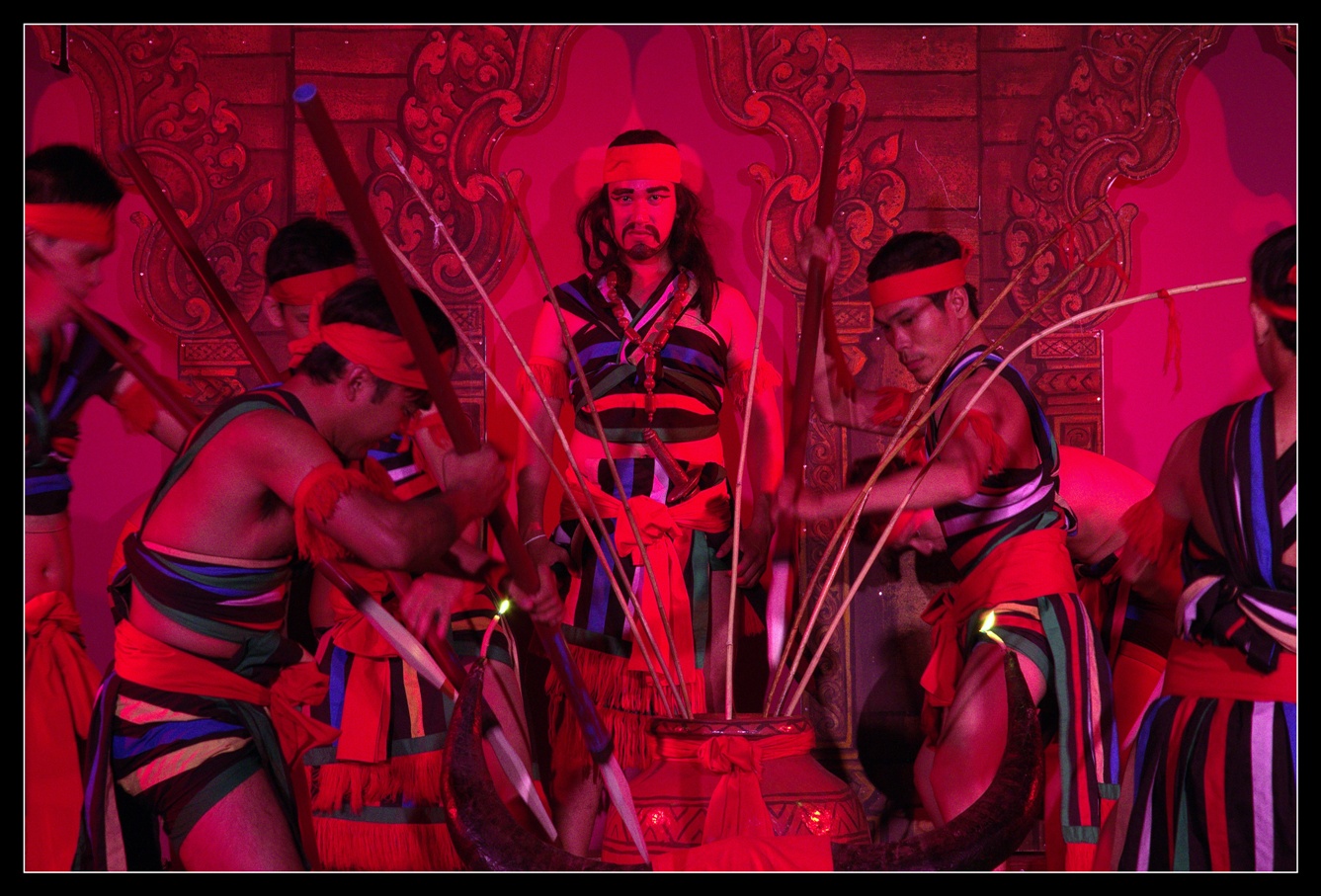
I took myself off to see a traditional Cambodian dance show and thoroughly enjoyed myself, realising just how much I have missed going to the theatre. My photography was, however, not up to scratch, and it was challenging to capture the fast-moving dancers in the low light.
18 May - Phnom Penh – Traeng Trayueng - 90 kilometres It was an absolute nightmare getting out of Phnom Penh. It was 8h00 on a Monday morning, and major roadworks were underway. Cambodians drive in weird and wonderful ways and on both sides of the road. Not surprising, I had a small collision with a motorbike coming in the opposite direction and ripped my front pannier. For the rest of the trip, the pannier was held together with duct tape.
The good road leading out of Phnom
Penh didn’t last long, and then it was back to the old narrow
and bumpy road, at least it had a good dirt shoulder for
cycling.
The restaurant across the street provided a delicious bowl of curry noodle soup. In fact, it was so good that later I went across the street and got another one. It was quite remarkable to see how Cambodians stood together trying to overcome their sad history. The owner of the guesthouse had built a large open shed with volleyball courts and snooker tables. This was where the village kids came to play, and practice and the owner didn’t charge a single cent. He didn’t even sell any alcohol or soft drinks to recuperate his expenses.
19 May - Traeng Trayueng – Veal Rinh - 93 kilometres As the route headed further south towards the coast, it became somewhat hillier. Much of the land in that part of the country was covered by the Cardamom Mountains, and one needed to cross them to get back to Thailand.
Firstly, however, it was on to Sihanoukville to check out the diving. On reaching Veal Rinh it was still reasonably early, but lacking the desire to do another 50 kilometres to Sihanoukville, a conveniently located guesthouse lured me in.
20-22 May - Veal Rinh – Sihanoukville - 53 kilometres The next morning, it was a short distance to Sihanoukville where I settled for bungalow-style digs at the Reef Resort, which had a swimming pool. The owner offered me an excellent deal for a three-day stay, and although I had no intention of remaining that long, the price was too good to ignore. The diving turned out to be not as good as expected, and I gave it a miss and did zero for three days, except for enjoying the swimming pool.
23 May - Sihanoukville – Koh Kong - By bus
I was keen to get going but woke to
a steady rain. Usually, it rained hard and was soon over, but
that morning, it continued raining, and I was reluctant to get
on the road with my broken pannier. I should have used my time
in Sihanoukville to fix the
Cycling the same country/route twice was not very exciting, and I found it hard to get motivated. After finding a room in Koh Kong, I made a half-hearted attempt to fixing the broken pannier. It would have been easier to put everything in a waterproof bag, as the pannier was beyond repair. I did, however, make use of my time in Koh Kong to look for a pannier online, and was surprised to find a company in Bangkok selling Ortlieb panniers. I knew I wouldn’t have much time in Thailand as once across the border, I would only have two weeks to get to Malaysia, which meant a steady 100 – 120 kilometres a day.
24 May - Koh Kong
Instead of crossing the border into
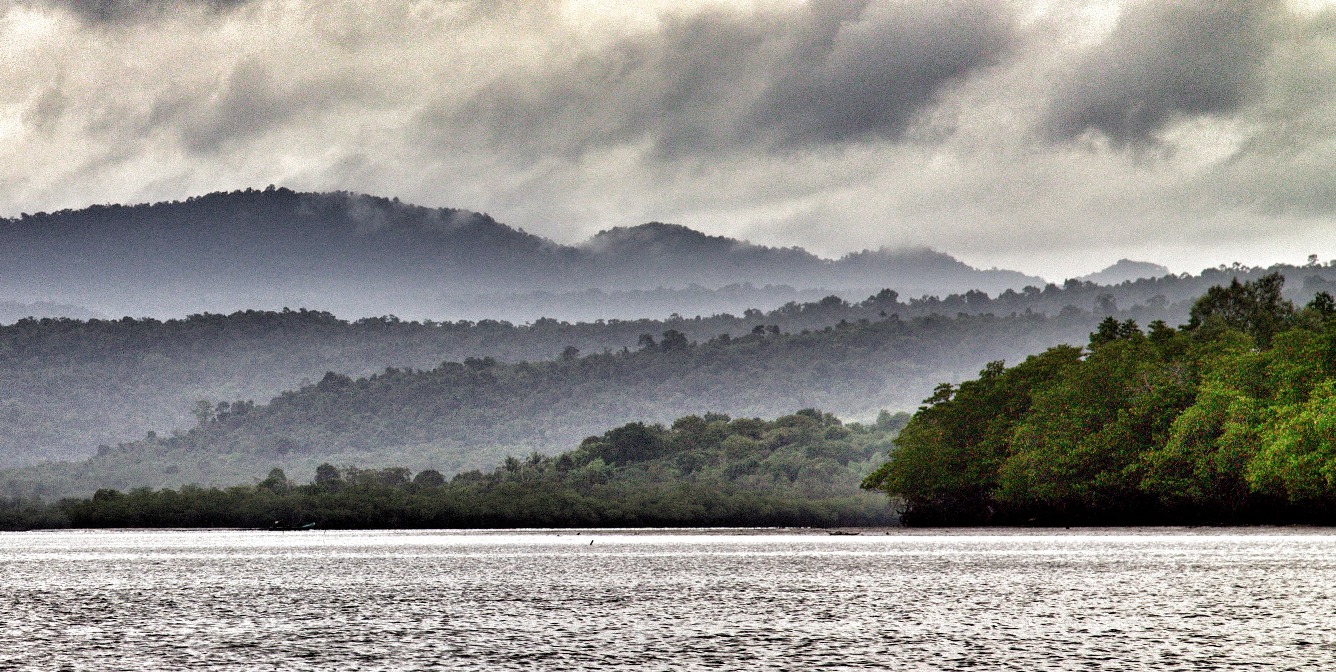
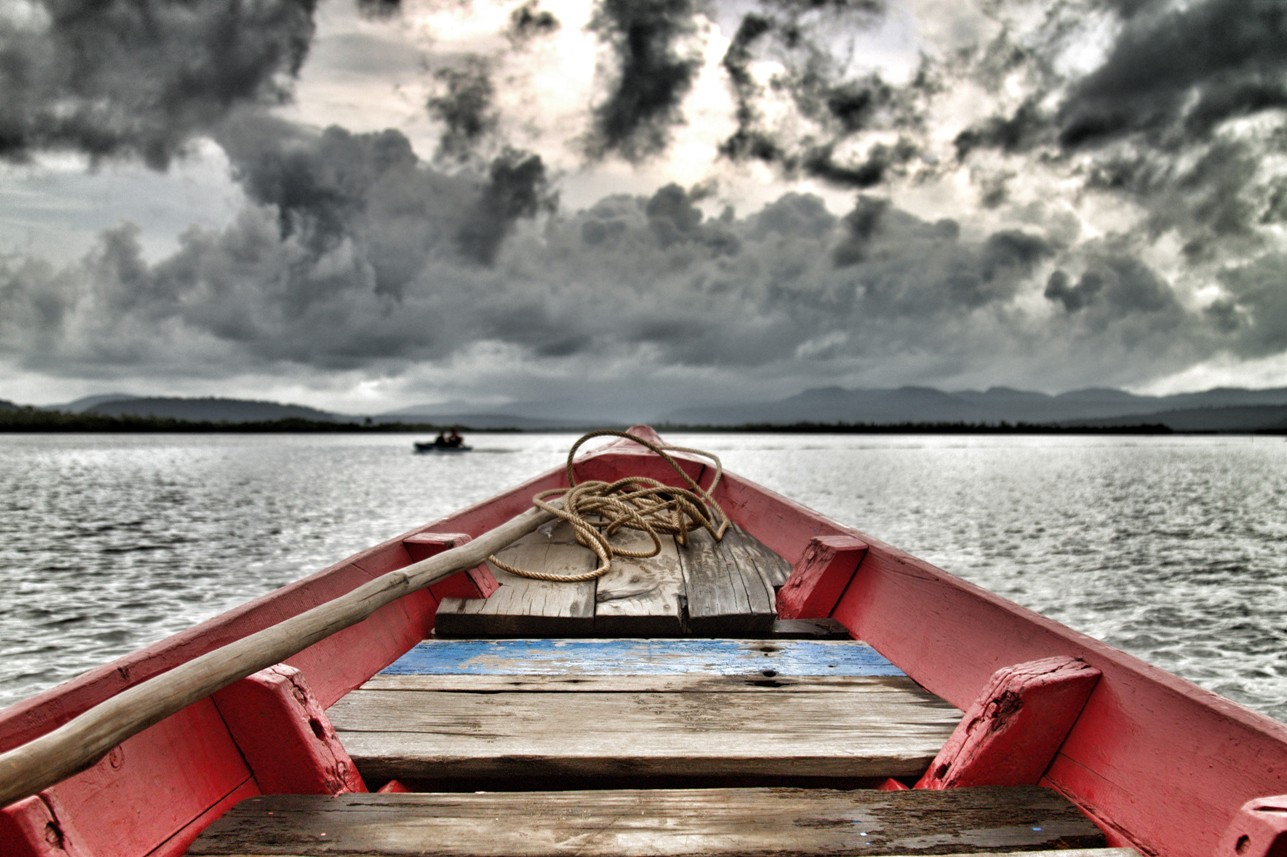
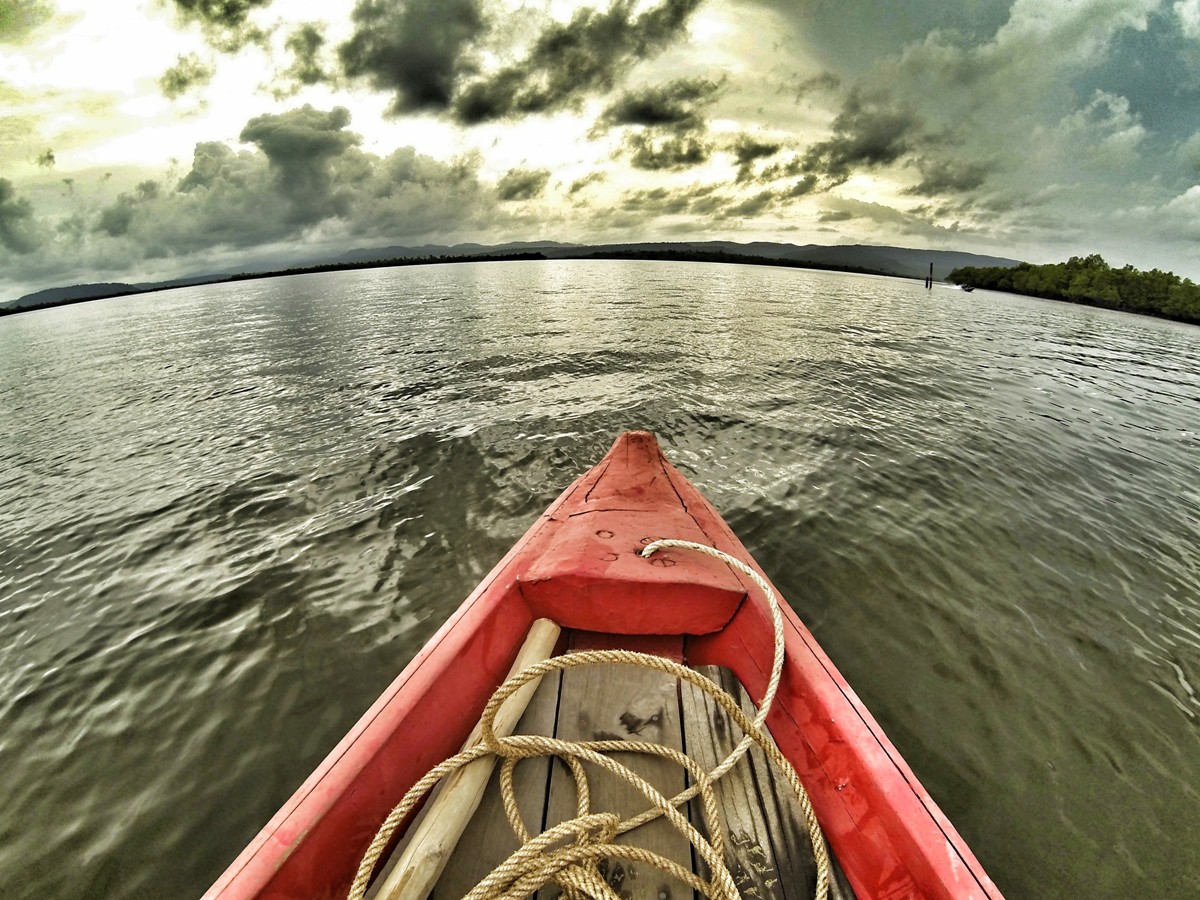
Thailand, a trip upriver looked interesting. It was a good
change of scenery and money well spent. The boat slowly puttered
up the river for about an hour and a half before trekking up the
mountain to a waterfall. It
was lush and green and
terribly humid as we slowly strolled
through a dense forest to reach the waterfall.
25 May - Koh Kong – Trat - 108 kilometres It must have been the end of the dry season as it rained the entire day. Not that I minded -as it made for good cycling weather. The Cambodian immigration office was across the river and from there it was a short cycle to the Thailand Immigration. As it was raining, I had my head down all the way to Trat, which had a few basic guesthouses.
This brought to an end my ride through Cambodia, and I found myself back in centrally located Thailand for the 5th time. |