|
Around the world by bike
|

|
29 October - Montego Bay, Jamaica – Havana, Cuba - By plane
From Jamaica, the most obvious next destination
was Cuba and hardly 400 kilometres north of Jamaica. The most
economical flight to
There wasn’t much to do before departing Jamaica as the bike was already boxed. Besides the backpack with the camera and other electronic stuff, all four panniers and its contents fitted into one large bag, a feat in itself!
The taxi ride to Montego Bay airport was a short one and couldn't have been more than five kilometres from the hotel. Thankfully, I found a wrapping service as it was doubtful whether my homemade bike box, held together with duct tape, would last.
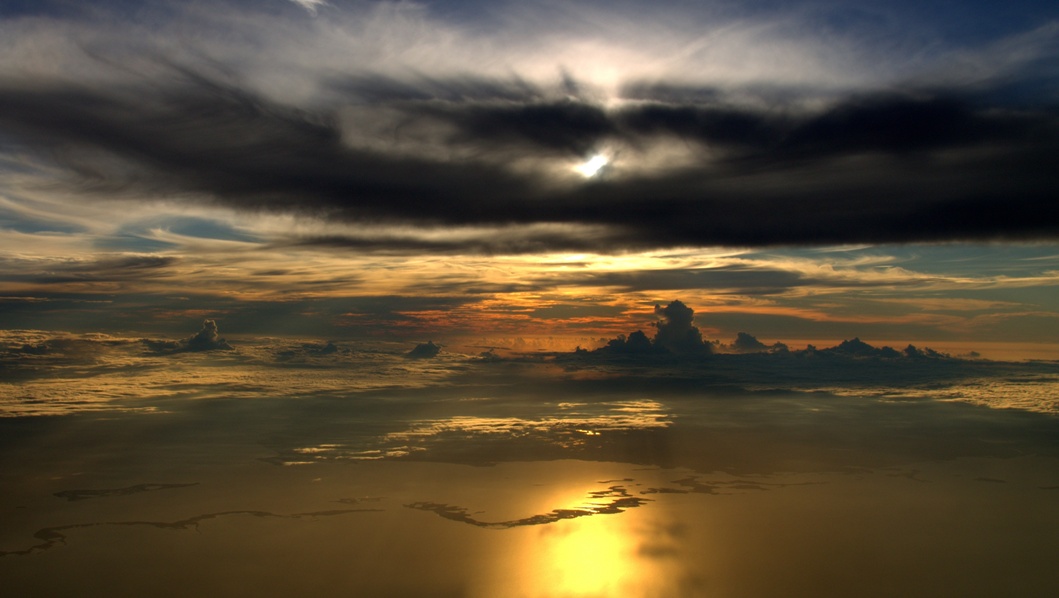
Right from the start, it was clear Cuba was going to be a different cup of tea. The first thing I noticed was the abundance of space on the plane, quite a rarity in this day and age. One could even spread out for a little snooze before descending into Cuba. Approaching Cuba, we witnessed a most unusual sunset, with well-organised farmlands below, stretching as far as the eye could see (I guess they were tobacco fields).
Clearing customs and immigration was exceptionally easy. Once all was done, I excitedly hailed a taxi to Hostal Peregrino, situated in an old building in Centro Havana. You can imagine my surprise when I rang the bell and a key, tied to a piece of string, was lowered from the window above. This marked my remarkable visit to fascinating Cuba. The hotel didn't receive my email, and all their rooms were full; fortunately, their neighbour still had space. It was, in fact, more convenient with the bike. The family was extremely welcoming but, unfortunately, only spoke limited English and I even less Spanish. The place was comfortable with a fan, air-con, private bathroom and even a little bar fridge.
Most confusing was the Cuban money. Cuba had two currencies: CUC (1 CUC = 1 US$) and pesos (Moneda Nacional MN) (1 CUC = 25 pesos). Both the room and taxi fare were quoted in CUC and guessed it standard practice to quote tourists in CUC.
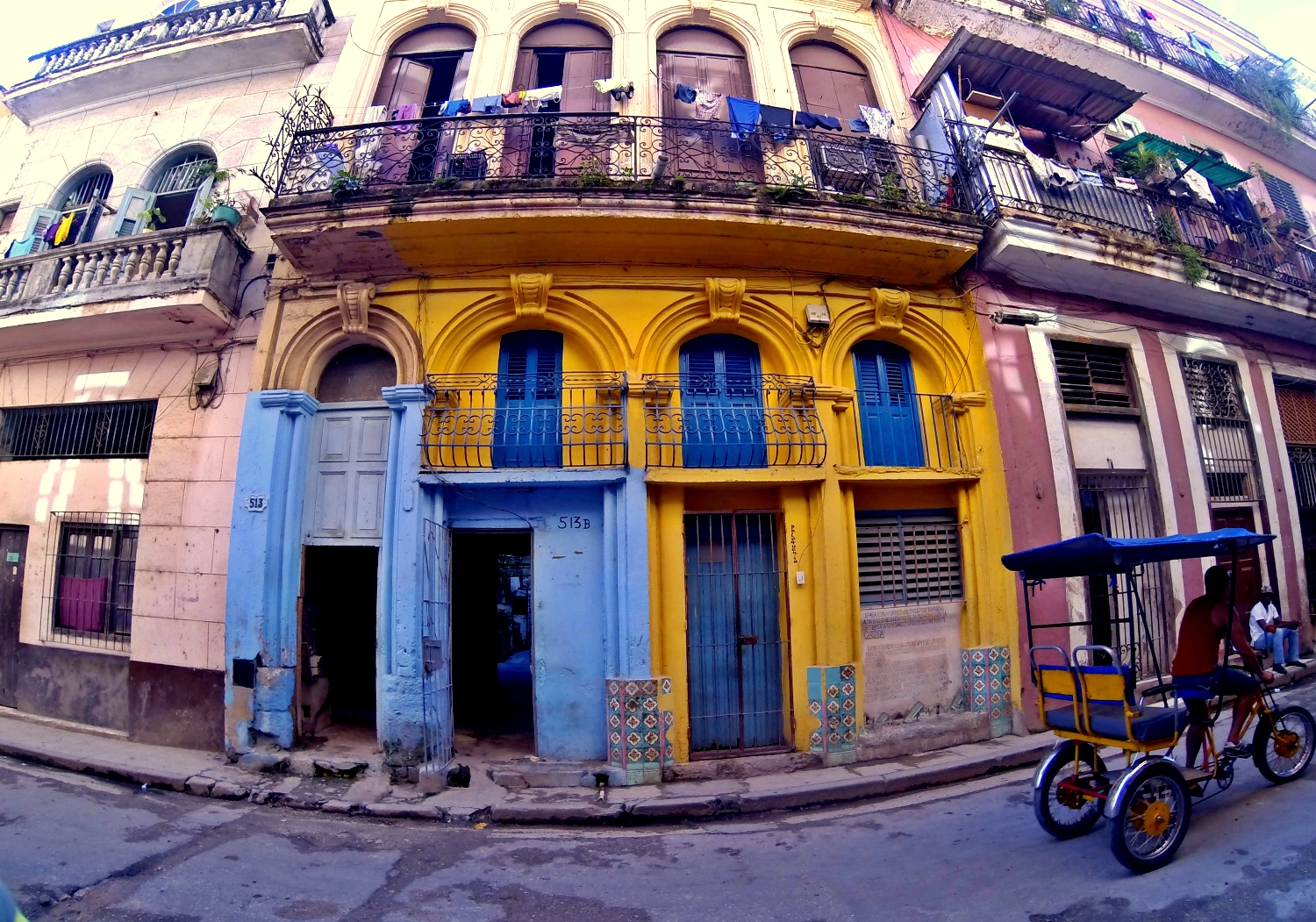
30-31 October - Havana After a breakfast of fruit and scrambled eggs, I set off to explore Havana, referred to as "La Habana". As always in a new country, nothing was quite as expected, as not everything the media reports is accurate.
The 50-year-old American trade embargo was still
in place, but it didn't mean Cuba
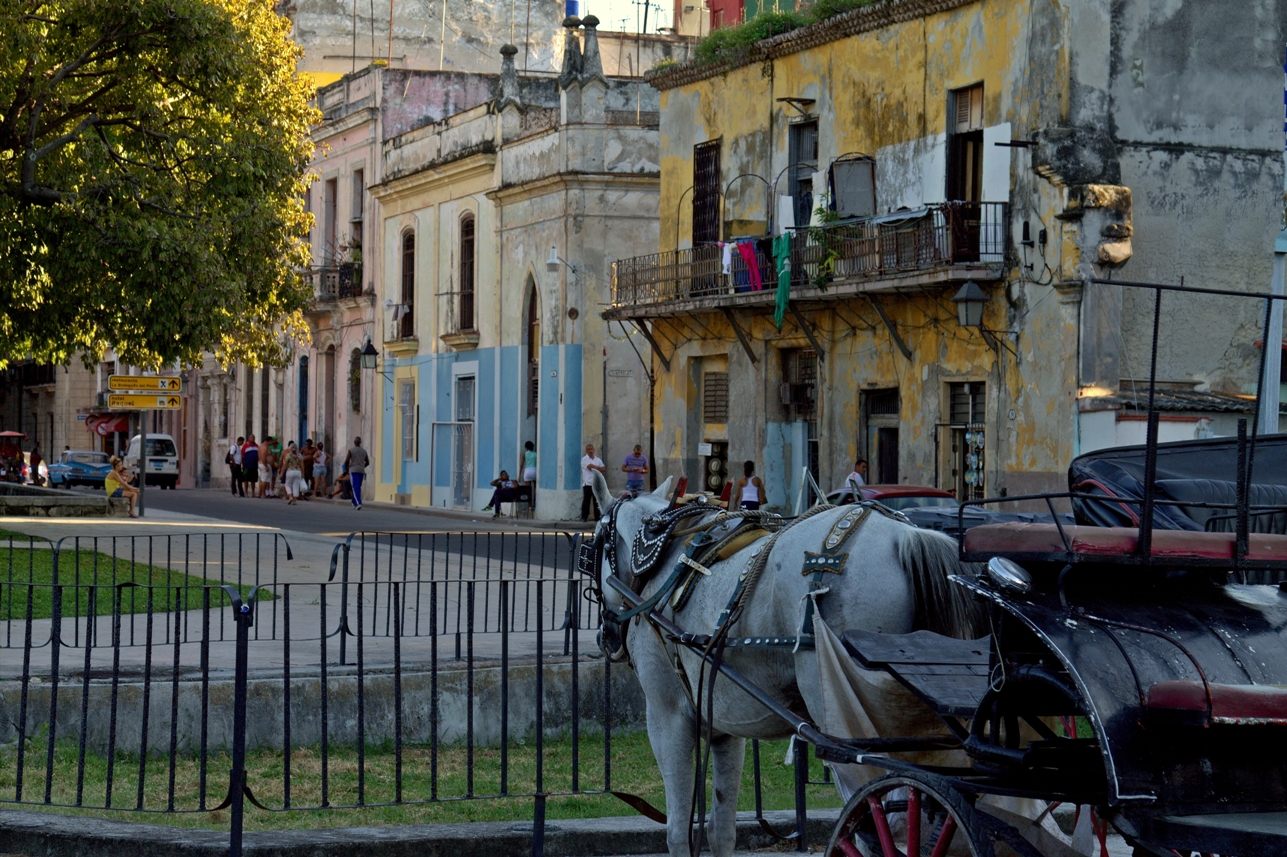
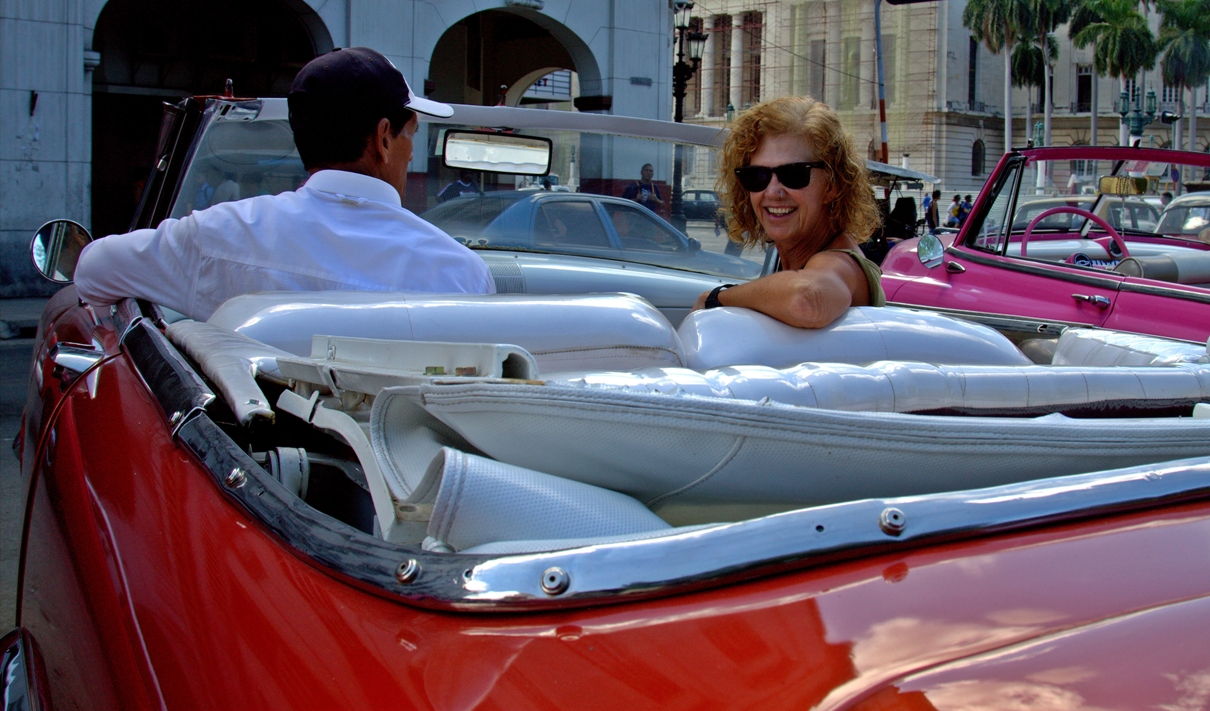
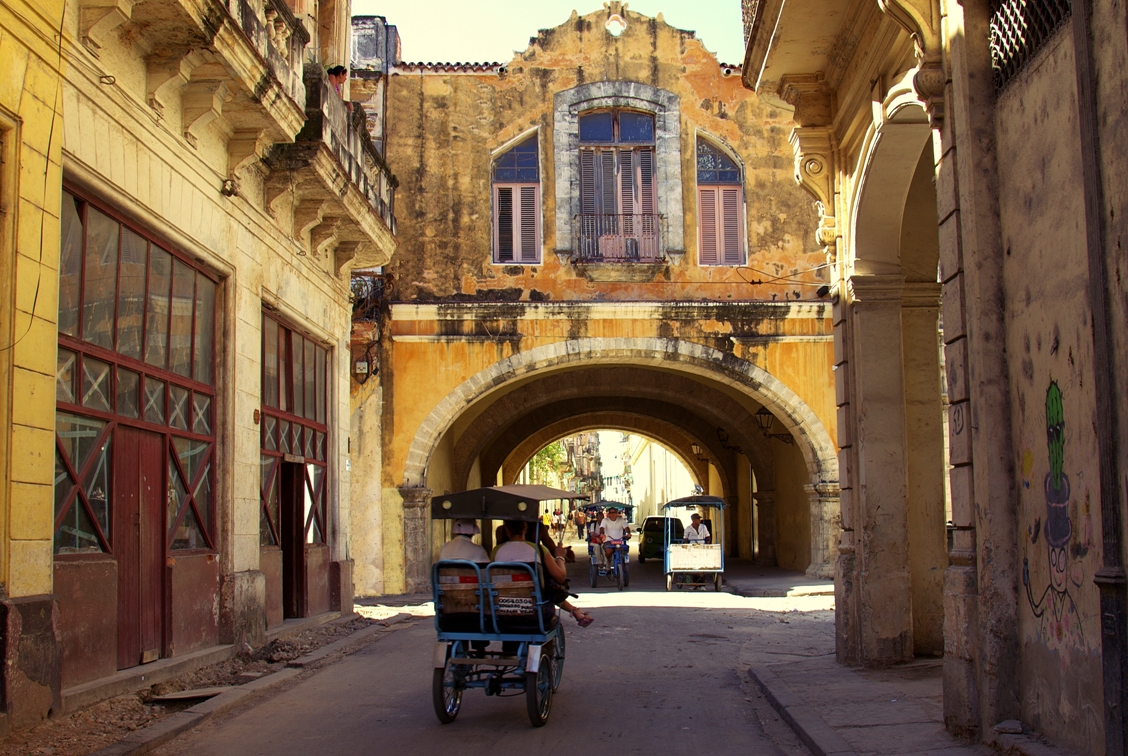
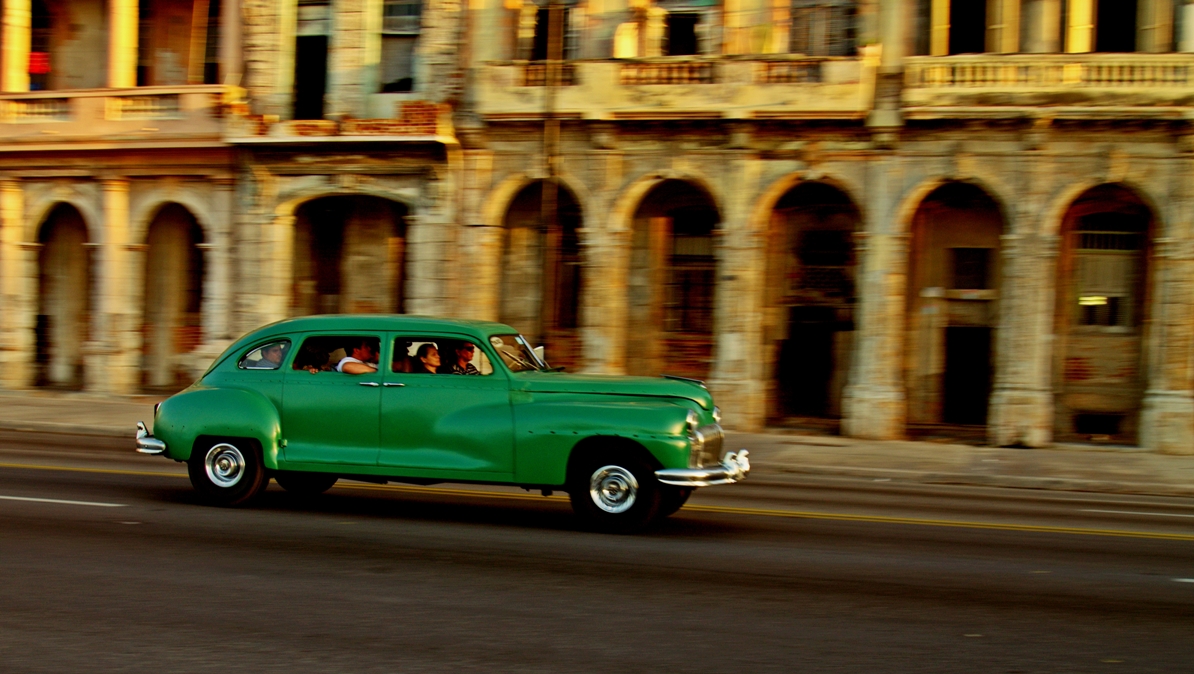
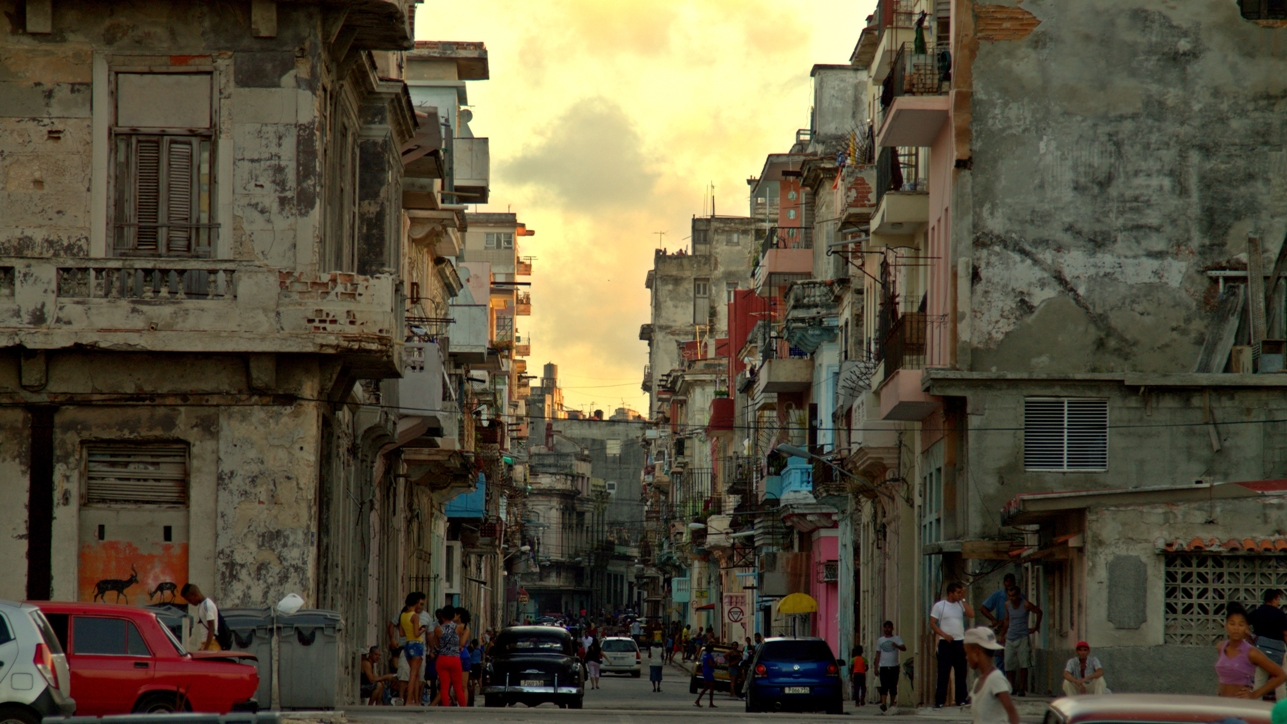
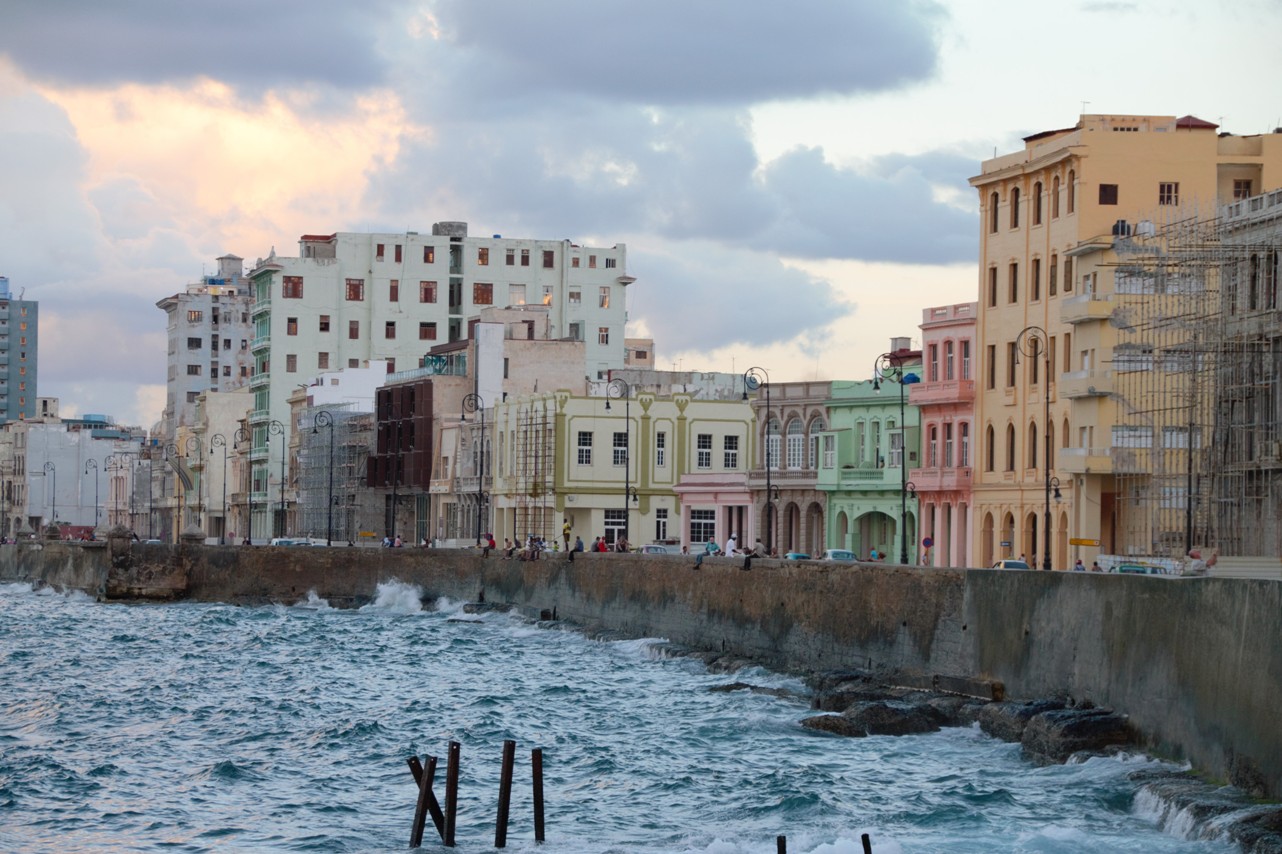
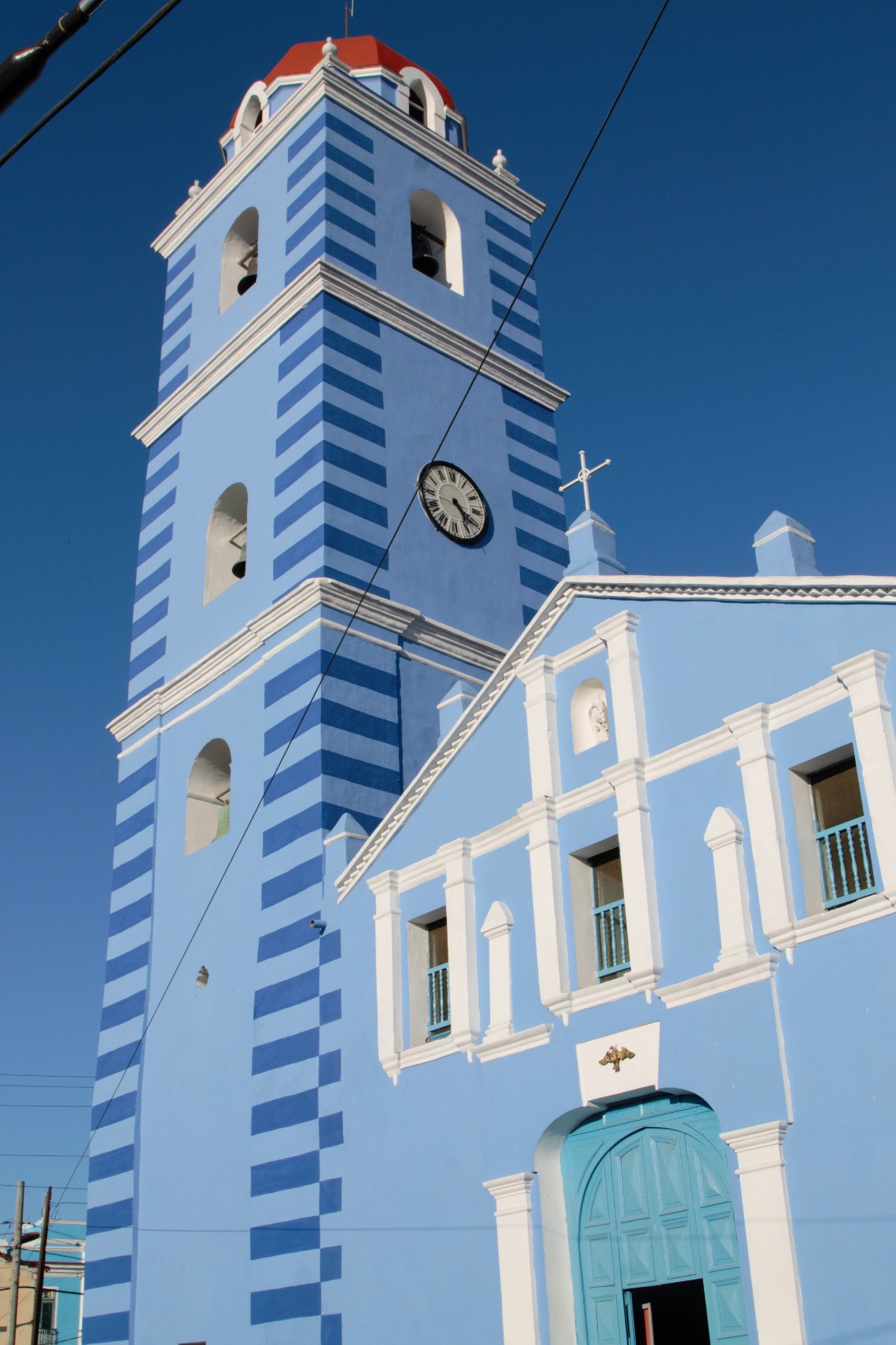
Exploring the old part on foot was best and what a glorious area it was. Gracious old buildings, many already restored, lined the streets. I would have been foolish not to drive along the Malecon sea drive in an old convertible, and thought the only thing missing was a bottle of rum.
The following day was spent much the same, only
in a different part. With so much to see, one could easily spend
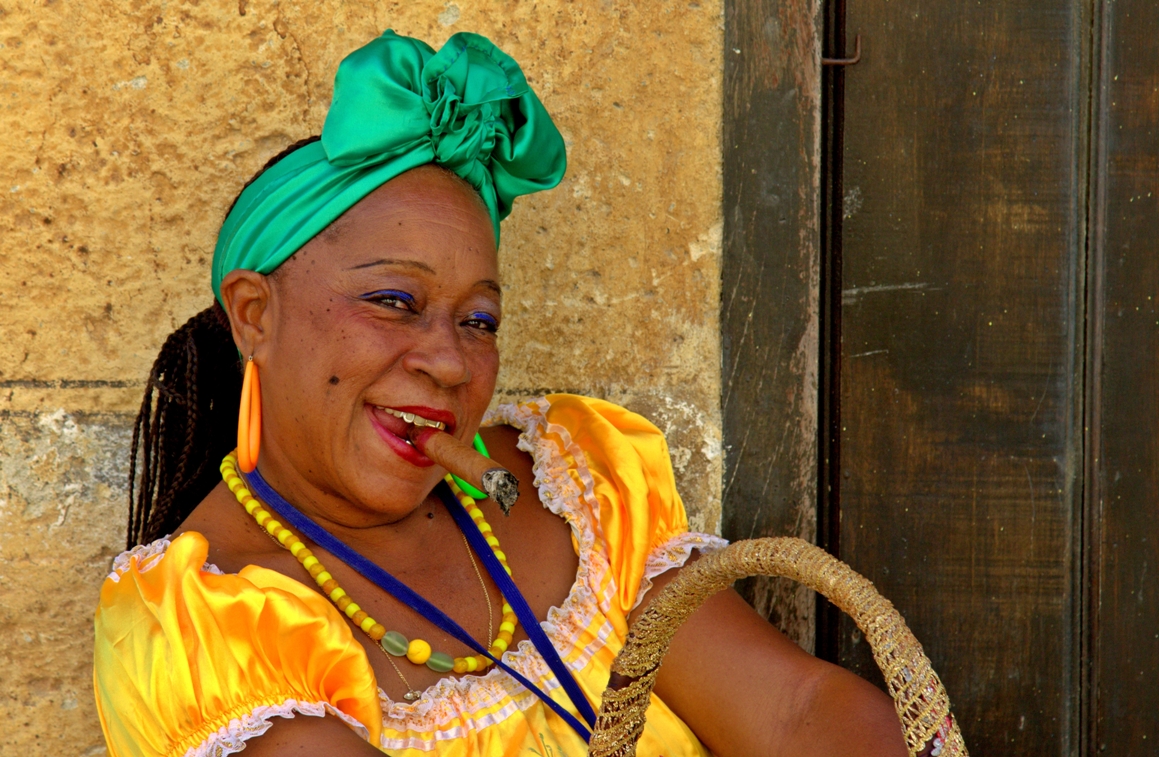
a few days in Havana. My walkabout took me past colourful
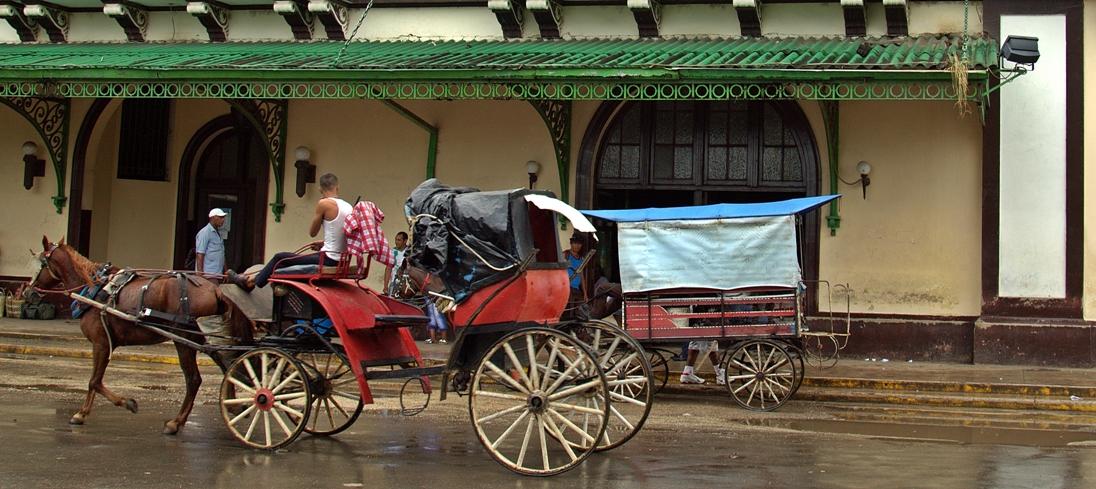
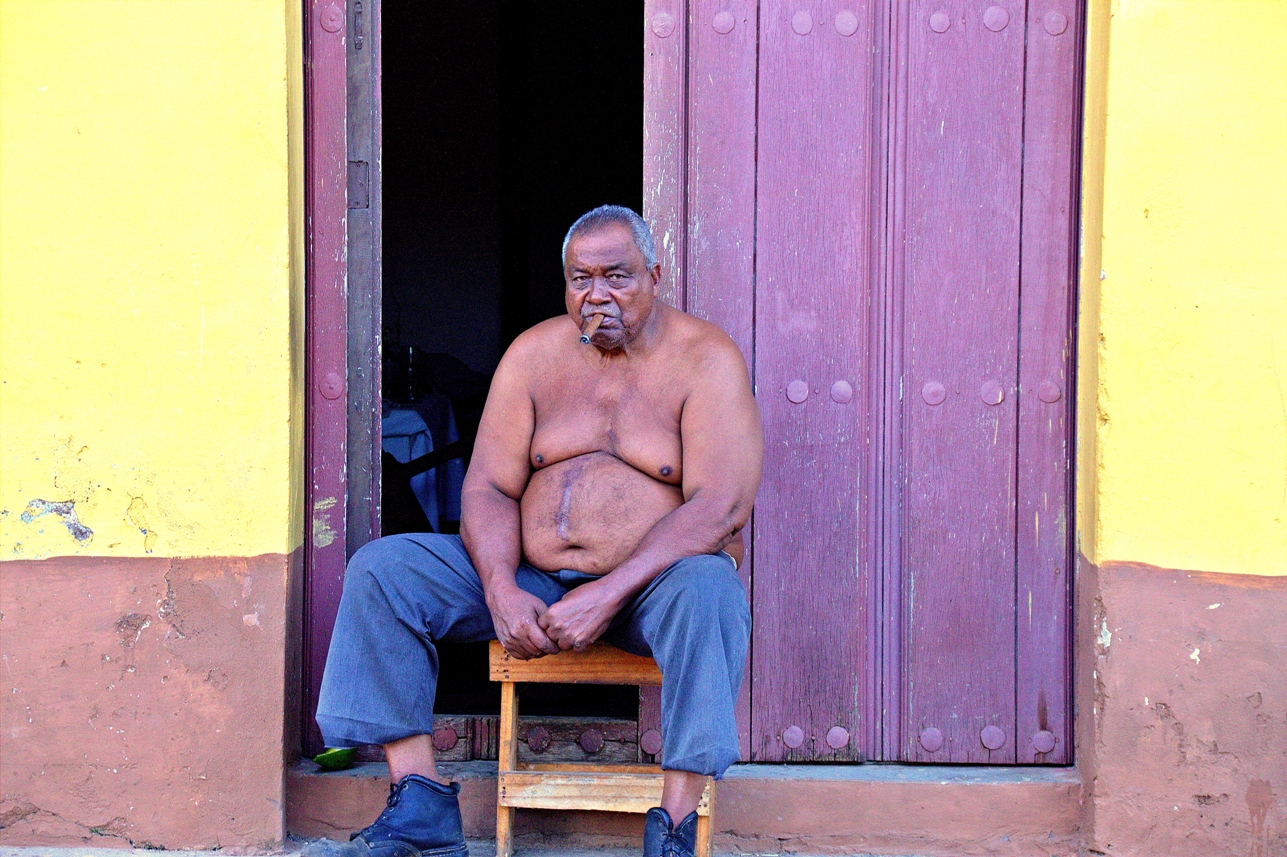
cigar-chewing ladies, horse carts and bicycle taxis (they
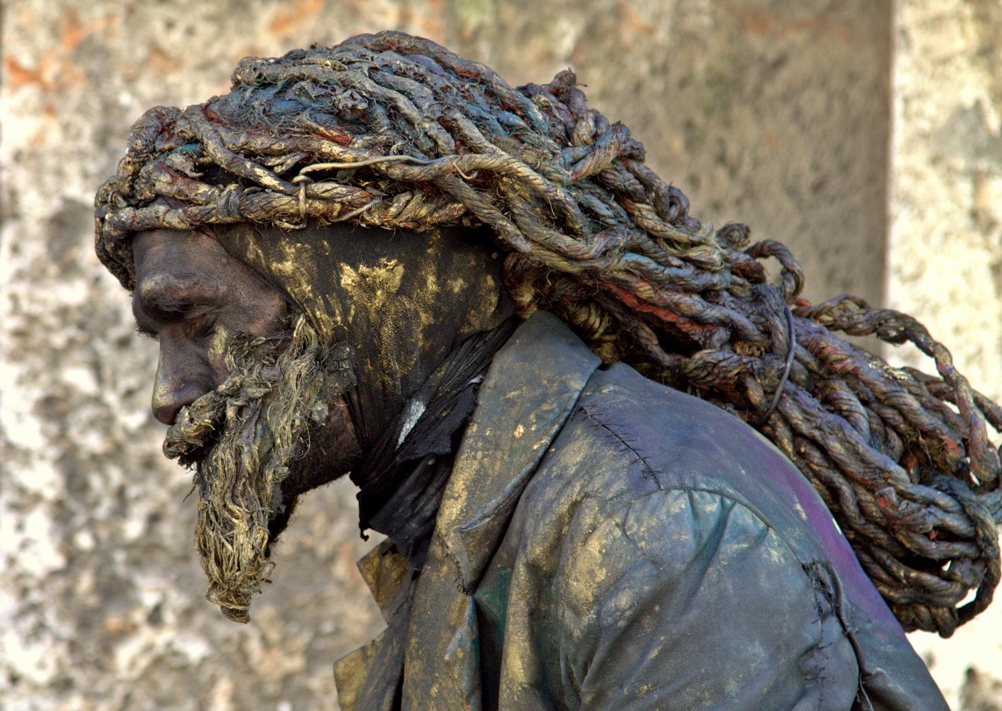
weren't only for tourists). I passed the most realistic human
statue ever encountered; made even
more surprising by his placement next to an
identical statue. Only donating money in
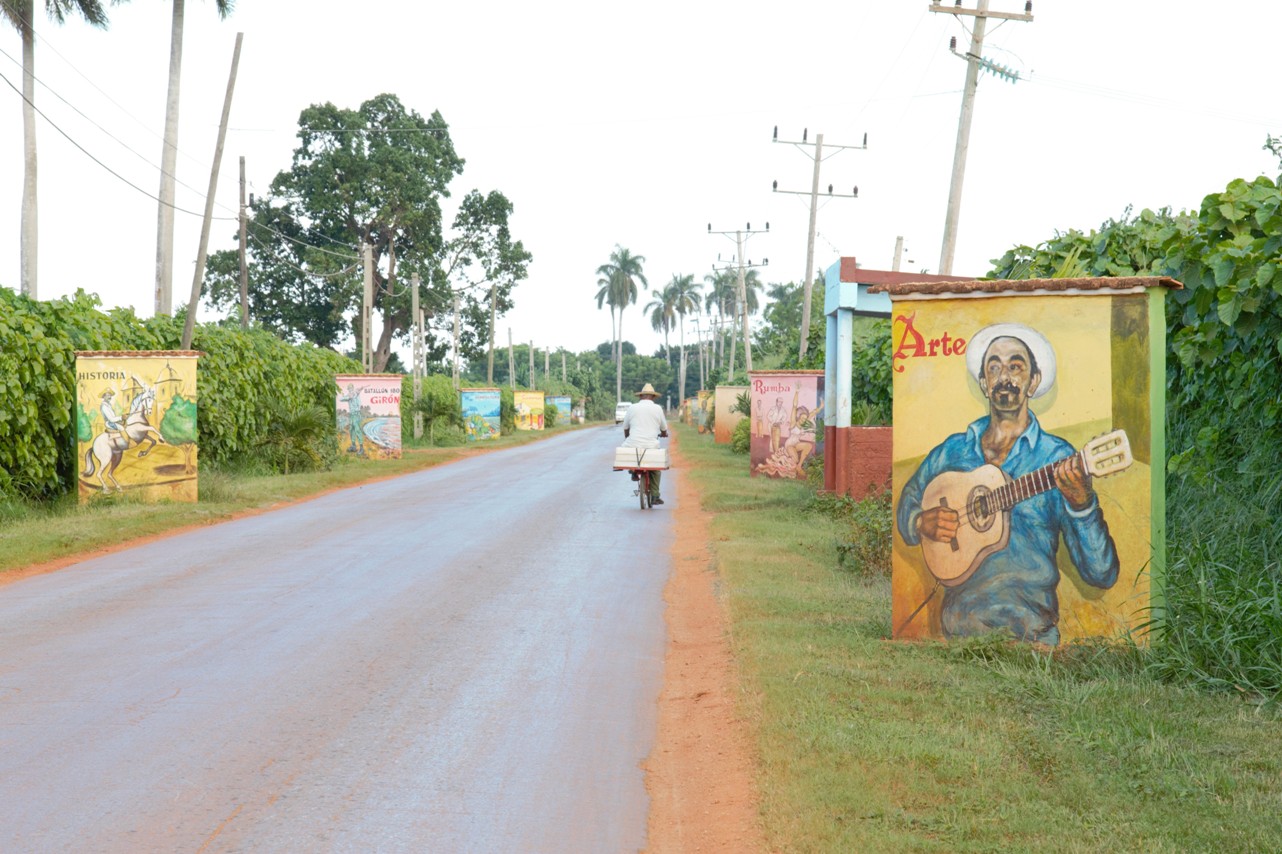
Giggling about that, I continued along narrow lanes, where front doors led directly onto pavements and where salsa music emanated from just about every doorway. Music, dance and art were everywhere in Havana, and it seemed nearly everyone could play an instrument.
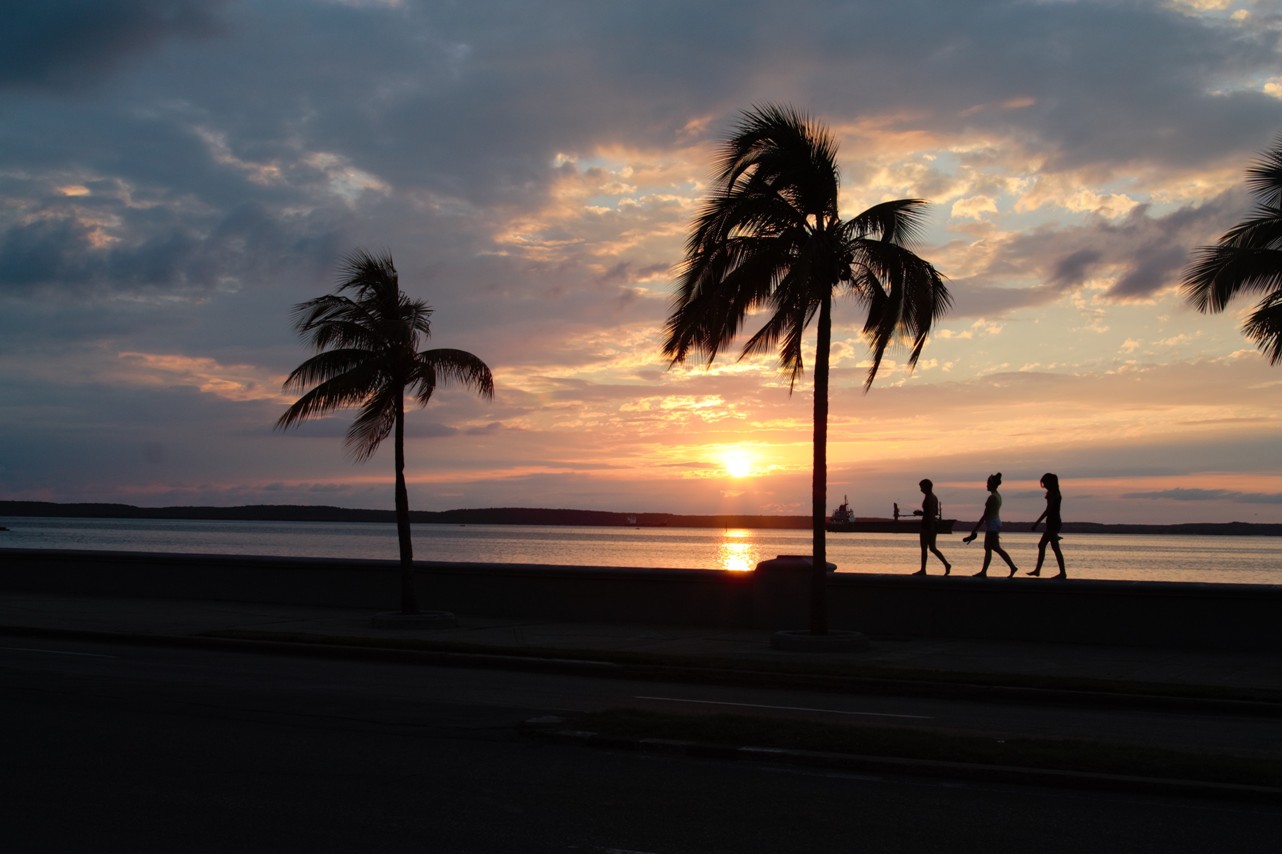
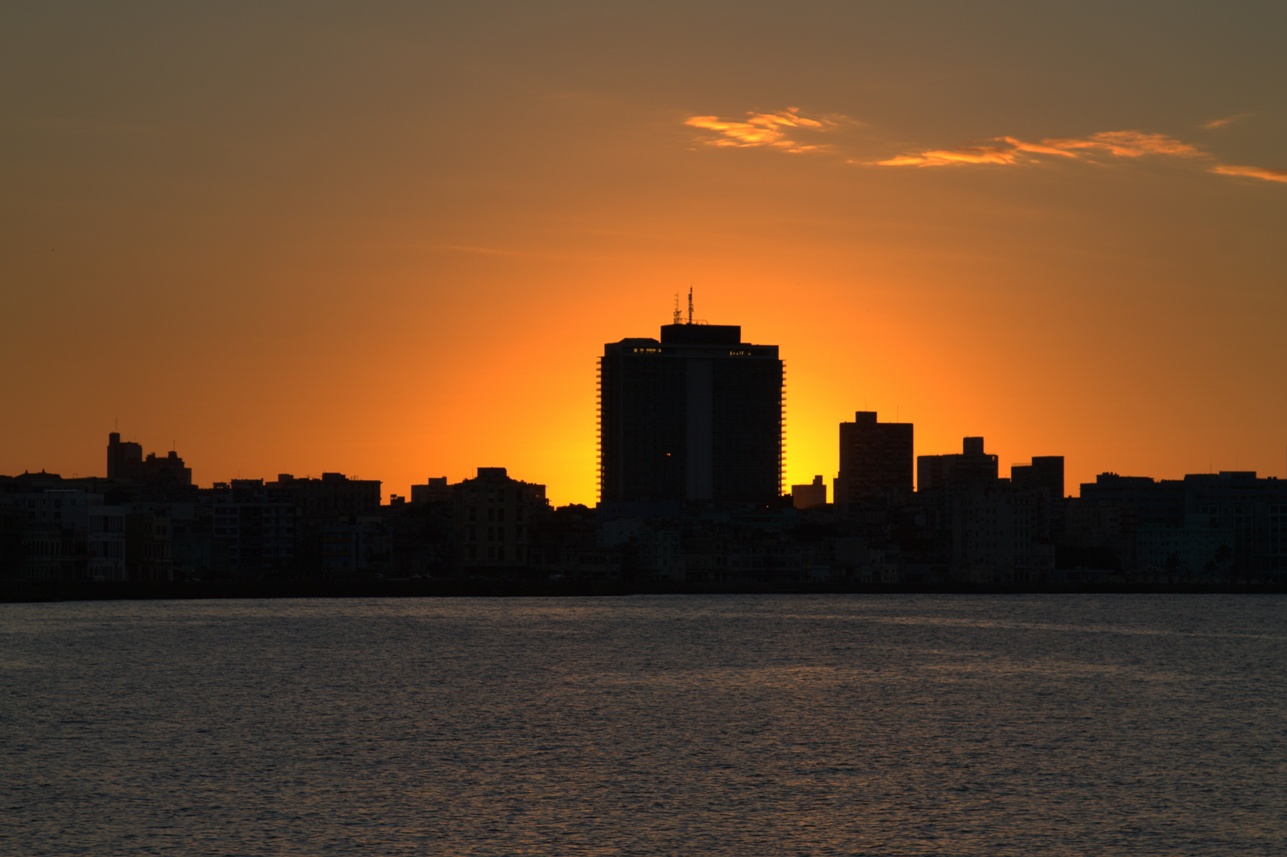
At sunset, the waterfront made a perfect spot to snap a few pics and grab a bite to eat. I was keen to get going and planned on returning to Havana a few days before my departure to explore more of this fascinating city.
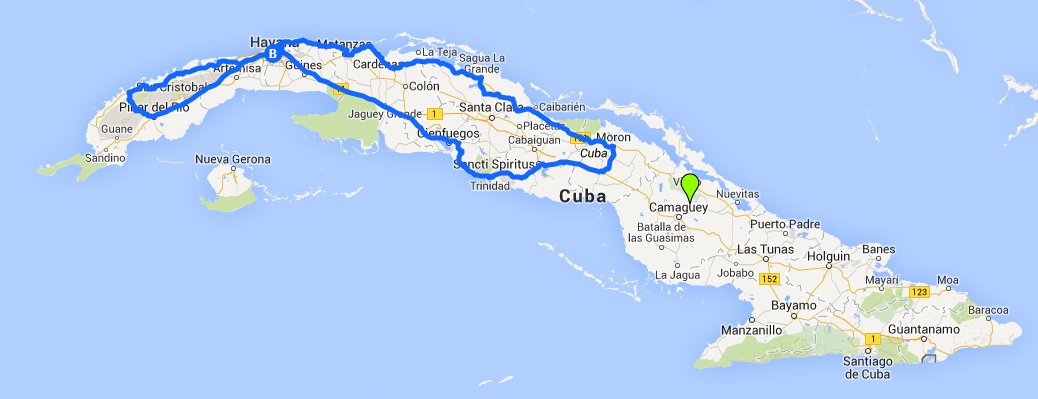
1 November - Havana – Bahia Honda - 132 km The section between Havana and Bahia Honda didn't make for very exciting cycling, but after nearly ten days I was delighted to be back on my trusted old iron horse (or is it a camel?). The mild headwind encountered made the going slow but kept one cool at the same time.
Although the map indicated the road as an "autopista",
it was in poor condition and
In Bahia Honda, a "hospedaje" owned by Beysi and her family was a real treat. They fed me copious amounts of food, and in broken Spanish I tried communicating, letting them know where I was from and where I was going - not that I knew exactly where that was.
2-3 November - Bahia Honda – Vinales - 85 km
After a healthy breakfast of fruit juice, fruit,
coffee, egg and bread, I left my generous family. The bumpy
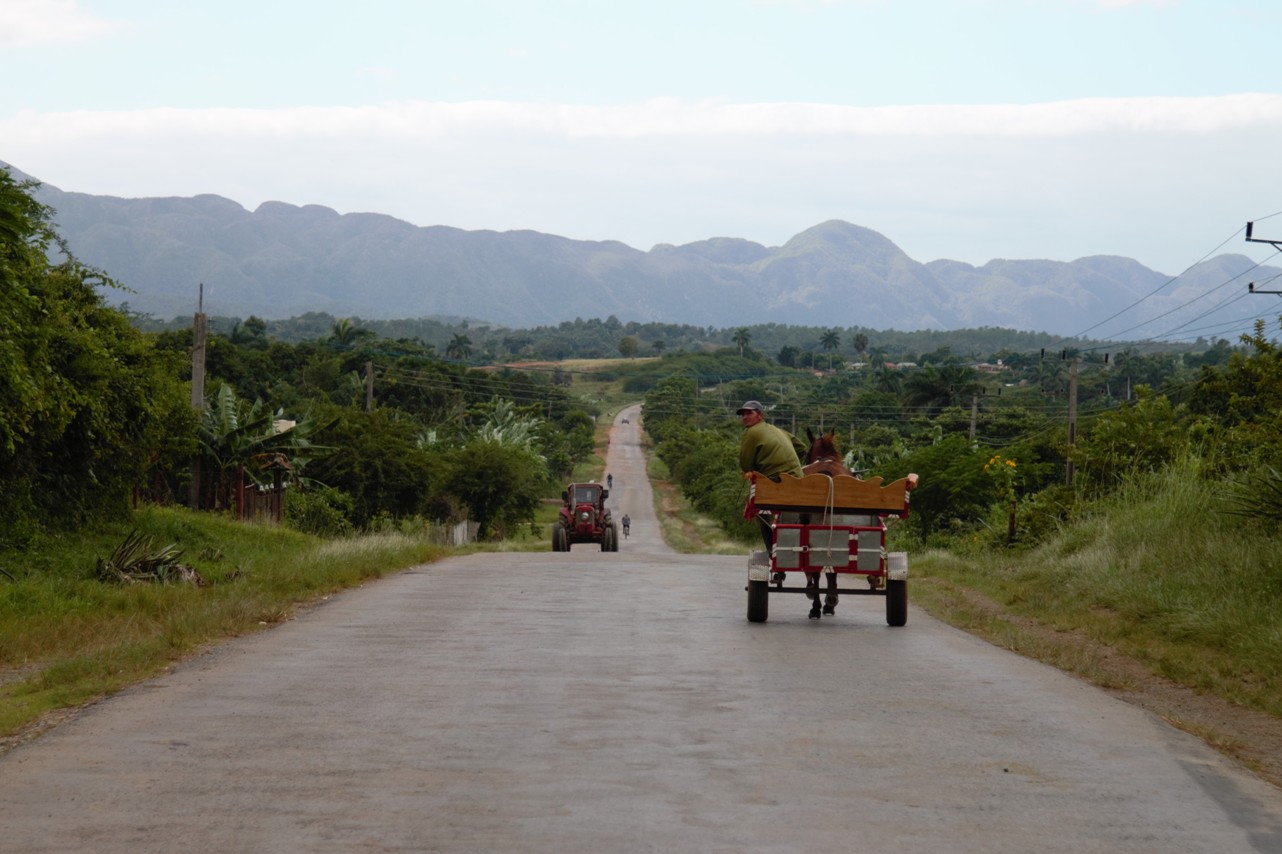
route continued along a back road, filled with cigar-chewing
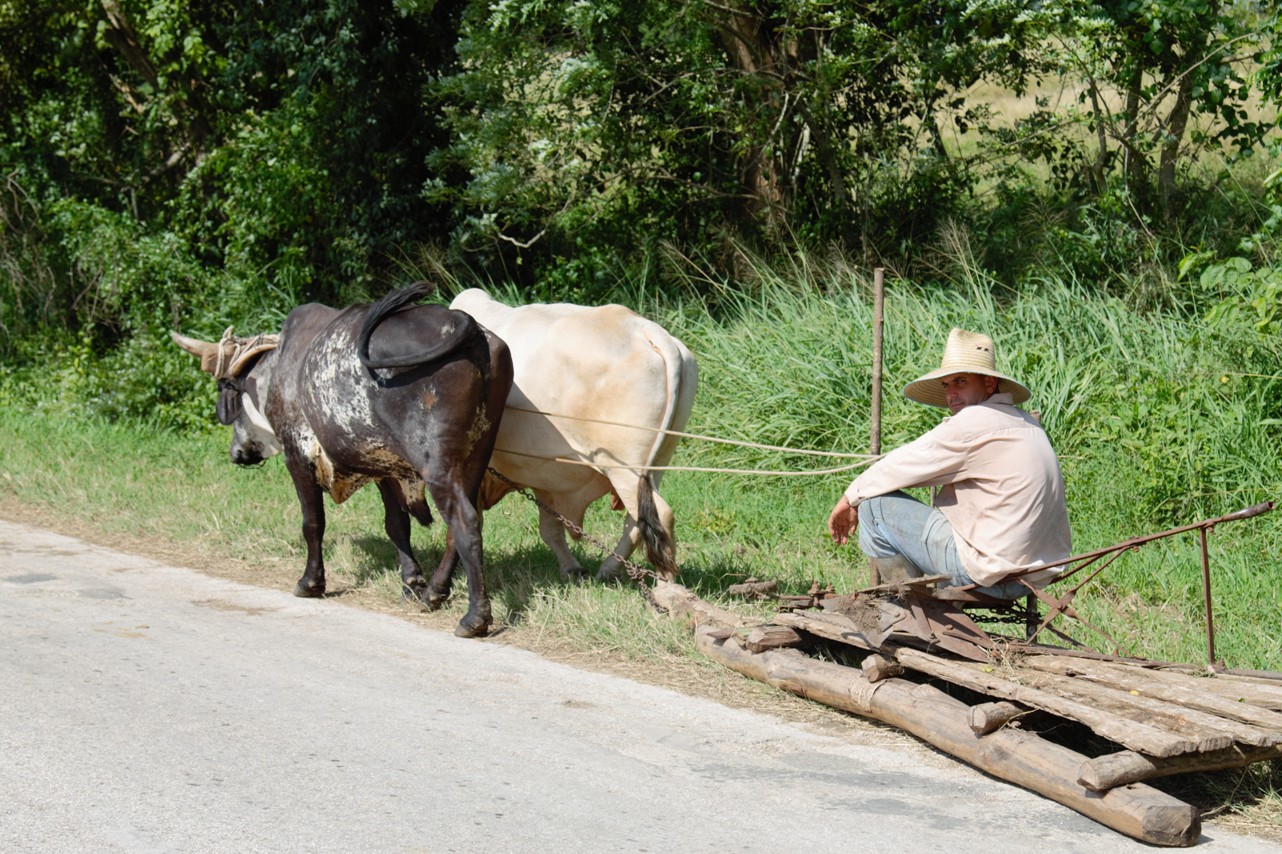
Cubans on horse carts and ox wagons. Again, the going was slow
as the route slowly led uphill along the
Vinales valley. The valley was a fertile one, and
my path, therefore, littered with fruit stalls where offers, not
only of papaya juice but
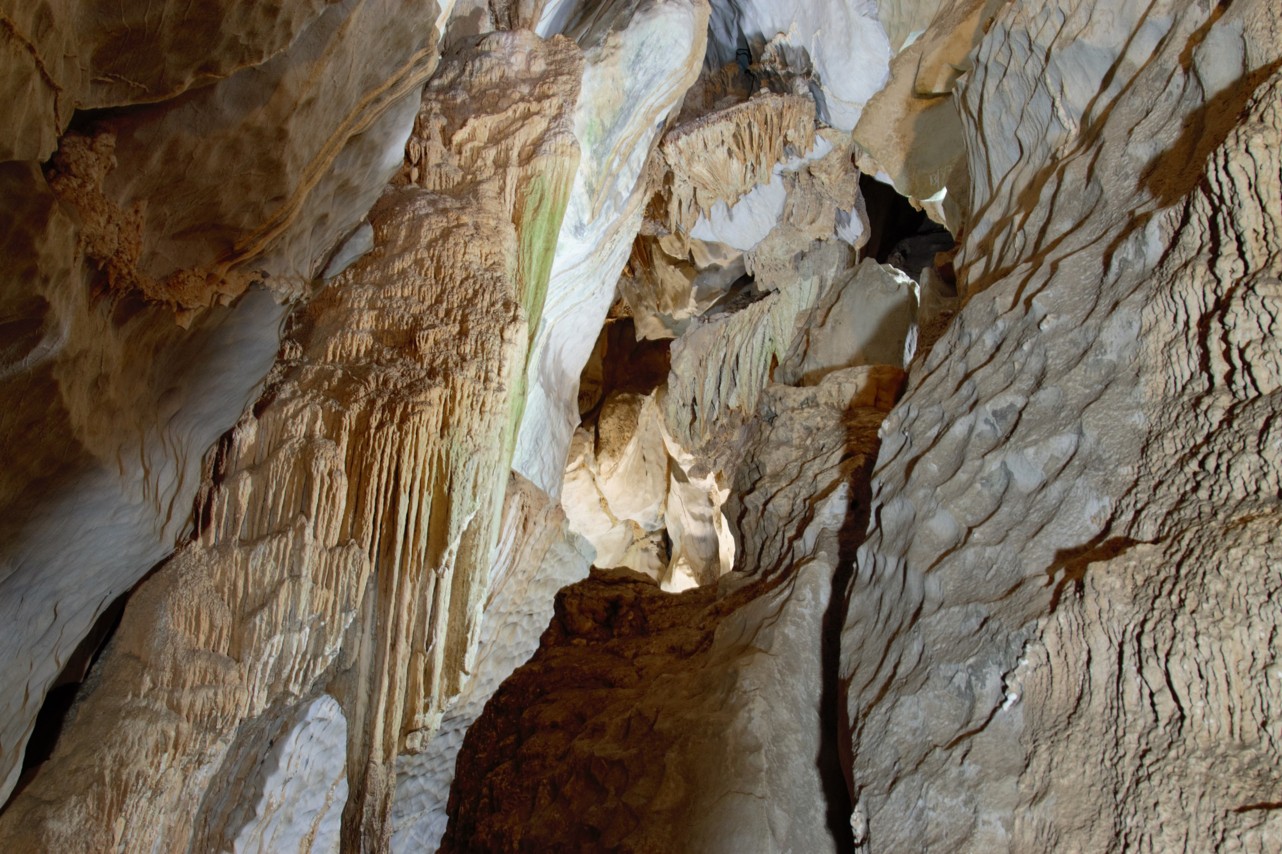
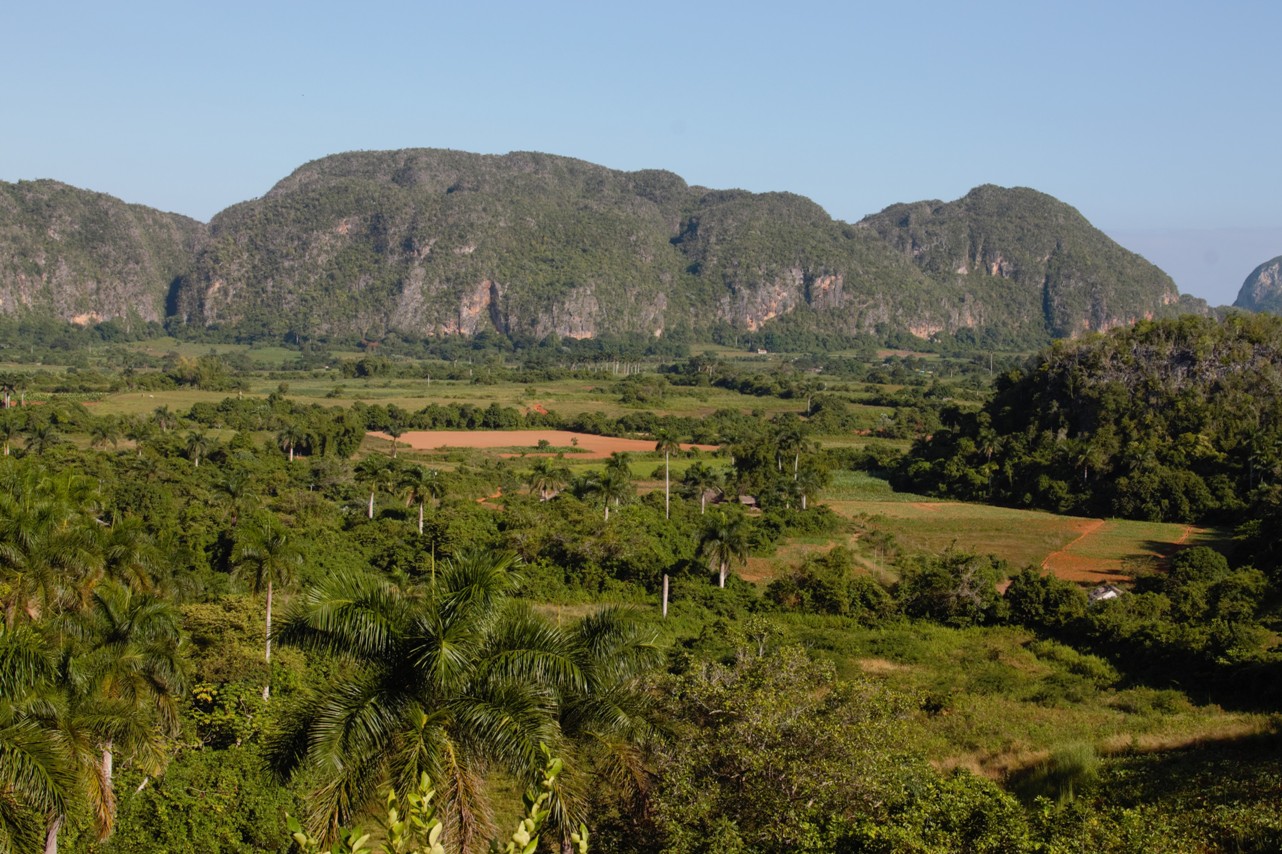
Vinales was touristy with literally hundreds of places advertising rooms to let and nearly the same number of restaurants, quite a feat for such a small settlement. The reason people came to Vinales was to visit nearby Vinales National Park, as well as the valley which has been declared a UNESCO site. It was said, 100 million years ago underground rivers ate away at the limestone bedrock, creating vast caverns. Eventually, the roof collapsed, leaving only the eroded walls we see today.
Finding accommodation was effortless, and the one located was a large and comfortable abode. The establishment had a restaurant that served the most delicious vegetable soup (and, of course, a "Cristal", the local beer). Plans were on staying in Vinales the following day, and it was, therefore, late before falling asleep to a salsa beat in the far-off distance.
The next day was spent visiting a nearby cave as well as a tobacco farm where some of Cuba's finest cigars were still hand-rolled. The cave was interesting and said to be an ancient indigenous dwelling. After a short walk, one came to an underground river where motorboats took you the rest of the way.
That evening, I located an internet café and uploaded a few pics before falling too far behind. The internet was expensive but far worse was the long queue waiting for the only seven machines in town. By the time my turn came, it was already late and before I finished was told they were closing.
More frustrating than the long queue at the internet was the hissing sound from the touts. They had a habit of hissing like snakes when wanting your attention, something that was quite annoying, but this was Cuba where things worked differently.
4 November - Vinales – San Cristobal - 110 km
Leaving my comfortable abode, I followed my nose
in an easterly direction, not quite sure where it would lead.
Again, it wasn't very scenic
cycling but I pushed on until reaching San
Cristobal. A headwind prevailed all day and it was, therefore, a
relief to reach this tiny village.
It was, however, a typical Cuban family with trinkets displayed in the cabinet, and photos in old frames hanging askew on the wall. The Cubans appeared to have the same family values as the South Americans. Family members and friends were constantly popping in for a visit, and there seemed an endless flow of comings and goings. San Cristobal was a pleasant rural area, nearly like a big farm, where there always seemed a cock crowing and a dog barking in the distance.
5 November - San Christobal – San Antonio de los Banos - 85 km
Records showed 24% of the population was of mixed
race, 65% White, 10% Black and 1% Asian. One could easily
question these figures as I hardly ever saw “White”
people in Cuba and thought the terms Caucasoid,
Mongaloid and Negroid would have been more appropriate as
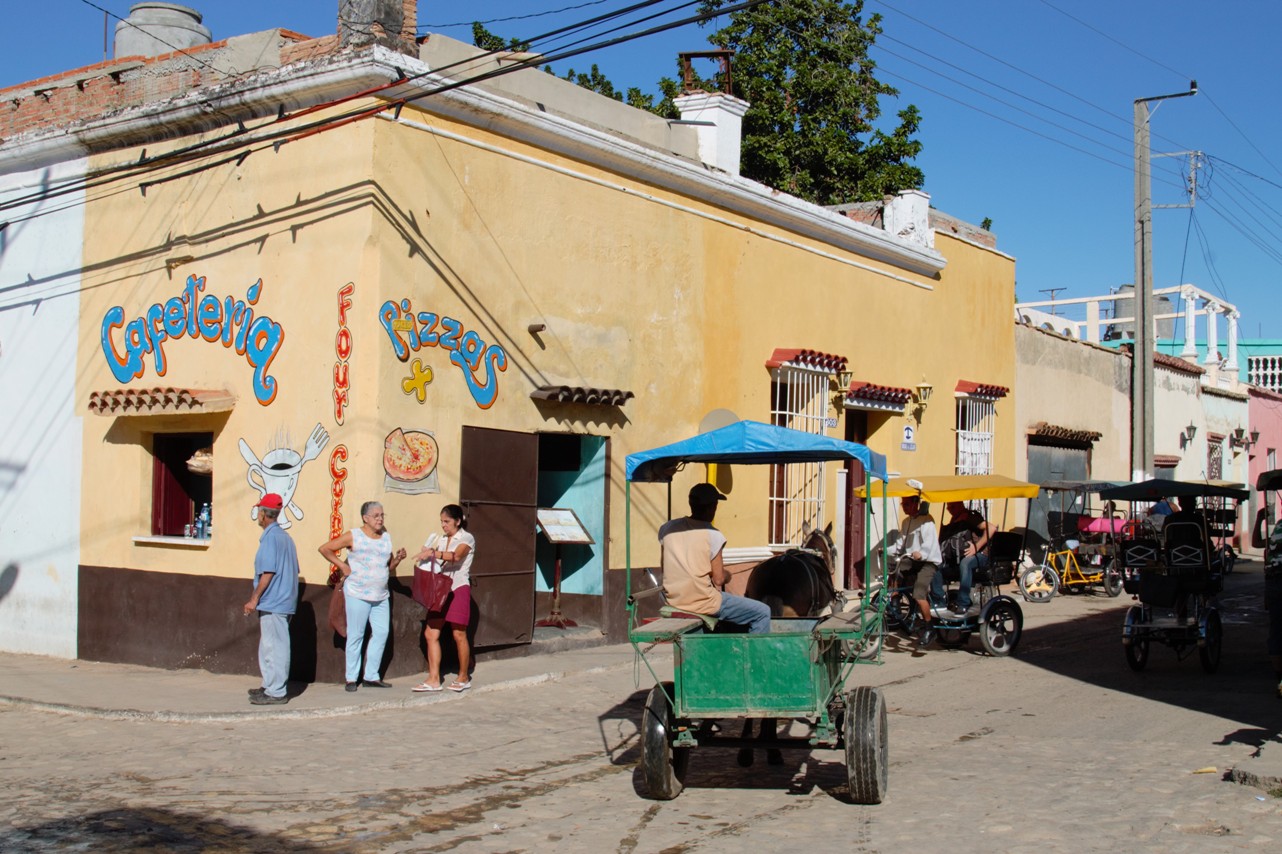
The way to San Antonio led past small communities where people went about their daily business which consisted mostly of fixing things, and it was said that the word “resolver” was the most used in Cuba. These settlements had numerous hole-in-the-wall type shops selling bread rolls, juice or pizzas, all for a few pesos.
The plan was on heading to Batabane where one could get a ferry to the nearby Isla de la Juventud. The diving was particularly good off the west coast of the island, but halfway through the day learned it could be difficult to get a ferry ticket in Batabane as tickets were mostly sold in Havana as a bus-and-boat combo ticket.
At Guira de Melena, a change of plans made me
head the 13 kilometres north to San
6 November - San Antonio de los Banos – Nueva Paz - 90 km app
The days were slowly getting a rhythm of their
own as I biked up and down hills,
Towards the end of the day, and on reaching Nueva Paz, the map didn’t show another village other than tiny Nueva Paz. To the surprise of the villagers, a foreigner cycled into their little town enquiring about a casa. More surprised than the locals, I found the village amid a local festival. I wasn’t sure what the festival was all about, but it must have been an important event as the only two places that had rooms to rent were full.
A hospitable family invited me in, as can be
expected, it turned out quite a novelty. Most of the other casa
particulars or homestays catered for travellers and mostly
consisted of a separate room with en-suite bathroom – all very
luxurious when compared to typical family life in Cuba. Staying
in a local home was something totally different. Firstly,
The family consisted of a mum, dad, grandmother
(who had to be taken care of) and their dwarf daughter. This is
only mentioned as it came as a surprise to spot at least
three dwarfs while in Jamaica (thought excessive
for such a small island). The family was super kind, and I
regretted not being fluent in Spanish but could at least tell
them where I was from and showed them the map of my cycle route.
They
were stunned one could do all that on a bicycle
(sometimes, I am equally stunned).
The daughter’s room became mine, which was, fortunately, a normal size bed; only the mirror was a bit tricky. She later came to offer me the use of her soap, powder and other cosmetics - too sweet. She was immensely proud of having these items. In Cuba, any cosmetic stuff, including soap and creams, were valuable items and, interestingly enough, beggars mostly asked for soap and lotions instead of money. The question was: Do you make use of these items or not? I used a wee bit of the lotions and reckoned if I offered something that valuable to someone, I would be chuffed if they made use of it.
7-8 November - Nueva Paz – Playa Larga - 100 app km
Larga was one of the two beaches invaded by the US in April 1961 and, along the way, one could see monuments and signboards keeping memories of the revolution alive. In Playa Larga, there were a whole bunch of casa particulars lining the shore and, therefore, no difficulty in finding a bed. The casa chosen provided food, and it wasn’t necessary to move one step; all one had to do was sit on the veranda and watch the bay.
The following morning was laundry day after which I took off in search of a shop selling hair stuff as I lost my comb. Losing things became my superpower, and I was very good at it. Instead of a comb, a diving shop was spotted and was just in time to join them on two dives. Teaming up with two very pleasant and experienced divers, we happily plunged into the crystal-clear waters of the Bay of Pigs. It turned out two wonderful dives, and I was (as always) incredibly pleased for the opportunity. The dive was an easy shore entry. About 30 metres offshore was a massive drop-off which reportedly bottomed out at a depth of 300 metres. I didn’t check! Visibility was crystal clear, and exciting to peer over the edge, into the abyss. Fantastic stuff, all for CUC25.
Interestingly enough, the Bay of Pigs (known as “the Bay of Pigs fiasco”) had an interesting history. It was there that mighty America tried to invade tiny Cuba in 1961. One thousand four hundred 1400 CIA-trained men, financed by a US$13 million military budget, landed in Playa Giron intending to wipe out the Cuban Air Force. Castro had been forewarned and had moved his Air Force the previous week. To make matters worse, the Cubans sunk the two US supply ships leaving 1,400 men stranded on the beach. The US government didn’t come to rescue the poor stranded soldiers: 114 were killed and the remainder captured and traded for US53$ million worth of food and medicine. A real David and Goliath tale, if you ask me.
9 November - Playa Larga – Playa Giron - 34 km
At my casa, I met two cyclists who’d come from
Cienfuegos. They informed me of a coastal route, a much shorter
way, between Cienfuegos and Playa Larga but, in the
process, they picked up 15 punctures between the
two of them. I, there and then, decided to
The resort was a strange place, about the size of a small village, right on the beach but neglected. Only a few bungalows were occupied, the lawn was knee-high, and hardly anything appeared in working order. The food, however, was delicious and consisted of a buffet lunch, dinner and breakfast; the problem being one can only eat until you had enough. The two genuinely nice cocktails made up for the lack of other facilities.
10 November - Playa Giron – Cienfuegos - 70 km
Signboards indicated 94 kilometres to Cienfuegos.
The going was easy as most of the day was cycled along a
low-lying and swampy area and the road in good
condition. Now and again, one had to give way to
herds of cows or cycle on the opposite side of the road as half
the
As always, a good few people lured one to their casa particular, and it was a pleasure to give them my business. The prices were all identical, and the accommodation very much the same. The lady where I bunked down seemed pleased that she had a guest and went out of her way to put the bike away and made things as comfortable as possible for me.
An evening stroll along the waterfront and around the central plaza revealed hives of activities. In the process, I met Jenn and Jeff from Canada (who were travelling by bicycle). They mentioned they saw me in Vinales. I’m always impressed by people who can identify one off the bike without the disguise of a cap and shades. How very observant of them.
11-12 November - Cienfuegos – Trinidad - 80 km I woke to the clip-clop of horse’s hooves, had a hearty breakfast and hopped on the bike to Trinidad, Cuba’s best-preserved colonial town. At first, the route was slightly hilly, but on reaching the coast it levelled out, and it became a pleasant ride past scenic beaches and bays.
Trinidad (a UNESCO World Heritage Site) was jam-packed with tourists and tour buses. The narrow cobblestoned streets could hardly accommodate all the busses, bicycle taxis and horse carts. Again, there were hundreds of casa particulars to choose from, and soon I was ensconced in a roomy house with a great veranda leading to an enclosed backyard.
A quick shower and I was strolling, camera in hand, together with the many other tourists down the narrow lanes of this 500-year-old Spanish colonial settlement.
On waking, I could hear the hustle and bustle of people peddling their wares from bicycles in the street outside. In a sing-song way, they announced whatever they had for sale. I hurried to the window and smiled at the scene of brightly coloured buildings, cobblestone streets and old men selling bread from bicycles shouting “El pan, el pan!” This was Cuba at its very best.
13-14 November - Trinidad – Sancti Spiritus - 70 km
My path followed the Valle de Los Ingenios, where
sugar was grown in the earlier years. Today, one can still see
some of the old sugar mills, slave quarters and manor houses of
that brutal era. The Manaca Iznaga with its 44-
Sancti Spiritus, the oldest European settlement in Cuba, turned out a hidden gem. Smaller than Trinidad, but less visited, it had many lovely, old buildings from the colonial era. As there were fewer buildings than in Trinidad, almost all were renovated, making it a pleasure to stroll the charming centre.
That night I came down with a stomach bug and spent most of the night hanging over the toilet bowl. By the time daylight broke, I was weak and tired and stayed in bed and slowly felt better as the day progressed. By lunchtime, I could face a cup of tea and a plate of fruit. Fortunately, Hostal Paraiso was comfortable and the owners accommodating.
15 November - Sancti Spiritus – Ciego de Avila - 76 km
Feeling much better, although weak (seeing I only
had a plate of fruit the previous day), I packed my mobile home
for the short distance to Ciego de Avila. The route was slightly
into the wind, but I caught the slipstream of a horse cart, and
together
Ciego de Avila was a tiny little place with a few old historical buildings. A hotel that was in dire need of TLC was home that night, and although no hot water in the shower, one couldn’t beat the price.
That evening, on my wanderings in the cooler night air, I passed the local theatre which was packed. The coolest, however, was that theatregoers still made use of horse-and-cart taxis to and from the theatre. How very cool is that?
Still not feeling 100% but having to eat something, I got myself a five-peso pizza, which, as indicated by the price, wasn’t very large (US$1 – 25 pesos).
16 November - Ciego de Avila – Moron - 40 km Although tired, I packed up and cycled north to Moron, a small town en route to Cayo Coco. I had no intention of going to Cayo Coco as it was understood the city was packed with all-inclusive resorts. Along the way, it started raining, and it turned out not the typical 30-minute storm, with the result I arrived in Moron dripping wet but, fortunately, found a surprisingly large amount of casa particulars.
By evening, villagers placed chairs outside doorways and watched the world go by while chatting to neighbours. What a social bunch the Cubans were. Street vendors magically appeared selling cake and popcorn – one can’t fault a country where cake is considered street food.
17 November - Moron – San Jose del Largo - 60 km app
I turned my bike in the direction of Havana, and
although a good few days remained on my visa, the time had come
to slowly move in the
direction of the capital. I read somewhere that
San Jose
had a spa and went in search of these magical
baths.
The mild tailwind made easy cycling and an early arrival at San Jose del Largo. The spa was slightly dilapidated as most of these type places were. I did, however, spend a good hour in the bath, which was a huge undercover one. The pool appeared right over the eye of the spring and had a sandy bottom where one could see the water bubbling up from a tiny volcano.
Again, I met two cyclists from Canada. They had been on the road for a year and planned on cycling at least one more. We had a meal together and shared a bottle of wine, compliments of my hosts.
18 November - San Jose del Largo – Remedios - 70 km
It was comfortable riding to Remedios as it seemed I’d rid myself of the stomach bug. Remedios was one of the first villages founded by the Spanish way back in 1513 and bedded down in a place right next to the central plaza. There wasn’t much to do in this tiny village, except to visit the few old buildings around the square.
I had much time on my hands and, therefore, spent it using the internet before having a bite to eat. Doing the laundry was a mistake as it started raining during the night and nothing was quite dry by morning.
19 November - Remedios – Quemado de Guines - 110 km app
Packing my half-wet laundry, I headed south. The
intention was to go to Santa Martha, but I couldn’t face another
touristy town and turned off and headed along the coast. I half
regretted the decision when it started raining; rain that
continued for the rest of the day. It rained so hard that water
couldn’t drain fast enough, and the path soon turned into
a mini river. With no reason or place to stop, I
In bucketing rain, and sloshing through ankle-deep water, accommodation was located, but with the rooms being rented by the hour, I had to wait until the occupants were done. In the meantime, a restaurant made a good spot to while away the time and, besides that, I was starving. Upon my return, the place was available and I could hang out the wet clothes and change into something dry. There was truly nothing to do; the TV only had one channel (and I had no use for the condoms) resulting in an early night.
20 November - Quemado de Guines – Hotel Elguea and spa - 60 km As my abode was an hourly joint, no breakfast was included but I was given coffee and a few bananas before leaving. Again, it rained the entire way, and on reaching the turnoff for a hot spring, it was a no-brainer and I headed the eight kilometres down the road, where I arrived soaked to the bone.
As always with the government-run hotels, the hotel was huge but without anyone in sight. The goats roaming the garden looked up in surprise and annoyance at someone disturbing their peace.
With little else to do, I repacked my bags, had a beer or two and soon it was time for the evening meal. This time there were a few more people as it seemed workers from the electrical company were doing work in the area and stayed overnight at the hotel. Although the restaurant had a menu, it only had one choice, which was very similar to lunch: chicken instead of beef, everything else was identical.
According to local legend, a slave who had contracted a serious skin disease was banished by his owner to what is known as Banos de Elguea. Later, the man returned completely cured. His master believed him, and a bathhouse was built at the spot.
21 November - Hotel Elguea and spa – Varadero - 110 km It rained throughout the night but, fortunately, by morning, it had cleared. Although the route was till flooded, a tailwind made easy riding. The touristy beach town of Varadero was situated along a narrow peninsula along Cuba’s north coast and littered with hotels and casa particulars.
22 November - Valadero – Playa Hermosa - 120 km To my dismay, I woke, not to the tip-tip of raindrops on the roof, but rain streaming down, more resembling a tap left open. Packing up was with more care than usual, making sure that all would make it through yet another rainy day. Fortunately, by the time I reached the corner shop for a cup of coffee and the (by then) ever-familiar toasted ham and cheese sandwich, the rain had eased.
A tailwind made riding a pleasure, and I caught up to two cyclists from the Netherlands holidaying in Cuba. This was only their second day of riding, and they were taking it easy. We chatted as we cycled along and, as they were looking for accommodation in Playas del Este, I followed suit. In the dying moments of the day, it started spitting again, and I was happy to call it a day.
Villa Playa Hermosa wasn’t much of a villa but was cheap at CUC13 per person. My room had no hot water, and although it had a TV, it didn’t work. The place was popular with locals from Habana, the music was going ten to a dozen and guests were already far into their rum by the time I arrived.
23-25 November - Playa Hermosa – Havana - 25 km
The ride into Havana was a short one and,
fortunately, it didn’t rain. On arrival at my casa particular, I
found them full. I thought it a misunderstanding as I booked for
the 24th and 25th. I was one day early and
could find a bed for that night, no problem,
but understood they were full for the days I’d booked. Somehow,
things got cleared up when I showed them the booking. All’s well
that ends well. I had
My visit to Cuba was a fascinating one. It was always interesting to make conversation with Cubans as they were a highly educated nation. In fact, Cuba had about nine physicians per 1,000 people where Africa only had approximately 0.2 doctors per 1,000, a substantial difference. Although economically poor, I thought them culturally rich as theatres were well supported and it appeared just about anyone could play an instrument.
26 November - Havana, Cuba – Montego Bay, Jamaica
- By Plane There surely couldn’t be anything more inconvenient than a 5.30 a.m. flight which usually meant a wakeup call of around 2.30 a.m. When flying with the bike, I preferred getting to the airport early, allowing enough time to have the bike wrapped and pay the bike fee, which was generally at an obscure office stuck away at the far side of the airport.
My casa owner assured me he arranged a taxi van to the airport. At 2.45 a.m. I tiptoed downstairs and was relieved to find the taxi already there, as Cuba could be as frustrating as it was fascinating.
Alas, it wasn’t a taxi-van but an old Mazda
hunchback. One could only laugh at the bizarreness of it all as
the bicycle was half hanging out the back. I giggled
uncontrollably all the way to the airport. The shockless old
Mazda splattered, hiccupped and farted black fumes as we
bounced over potholes in the direction of the
airport. I feared the bike could slide right out of its (by now)
sad-looking box. Not only was the box made out of two boxes
stuck together in Jamaica and held together with
plenty of duct tape, but it was also, by then, terribly
Although the airport had a wrapping service, it took some convincing the operator that it could be done. It was a relief to have everything booked in and be able to relax before my very long flight to South Africa, where the plan was on visiting for a while before heading to the Arabian Peninsula to cycle a few of the countries located on that very dry peninsula. With this also came to an end my cycle ride through the Americas. A journey that took me from Ushuaia in southern Argentina to Seattle, USA and across the country to Boston, with the islands of Jamaica and Cuba thrown in for good measure. |