|
|||||||
|
|||||||
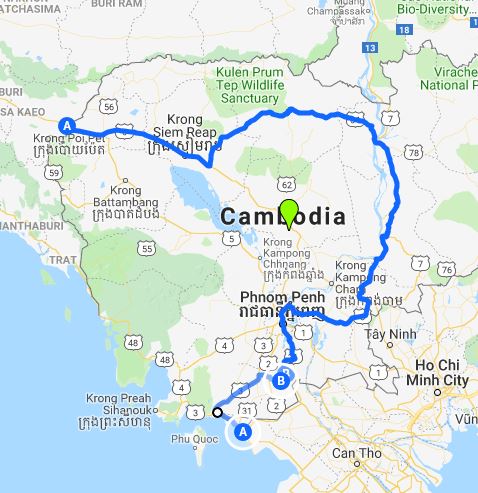 Cambodia (Caron)
(954km - 16days)
09/08 – 24/08/2018 |
|||||||

|
9 August Aranyaprathet – Roadside Guest house – 83 km
First thing in the morning, we headed for the
border, and with a quick stamp in the passport, we
left well-organised Thailand and entered a somewhat
more chaotic Cambodia. By the time we got to the
border, the border
We weaved our way through the dusty bumper-to-bumper traffic, dodging barefoot monks and muddy puddles to the Cambodian emigration, where we purchased a Cambodian visa for the specified $30 as per the embassy website; but the price was $30 plus 100 Thai baht. (The Thai baht, I assumed, was for their own pockets.) We counted eight staff all playing on their mobile phones.
At
last, we were on our way. We cycled along a good but
busy and dusty road, on which we encountered
numerous interesting roadside stalls. We made a
quick stop at a roadside restaurant where we bought
rice cooked in bamboo. The sticky rice is mixed with
sugar, sweet red beans and coconut milk, and then
stuffed into cylinders of hollow bamboo. The
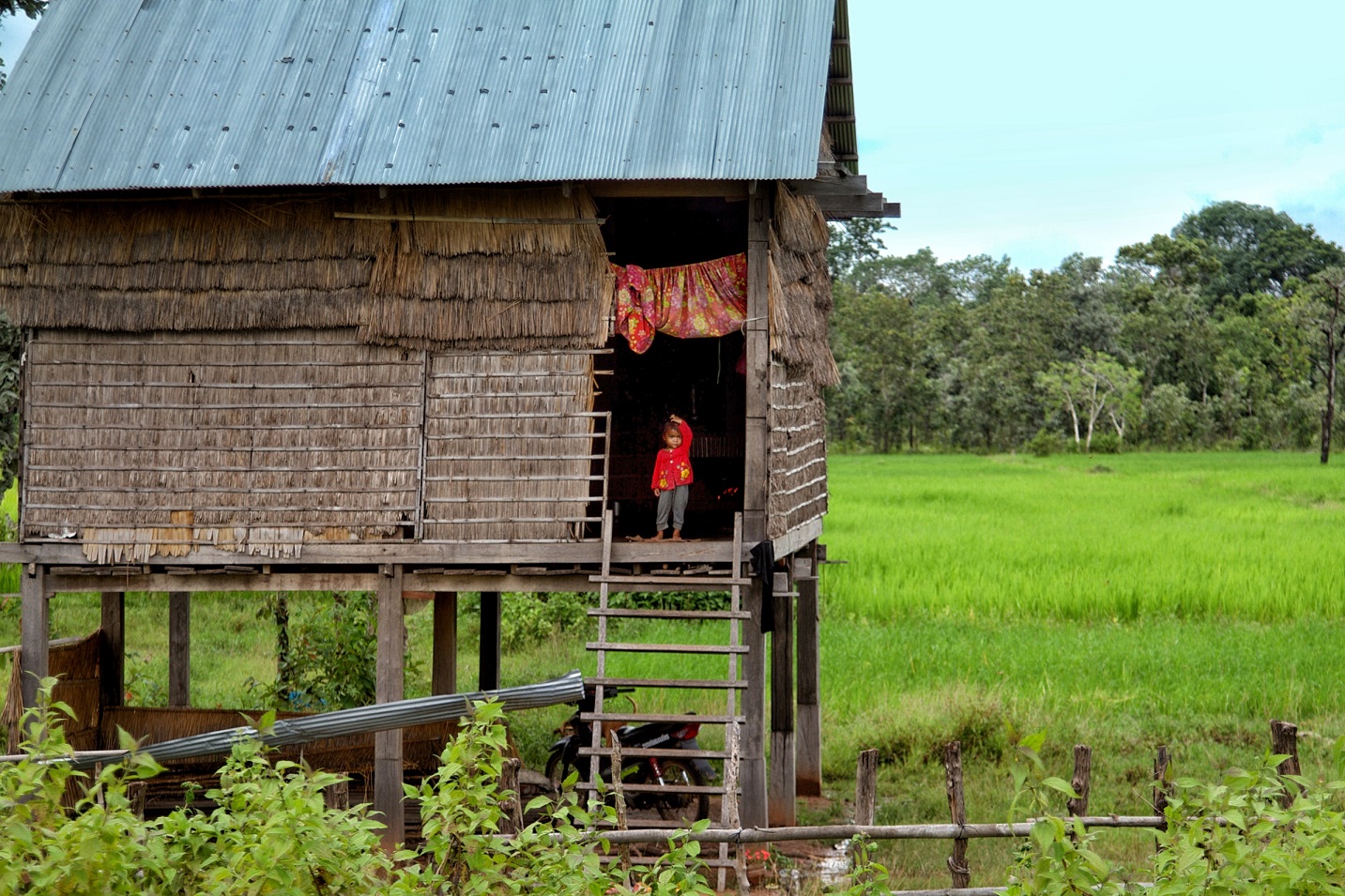
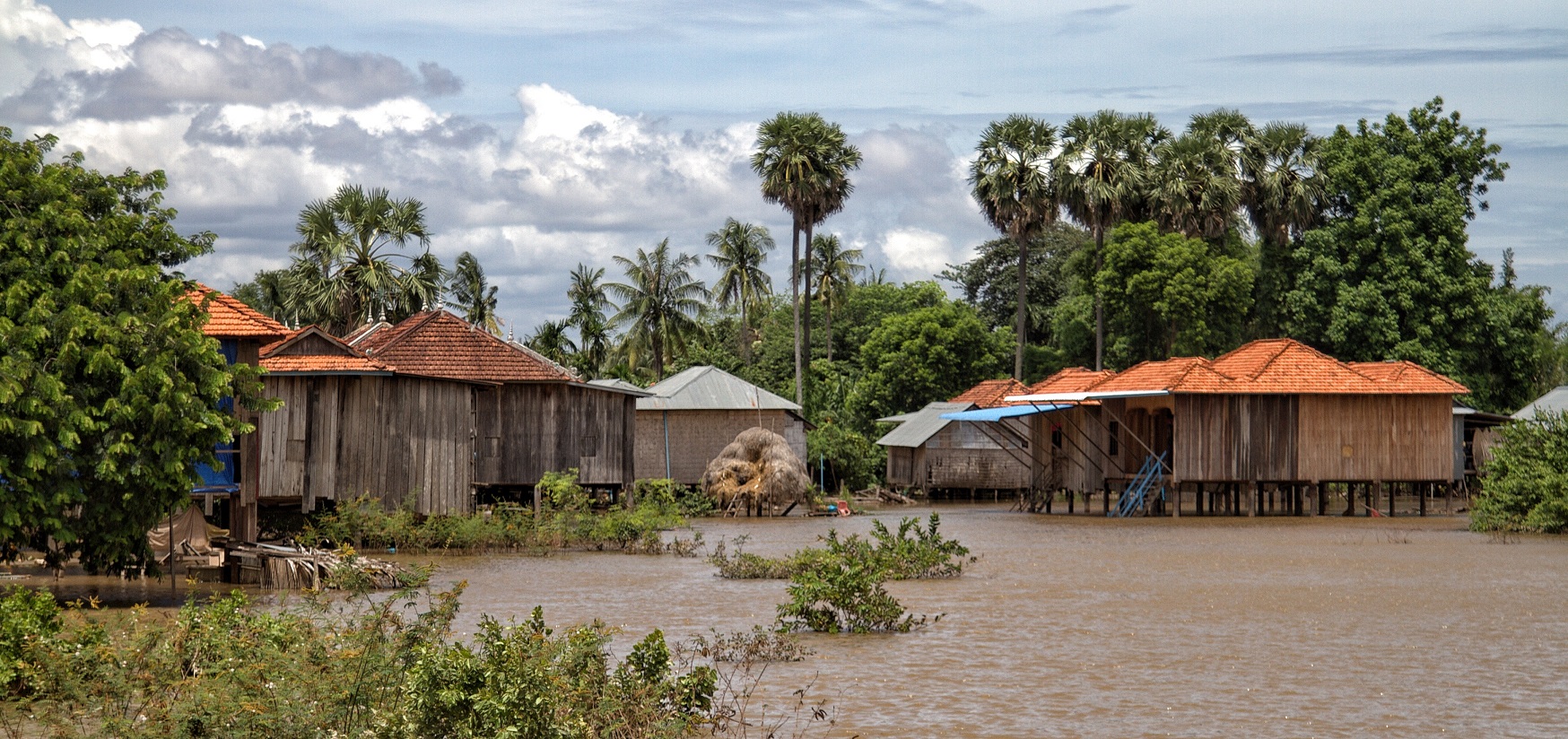
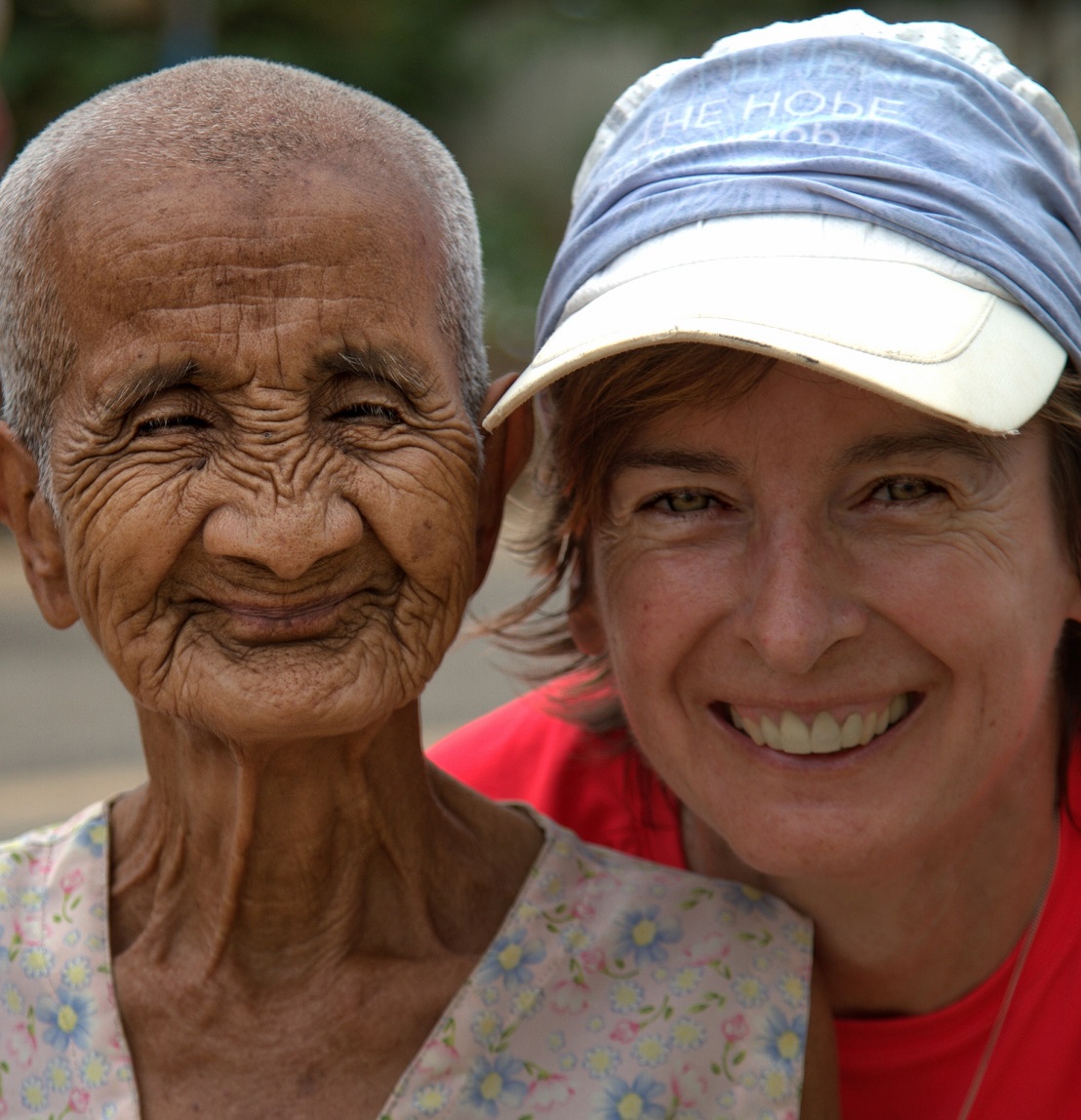
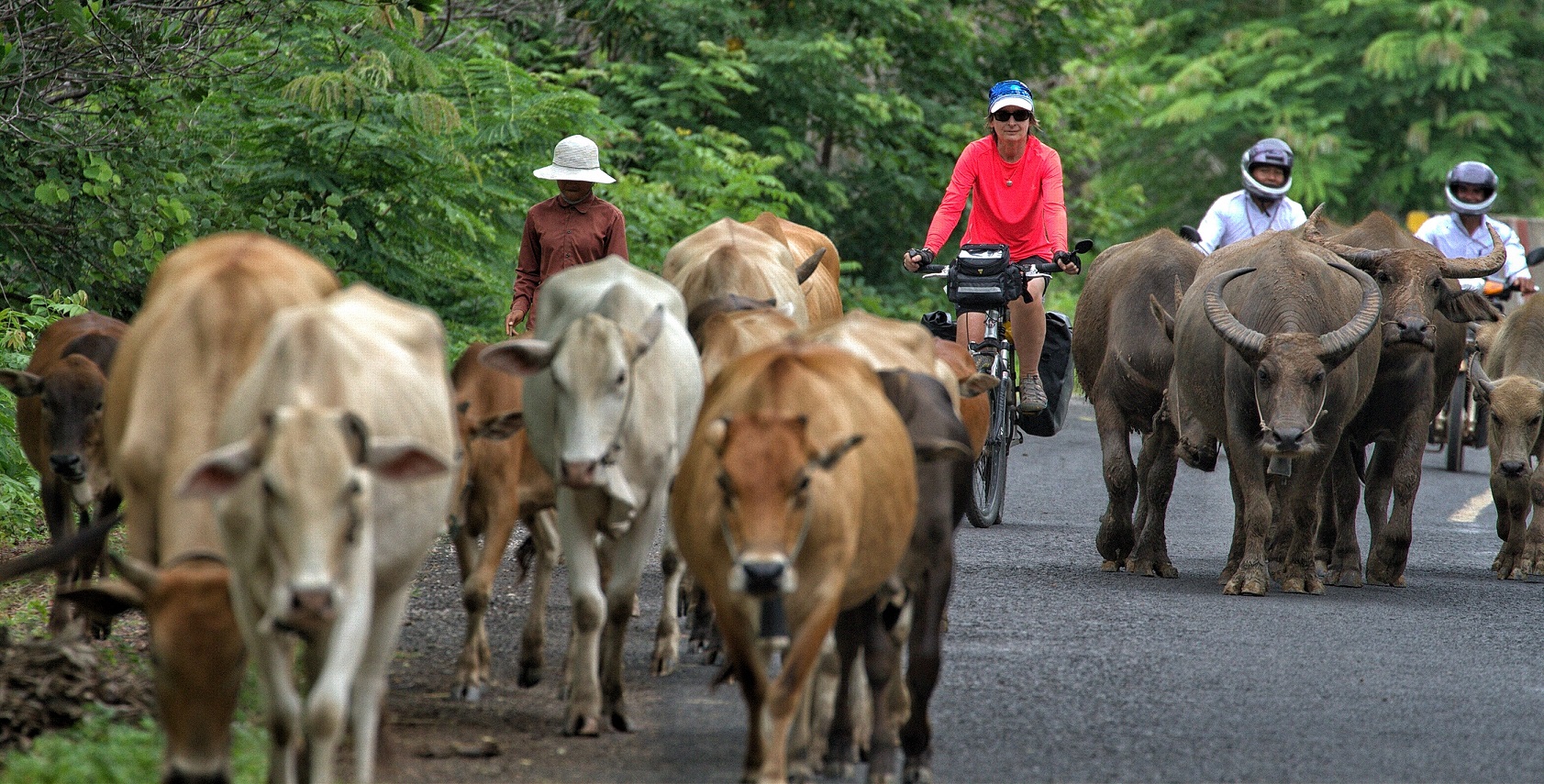
We made our way past bright green rice fields, wooden houses on stilts and friendly kids, stopping for coconut juice along the way. In the process, we met super-friendly rural Cambodians. Wrinkly old ladies gave us big toothless grins, and small kids shyly looked from behind their mother’s aprons at the two “farangs” (foreigners) in their midst. We ambled along, marvelling at our new country, as we passed men herding cattle and basic wooden houses where families were swinging in hammocks under their homes.
Eventually, we saw a sign for a guest house and turned off to explore. We were surprised to find a building offering ground floor rooms at $7, which we were more than happy to pay. We were, no doubt, the centre of attraction as we took a walk down the road to find food, and although no English was spoken, we managed to find what we were looking for, making for a lovely end to our day.
10 & 11 August - Roadside Guesthouse – Siem Reap – 85 km
We
sat outside our rooms chatting while I drank my
coffee and enjoyed the fresh, early morning air
before setting off down the road. We shared the road
with broom and feather duster salesmen. Ornate
temples jutted out of the forest and lent colour to
the rice fields that stretched as far as the eye
could see. We passed what we called the “nursery
carts” as they were loaded with plants and flowers,
Our noodle soup stop came, as usual, with a fair amount of interest from the locals and the bringing of children to be photographed. I had a feeling that the kids were not always that comfortable with their new role.
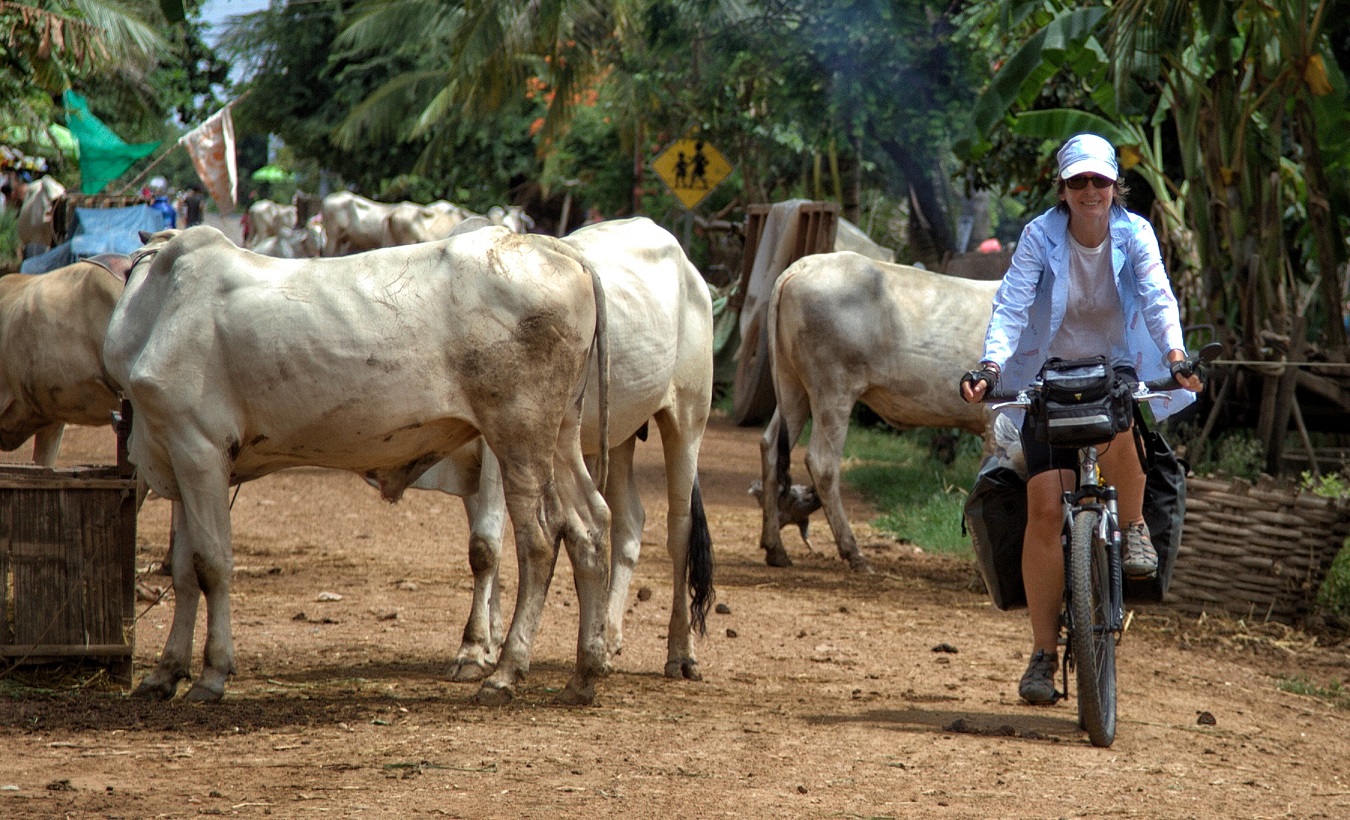
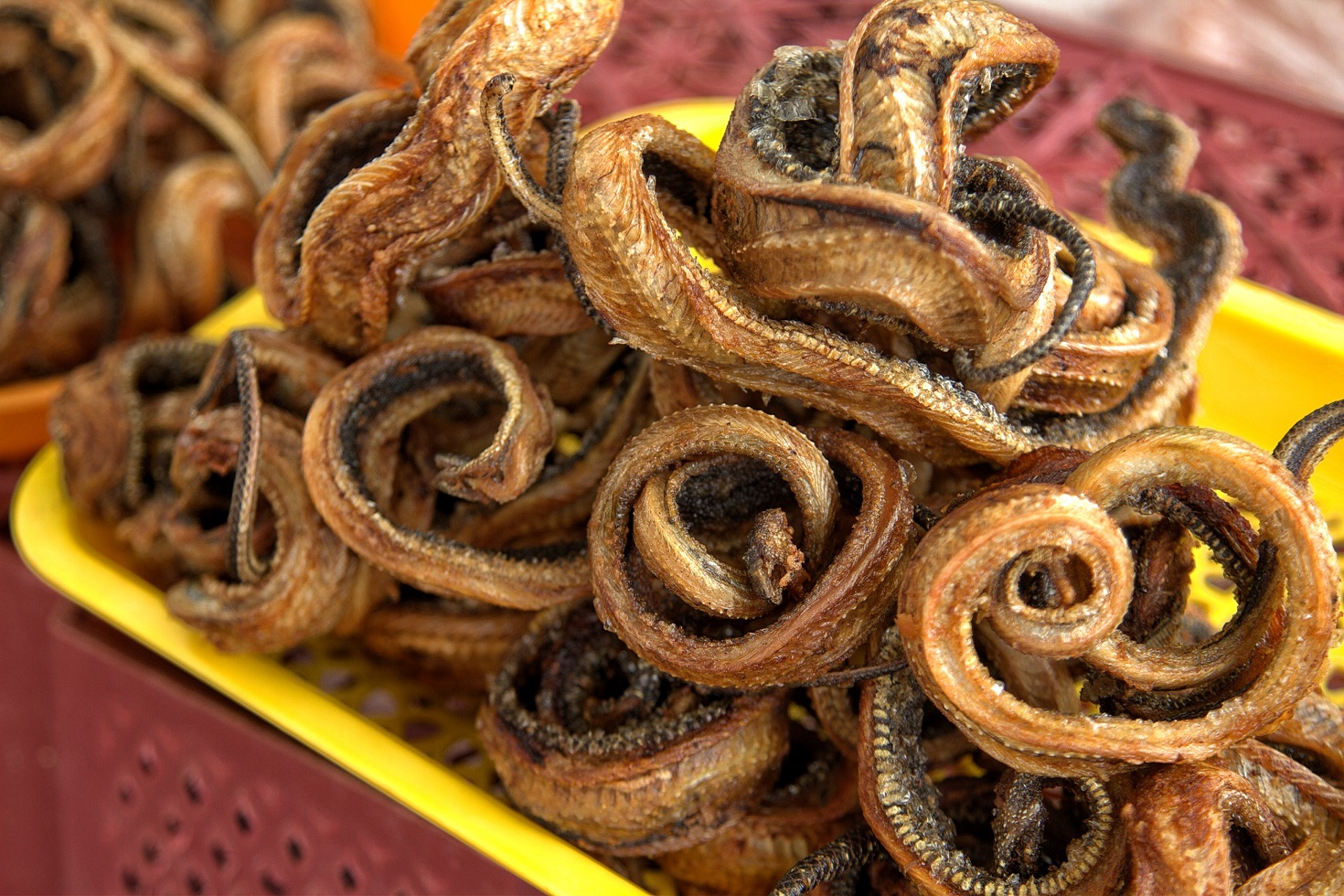
It was a marvellous day to be out on a bike. The weather was overcast, and we picked up a tailwind, making for easy cycling. Powered by the wind, we flew past water buffalo enjoying the muddy puddles left by the previous night's rain, and past roadside stalls selling cigarettes and petrol by the litre. We also encountered a rather interesting market selling deep fried snakes, frogs, and crickets. Caron could not face trying these delicacies, but I tried the snake that came with salt and lemon.
On reaching touristy Siem Reap, we were somewhat shocked at all the foreigners, fancy hotels, and upmarket eateries after being in the countryside for so long.
12 August - Siem Reap – Sroyorng Koh Ke Guesthouse – 116 km
On
cycling out of Siem Reap, I was surprised at the
amount of child labour we witnessed. It was Sunday,
and I hoped that they did go to school during the
week. As soon as we left touristy Seam Reap, the
road deteriorated and we bounced along through
potholes filled with
Instead of taking the highway, we opted for a much smaller path that we hoped would lead to the Mekong River. It was a fascinating ride along a dirt road and through the most rural of areas. It was an area where people farmed in primitive ways, lived in nipa huts, obtained water from wells and chewed paan. Wares were carted by ox-drawn carts, rice was milled in backyards and papadums made by the entire family. Corn was boiled at roadside stalls making it virtually impossible not to stop. We got caught by the rain no less than three times, each shower left us dripping wet with steam rising from our soaked bodies.
We passed kids playing in rivers and jumping off bridges and doing what kids do. Others were cutting rice in the paddies, and village dogs made it clear that we were in their territory. A pleasant day by anyone’s standards. Towards the end of the day, we were happy and somewhat lucky to find a guest house in a tiny village without a name.
13 August - Sroyorng Koh Ke Guesthouse – Chhaeb – 110 km
We
left our small overnight village together with child
monks collecting food. The road twisted and turned
through rural settlements where cattle and buffalo
had the right of way. Like the previous days, we
shared the road with two-wheel tractors pulling
wooden carts loaded
We passed motorbike salesmen loaded with piglets in bamboo cages or others with fish-trap baskets all destined for the local market. The most fascinating being a mobile separating rice milling machine (not sure what it is called). It went from house to house and separated the villager’s rice from the husk.
We
knew not many foreigners came this way as small kids
were fearful of us, hiding
After a quick shower, we headed for one of the roadside stalls and indicated that we wanted food. We were served chicken soup, consisting of a clear broth and chicken feet, rice and a pork dish that mostly included bones. Still feeling slightly hungry, we stopped at one of the other stalls to pick-up a noodle dish. While waiting Caron order a boiled egg that to her horror turned out to be “Balut” - a half-developing duck embryo! Needless to say, the dogs enjoyed it.
14 August - Chhaeb – Strung Treng – 86 km
Our
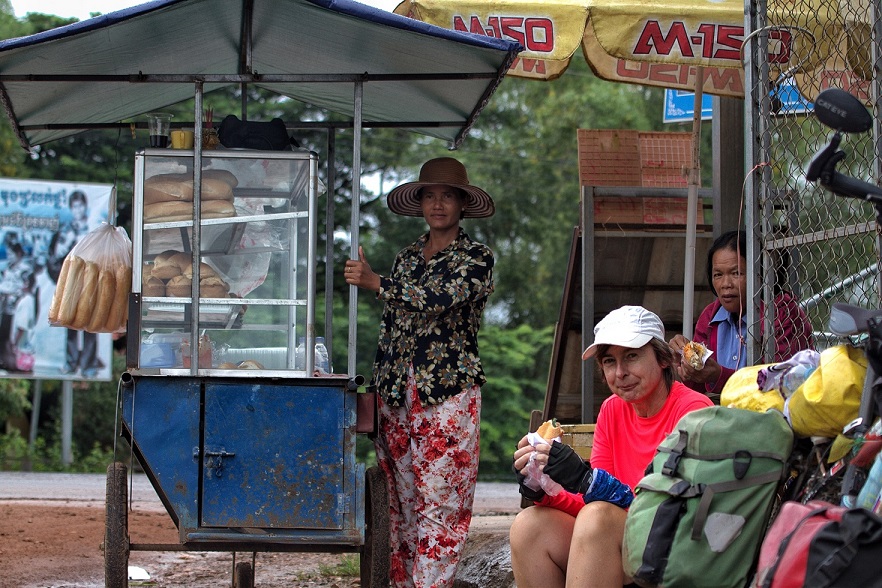
first stop was the baguette stand. Cambodia’s
traditional snack, the Nompang (baguette), is filled
with all kinds of strange things, including slices
of pork, meatloaf,
Then, it was on to our final stretch to the Mekong. Again, I have to stress that this is an extremely rural area where foreigners seldom venture. Although friendly, most of the children were very apprehensive of us. We cycled past wooden houses on stilts where friendly folk waved and shouted hello. Roadside stalls sold meagre supplies of petrol by the litre, as well as a few fruit and vegetables from the owner's garden. The most interesting was a collection of birds and other wildlife in cages as well as a baby monkey that seemed to have befriended a dog.
Each little hamlet appeared to have at least a
pharmacy, and some even had a small clinic,
consisting only of a few beds made with woven mats,
not that it was an unusual thing as most people in
southeast Asia sleep on woven rugs. Soon afterwards,
it started raining, and we
We crossed a multitude of broad rivers and watched the skilful fishermen through their nets with fascination. We passed the Mekong River via the large and modern Strung Treng Bridge. In town, we found a guest house right in the busy market area. After a shower, we walked out to the market looking for food but were rather unsuccessful and eventually settled for a fried noodle dish from the Chinese restaurant.
15 August – Strung Treng – Krati – 142 km
“Hou boude, hou,” Caron said when I told her that it
was 142 kilometres to Krati. As there was not much
in the line of accommodation or
Although it was a challenging day, it was still a
privilege and a pleasure to be out on the road. We
made our way south, past small settlements where
cattle, bare-bum kids and buffalo had the run of the
mill. We stopped for a lunch of fried rice at a
roadside stall,
Basic wooden houses on stilts, friendly Cambodians, and laundry flapping on fences became a familiar scene. We crossed large rivers and cycled past rice fields and forested areas as we made our way south, reaching Krati in a slight drizzle and fading light. Exhausted, and Caron with a somewhat sore behind, we found a room at the Heng Heng Hotel, situated right on the Mekong River, for only $8. No sooner were we in our room when a fierce storm came in, rattling windows and doors, and we could not believe our luck! Needless to say, we were starving, and after a shower, we were off to the nearby restaurant where they had an extensive range to choose from. It was an early night.
16 August – Krati
We
woke to the sounds of the street and a view of the
Mekong River. As we had plans of tracking down the
rare freshwater river dolphins, there was no rush to
go anywhere. A walk through the local market was as
interesting and informative as all markets, and it
gave us a
A somewhat bumpy tuk-tuk ride brought us to a place where we could locate a boatman to take us across a rather strong-flowing Mekong river to where we hoped to catch a glimpse of the river dolphins. The Irrawaddy dolphin is distinctive in that, unlike most species of dolphin which have a long nose and pointed features, the Irrawaddy species has a blunt nose and straight mouth, rounded tail and fins. It was an extraordinary sight to see them. They don’t jump like other dolphins, and we had to look closely to get a good look at them. With the threatening weather, we headed back to the safety of the shore and no sooner were we back at our digs, and the weather came in.
17 August - Krati – Police station – 83 km
Instead of taking the main road, we opted for the
river trail. A narrow, rural road ran
Pyjama-clad women sat in doorways nursing babies or
playing with toddlers while men on haunches fixed
fishing nests and bamboo chicken cages. The usual
roadside eateries also moved onto the road, which
was slightly elevated and that made for convenient
pickings. We meandered through the chaos until we
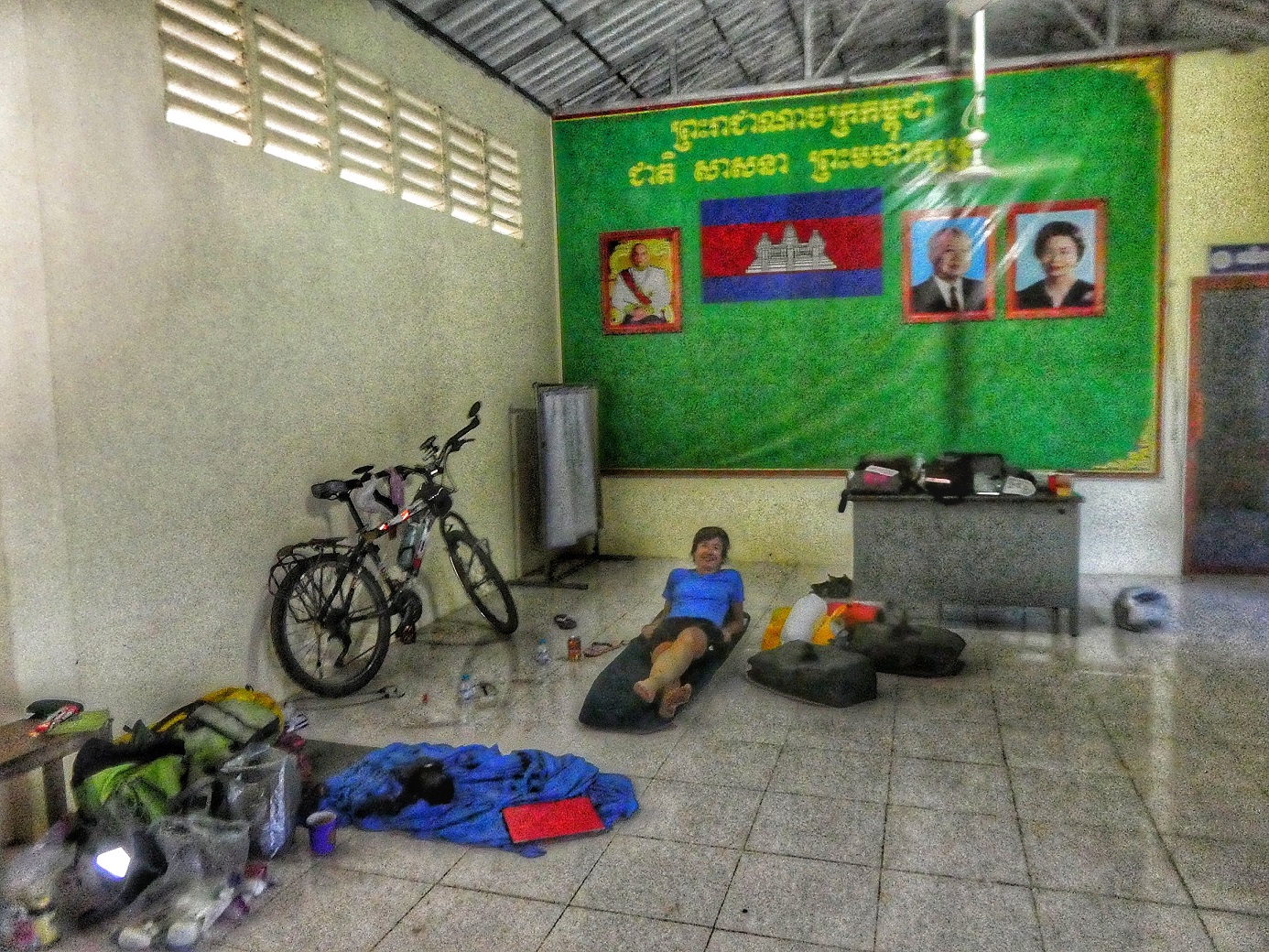
reached what we thought was a guesthouse. There
were, however, no such thing and we opted
18 August Police station – Kampong Cham – 48 km
We
were up early and Caron claimed that she slept with
one eye open. After another photo shoot, we cycled
out of the police station in
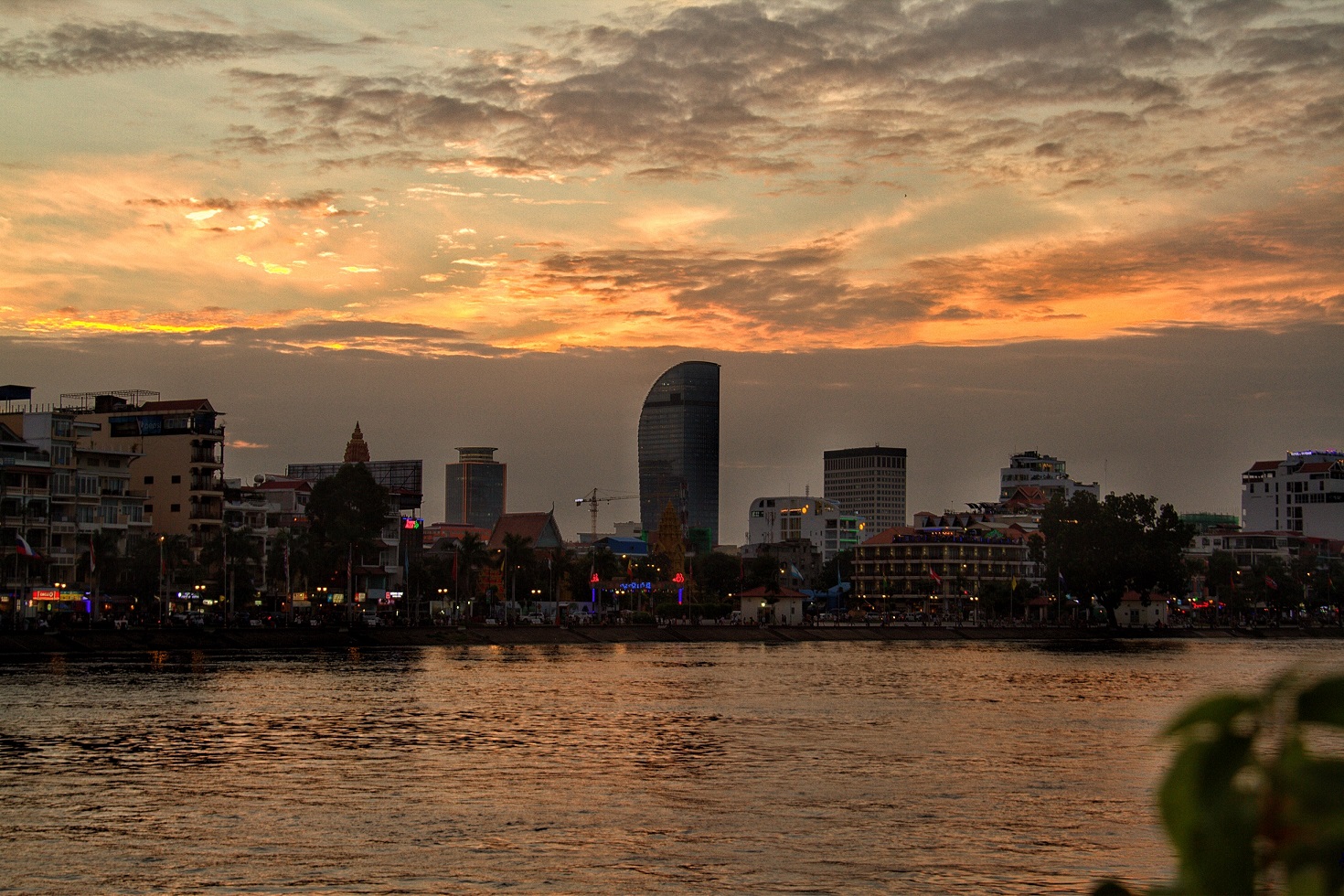
Like the previous day, we found the low-lying areas flooded, sometimes only the rooves of barns or houses were sticking out. Kids loved it and had a ball playing with anything that can float. The slightest of elevated areas were being used for the drying of corn, cooking food and keeping chickens and cattle. As the land used for grazing was flooded, feed had to be collected elsewhere and we passed ladies on bicycles loaded to the hilt with animal feed while men toiled the land with oxen. The river road remains one of my fave rides, and we slowly made our way to sleepy Kampong Cham where we found a lovely spacious room. That evening, we strolled along the riverfront together with the people from Kampong Cham, as this was where they hung out at sunset.
19 August – Kampong Cham –Phnom Penh – 110 km
From Kampong Cham, we were lucky to find a small
road running along the river. We marvelled at the
people living on barges and found it surprising just
how organised
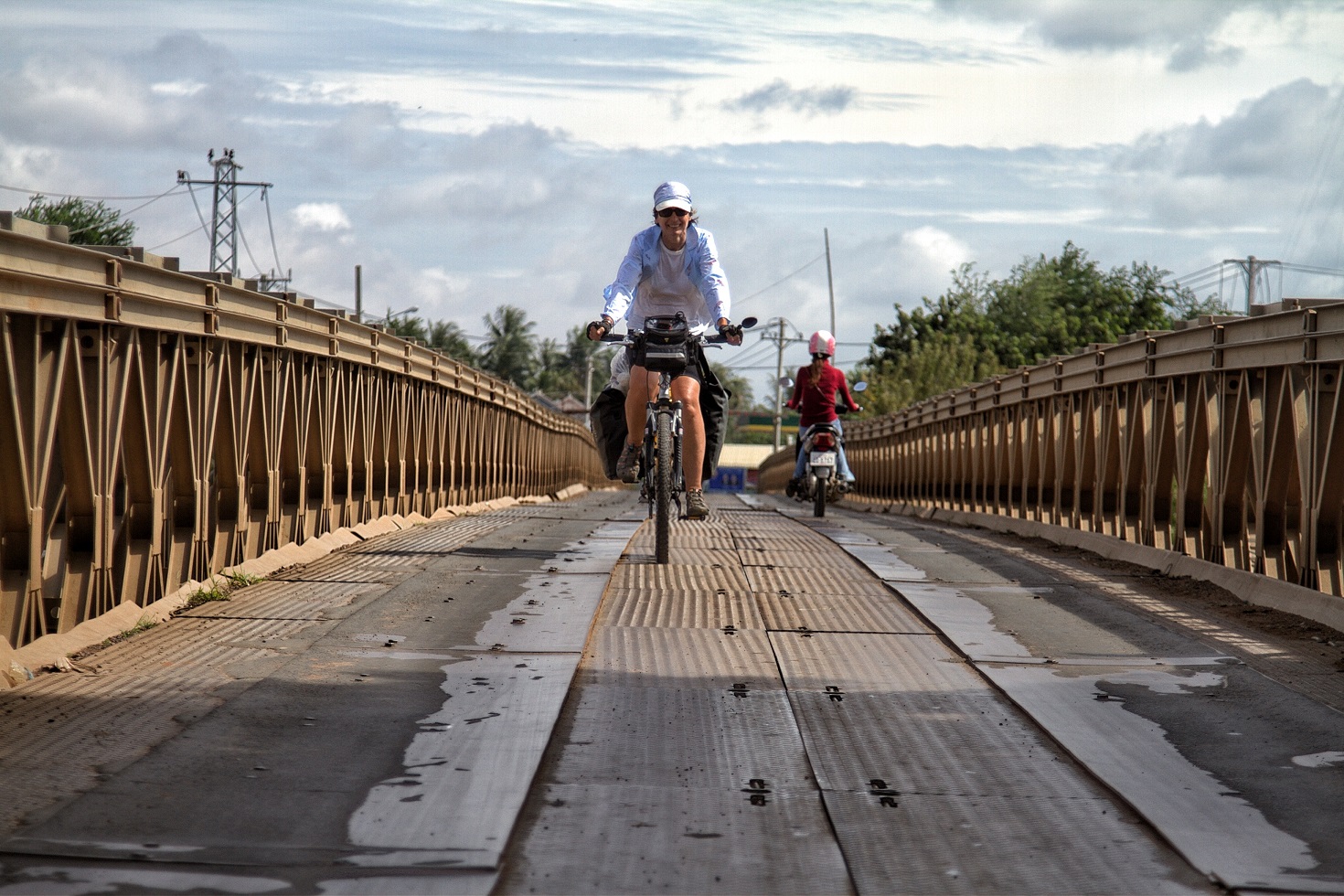
We took a small dirt road which, due to the flooding, abruptly came to an end, forcing us to make a detour. A typical monsoon storm came in, and we pulled into the nearest sheltered area, being someone’s house. We were welcomed in and offered seats to wait out the weather.
20 & 21 August - Phnom Penh
Our
first priority was to obtain a Vietnamese visa.
After a cup of coffee, we hopped on a tuk-tuk to the
Vietnamese embassy only to find that they were
closed for the day. There was zero we could do about
it, and we returned to the guesthouse. Caron
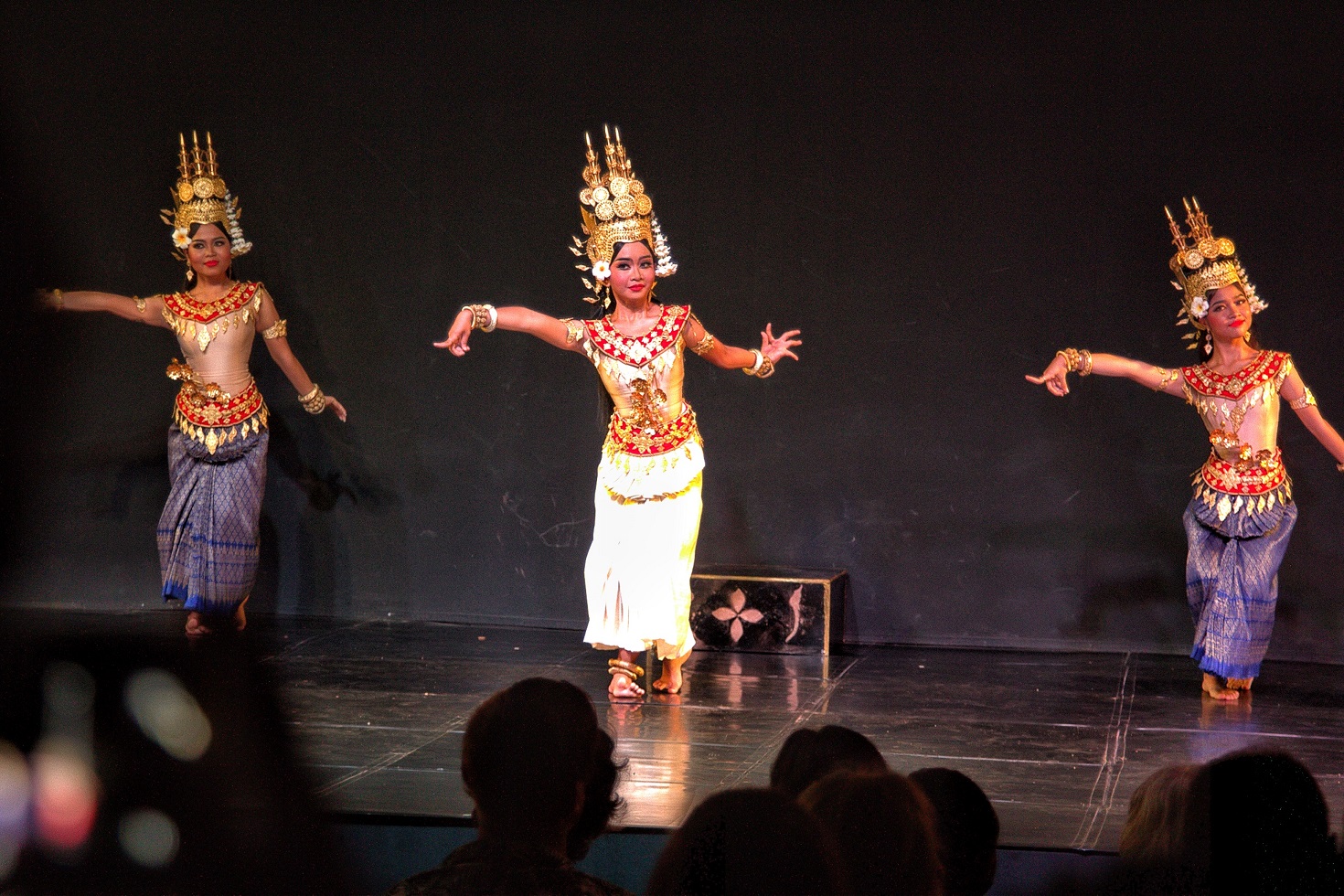
The following morning, we went in search of dumplings, which we found close to the market. Well fed, we felt strong enough to brave the busy market where we weaved through the stalls in search of nuts and other delicacies to concoct a snack for the road. We also bought tickets for that evening's traditional dance show that made for a lovely evening out.
22 August — Phnom Penh — Angkor Borei (Borey) — 91 km
We
managed to get out of busy Phnom Penh easier than
anticipated. We headed for Neak Loeung, but 20
kilometres outside the city, we changed our minds
and headed for Angkor Borei instead. It was a
stunning ride through a seldom visited and very
rural part of Cambodia. The road varied between
Although it was still the rainy season, some of their crops seemed ready for the market while others seemed to have been planted more recently. In the small village of Prey Lovea, we stopped for lunch, and then it was on to our final stretch to Angkor Borei. Although the area has been continuously inhabited for at least 2 500 years (yielding artefacts dating from the Neolithic period, Funan 4th/5th century AD), Chenla (8th century AD), and later, the Angkorian period (9th-15th century AD), there was no sign of past glory. We found a room at a guest house and then went out in search of food. That sounds easier than it turned out to be. Eventually, we managed to order fried noodles, but we would have been happy with just about anything that was dished up.
23 August - Angkor Borei - Kampot
We
planned on taking a boat to Takeo, a trip that would
save us from travelling a long distance on an awful
road around the lake. Since no one spoke any
English, we were not entirely sure that there was a
boat, and we did not know when it would depart. What
we could
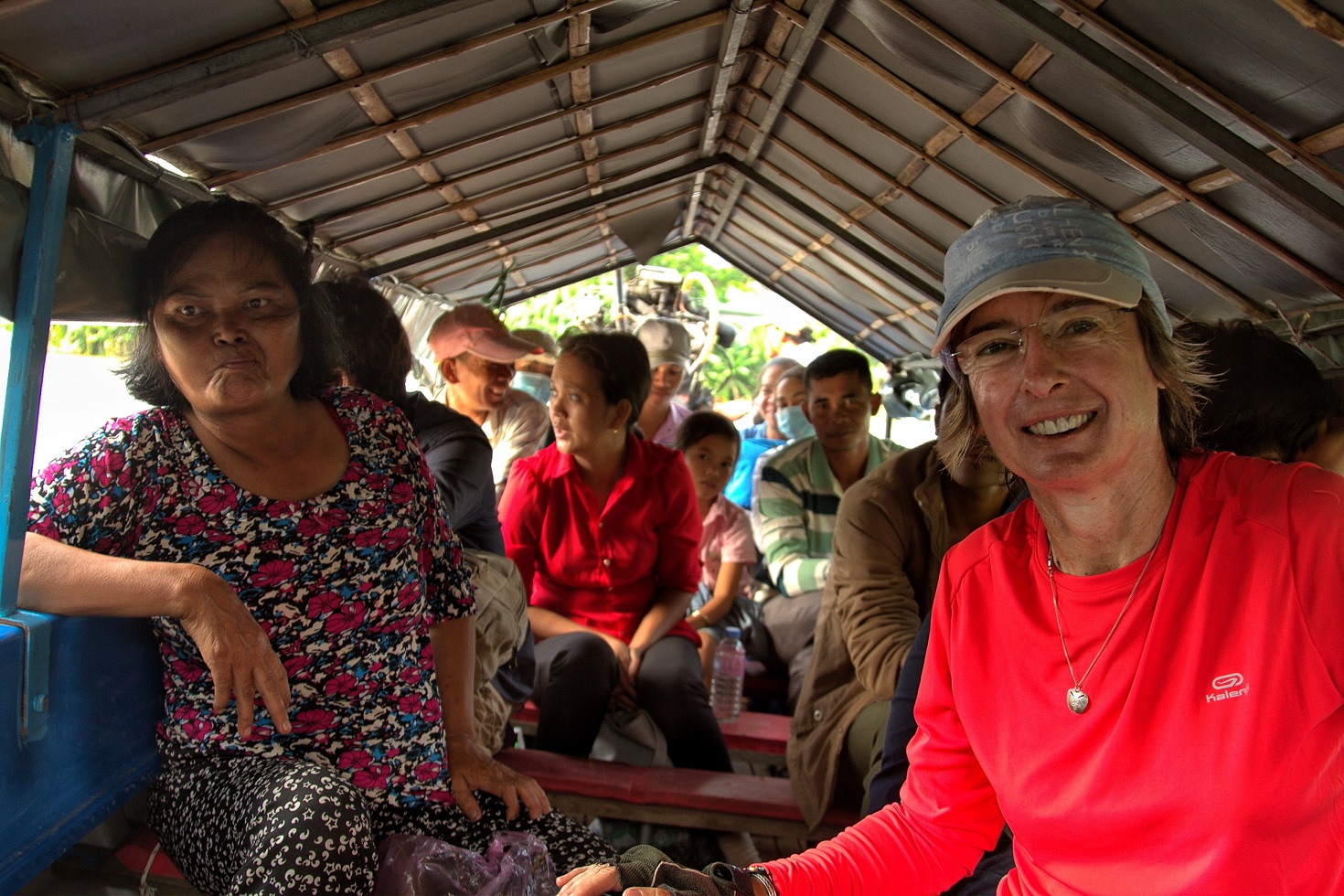
No sooner were we underway when the engine cut out, leaving us adrift for a while. Thankfully, we slowed down only to drop off another passenger, and we were on our way again. The skipper sped across the lake at a high speed, drenching two unsuspecting "farangs". We then understood why the locals filled the boat from the back! About an hour later, we arrived in Takeo, but we were soaking wet!
As my bike tyre had a slow leak, we stopped at a bicycle shop where I could buy a new inner tube. I had no spare tubes as I had neglected to fix the punctured ones. As it appeared that they did not have any in stock, I started fixing my old tube. The job was taken out of my hands by the owner as he must have thought I had no idea what I was doing. I did not resist, and he fixed my two punctured tubes. He wanted no payment for his work and also supplied me with a stack of patches. Before cycling out to Takeo, we stopped for pork pau and iced milk tea. We were served a glass of condensed milk over ice. We thought it strange but drank it anyhow. Afterwards, the owner showed that we were supposed to add the tea that was already on the table! By then, it was already late, and instead of taking the back roads, we headed to the main road that led to Kampot.
The
main road was not as busy as expected and had a good
shoulder for cycling that
Approximately 18 kilometres from Kampot, the road deteriorated to such an extent that we eventually cycled next to the road. The traffic snaked around the potholes as best it could. It was, however, a futile attempt as the road was one giant pothole. It was a dusty affair as we slowly made our way to Kampot.
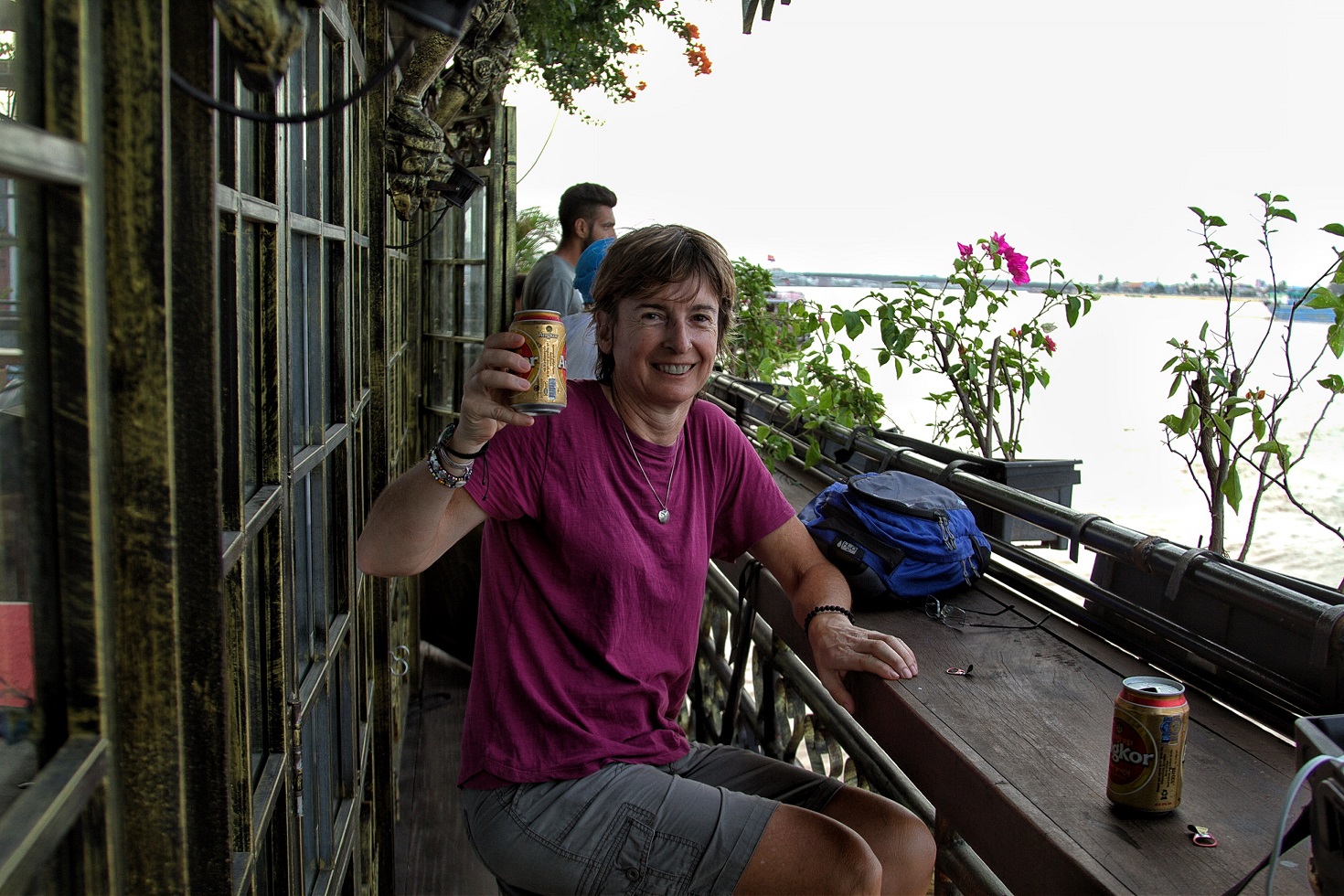
We were thrilled to arrive in Kampot, and we headed across the river to the bungalows where the people laughed at our dirty, dusty faces, as when we removed our shades, we were left with two large white rings around our eyes. After a shower, it was time for a well-deserved beer and a huge plate of food!
24 August – Kampot
The
Kampot River Bungalows are an ideal place to enjoy a
day of leisure. They are in a jungle-like setting
and its nipa huts on stilts overlook
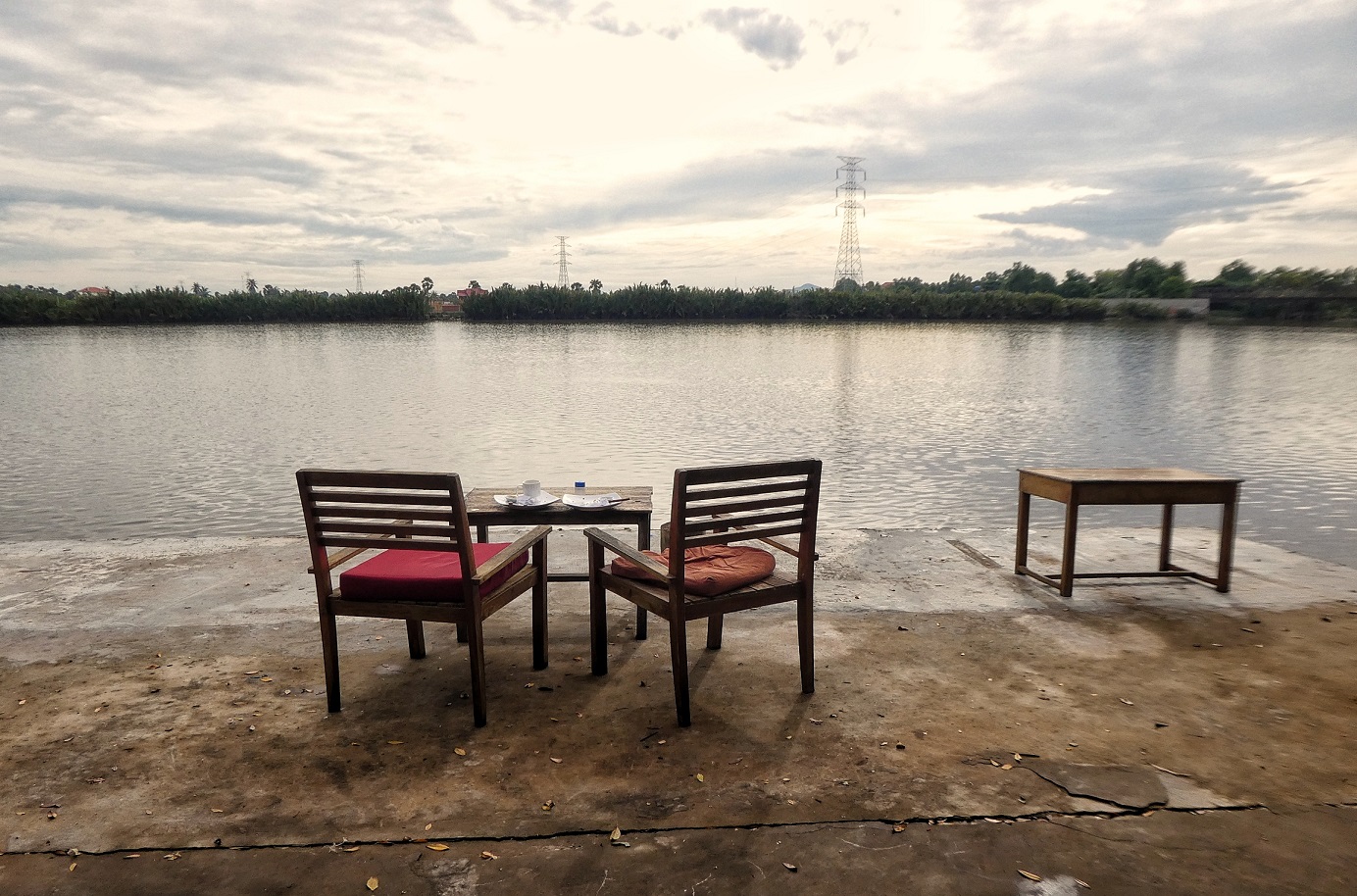
The inner tubes were perfect toys for floating on the river, and the restaurant deck that extended over the water was an excellent place to while away the time. It felt as if we spent the entire day eating. After breakfast, we cycled into the town of Kampot, where we had coffee and cake, shopped for snacks and then returned to our little haven. That evening we had supper on the deck overlooking the river. Life was indeed good behind the potted plants.
|