|
|||||||
|
|||||||
|
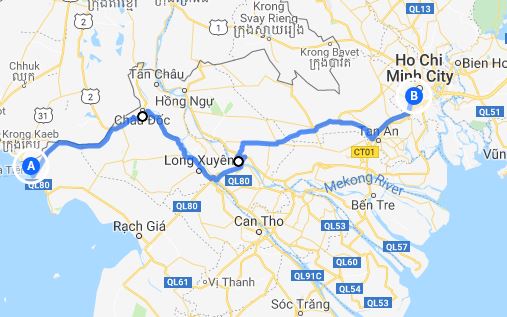
(483km - 6days)
25/08 – 30/08/2018 |
|||||||

|
25 August Kampot, Cambodia – Ha Tien, Vietnam – 75 km
On
a bumpy, dusty road, we weaved our way through rice
paddies, palm trees and
It
was the Hungry Ghost Festival, and all along the
way, shrines were stacked with tins of beer and
cigarettes. At the full moon of the seventh lunar
month of the Chinese calendar, it is believed that
the gates of hell are opened, and the spirits of
hungry ghosts are allowed to roam Earth. These
ghosts need food and merit. People can help by
offering food, paper money, candles, and flowers,
making merit of their
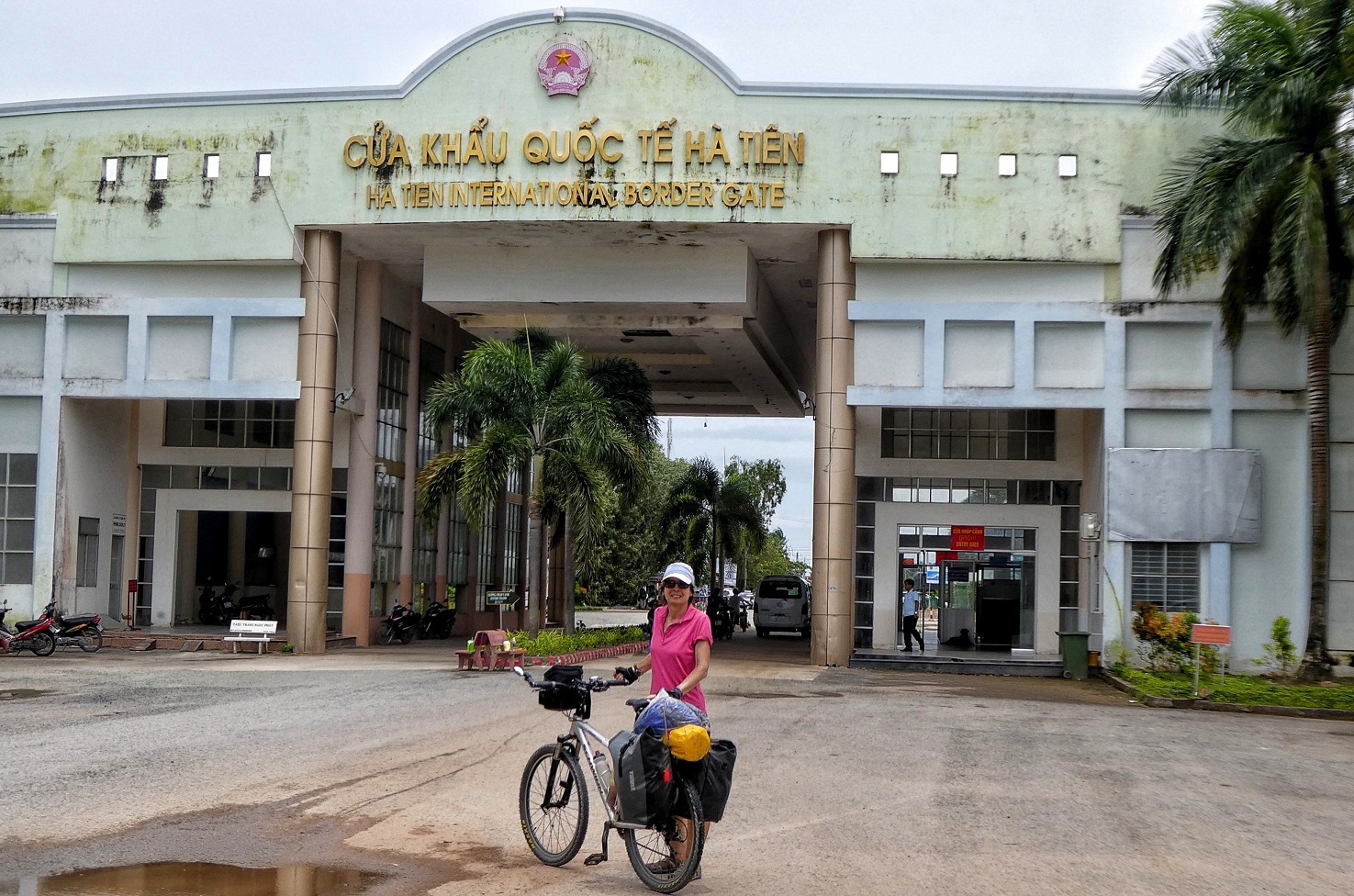
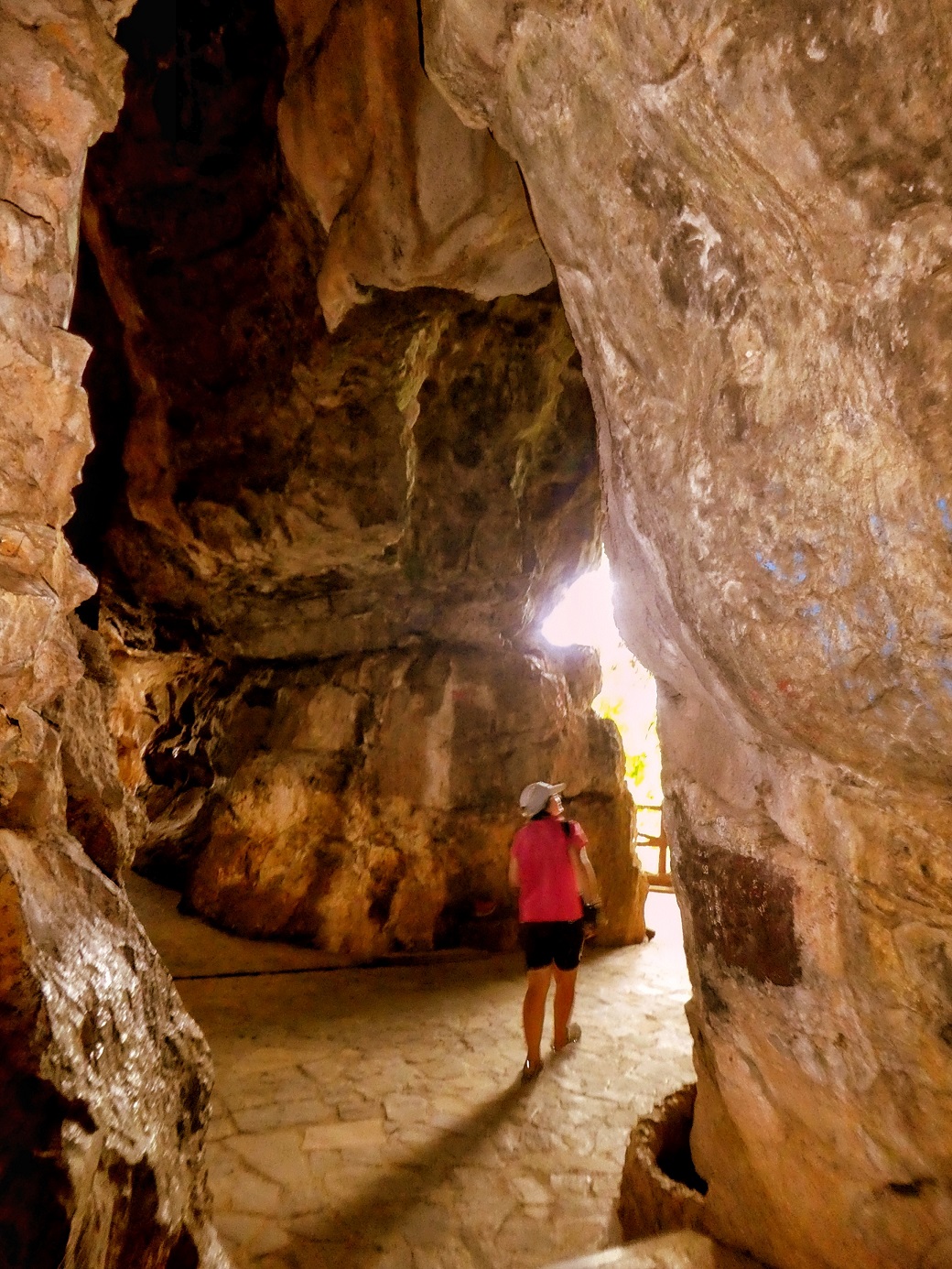
Soon, we arrived at the border, and it was a smooth crossing into Vietnam. Our first stop was at a cave temple, which we reached after climbing some stairs. The cave was surprisingly airy inside and offered great views of the surrounding countryside.
Our first town in Vietnam was one with a fascinating history. Way back, Ha Tien, was a Cambodian province. Being under attack of the Thai back in 1708, the then-governor, Mac Cuu, approached the Vietnamese for assistance, and after this, the area was governed by Mac Cuu as a fiefdom. However, this was not the end of their struggle, as, since then, they have been invaded by the Thais on several occasions. The area also came under attack during the American war as well as during the reign of the Khmer Rouge, who massacred thousands of civilians living in Ha Tien at the time. Today, though, Ha Tien is a busy and laid-back town with a lovely river setting, a busy market, and an exciting night market.
We first had to change money, something that was not as easy as it sounds, as no one spoke any English, the banks were closed, and one typically got a better rate at the gold shops. With a whopping 2,000,000 Vietnamese dong (approx. $85) in our pockets, we felt rich and got ourselves an excellent room that was right on the river.
26 August — Ha Tien — Chau Doc — 103 km
We
woke to the sounds of the street and the general
mayhem of the local market. I sipped my first cup of
coffee while listening to the ferries blow their
horns before leaving for the islands. It was,
indeed, a pleasant way
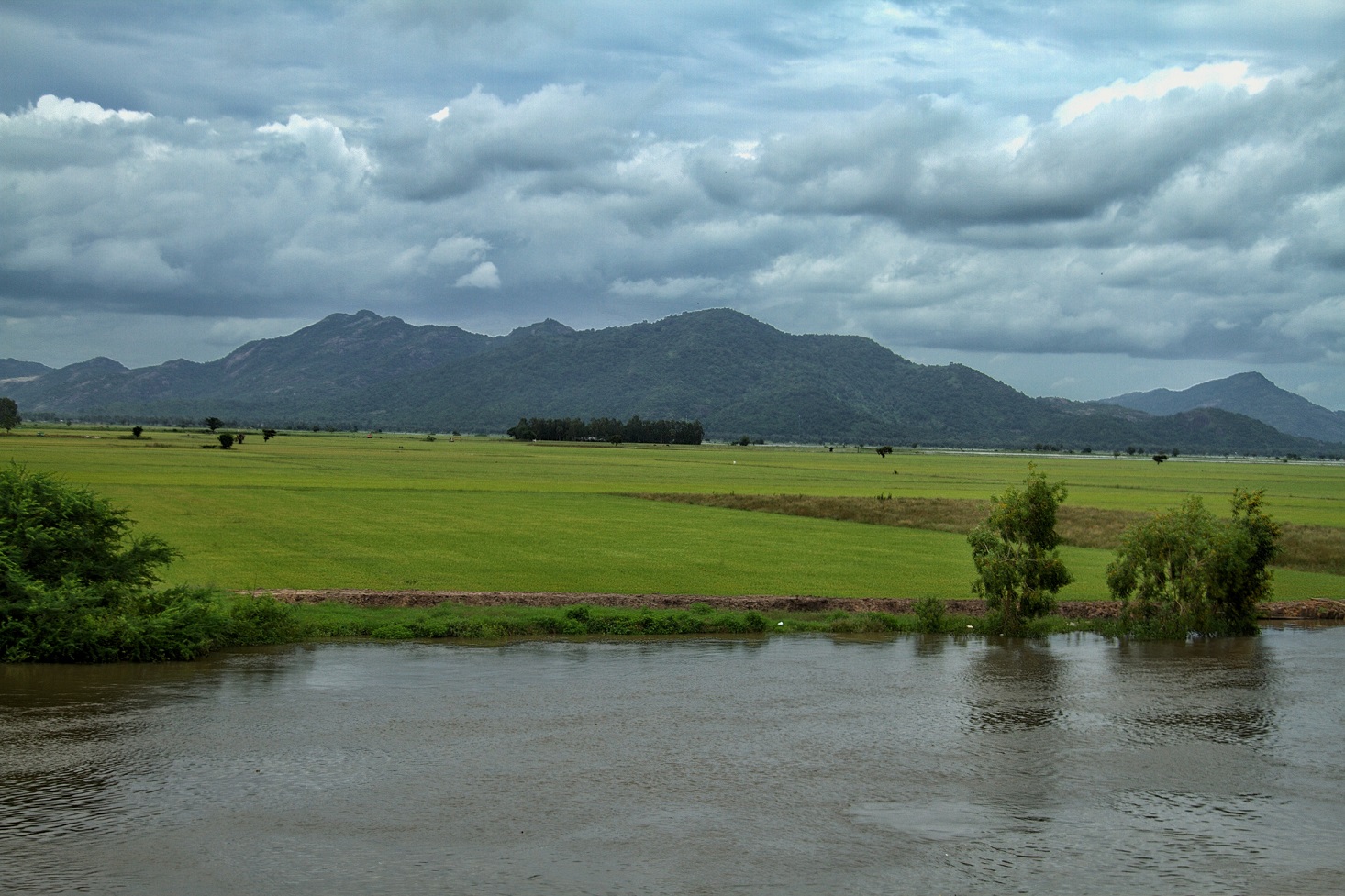
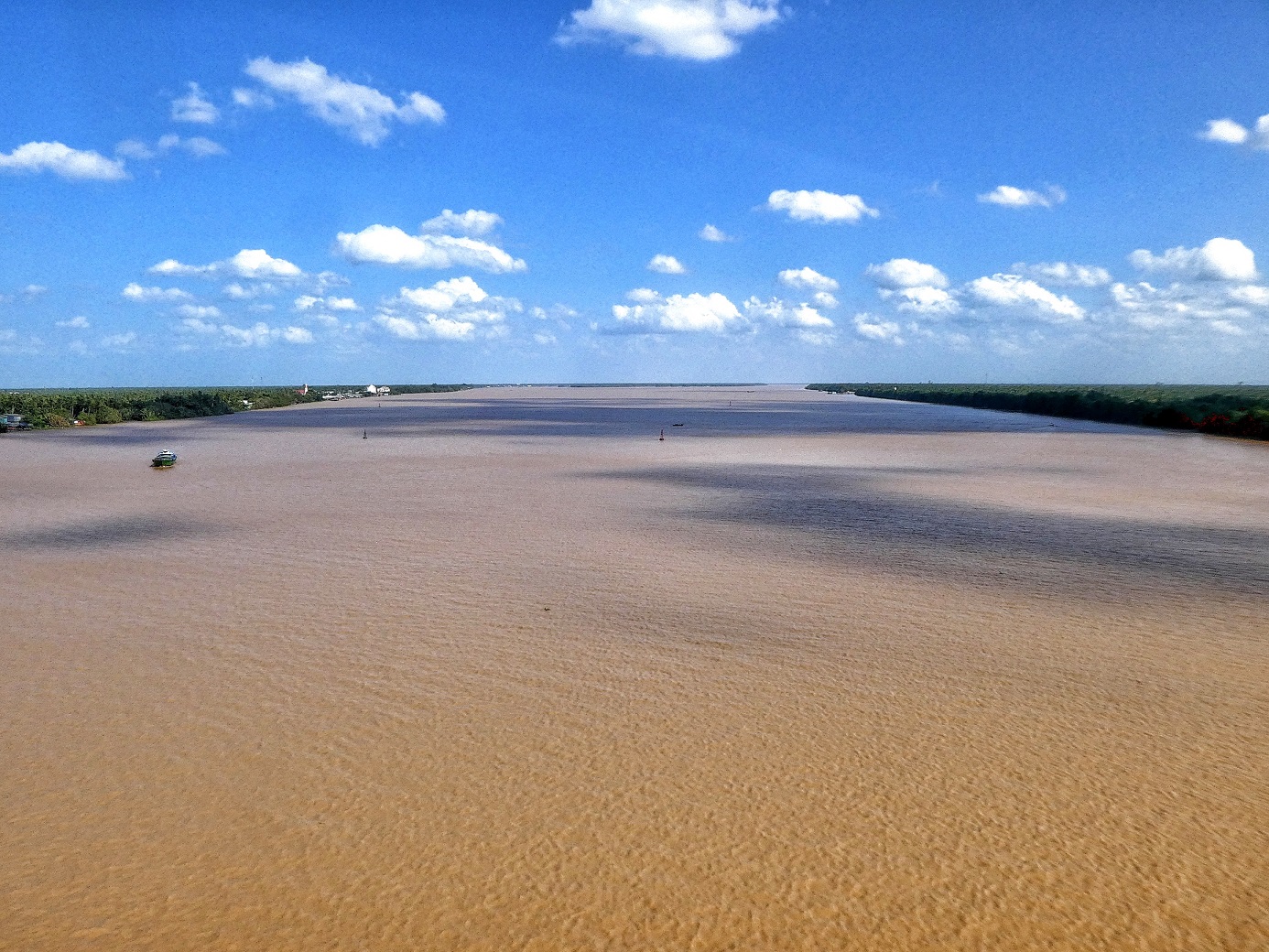
We followed a canal that ran close to the Cambodian/Vietnam border. The road was congested with motorbikes and minivans that were running to and from Cambodia. It was, however, still a pleasant ride, and the recent rains transformed the delta into what looked like an ocean. At times, the canal we cycled along completely disappeared, and we were amazed that the boats still managed to find their way. River transportation is alive and well in Vietnam, and so is the farming of birds’ nests. These edible birds’ nests are created by swiftlets that use saliva to build their nests. The nests are particularly prized in Chinese culture due to their rarity and supposedly high nutritional value and exquisite flavour. According to what I read, these edible birds’ nests are among the most expensive animal products consumed by humans with nests recently sold at prices up to about US$3 000 per pound, depending on grading! We cycled past many a massive structure built specifically for these birds and their nests.
Roadside stalls sold woven baskets and mats, and
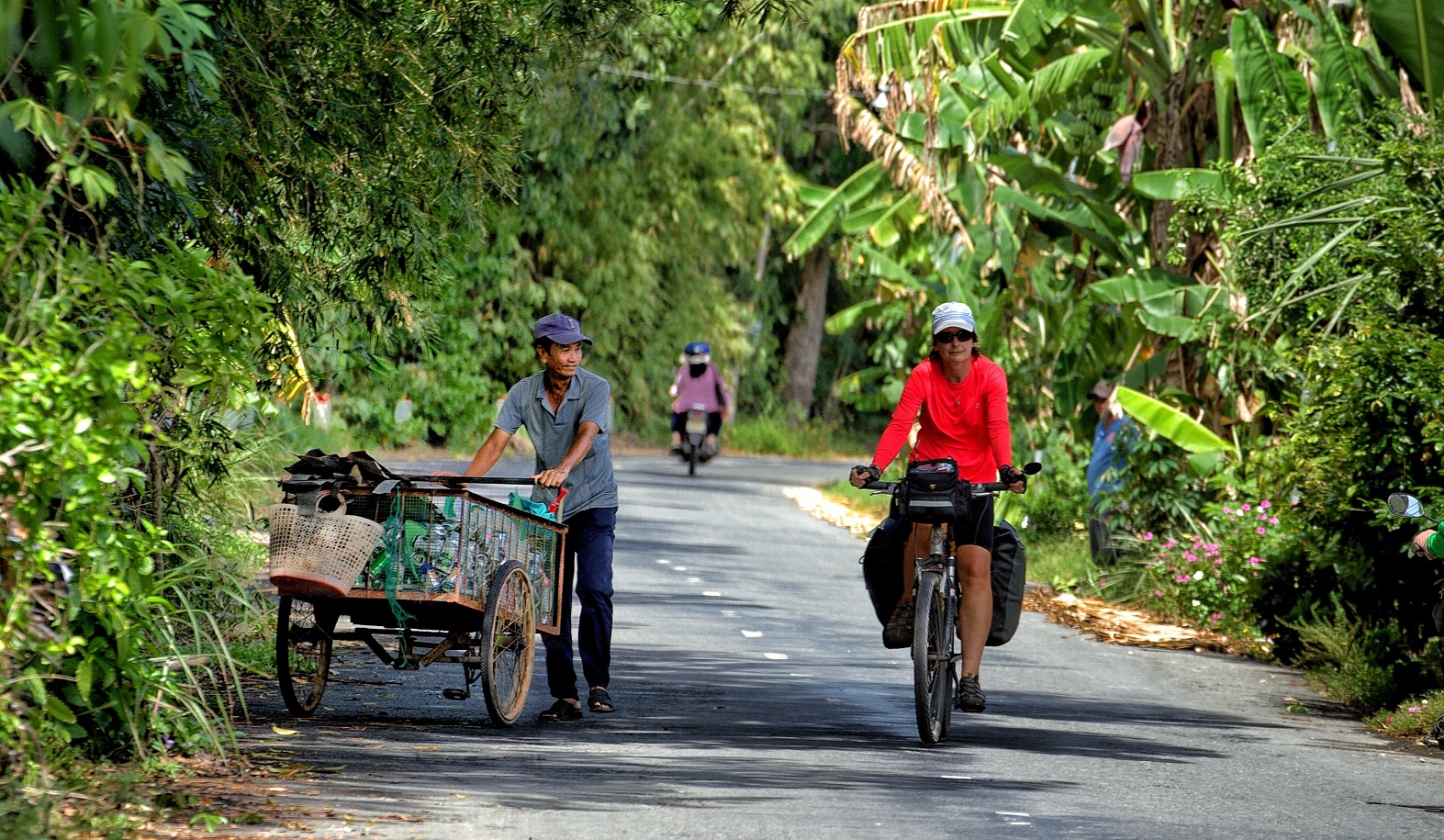
peasant villagers collected plastic bottles and tins
for recycling. In Vietnam, roadside stalls not only
come with a table and chairs but also a large number
of hammocks, and it appeared that it was unthinkable
to sit when one could lay in a hammock, something
that made complete sense to me. We followed
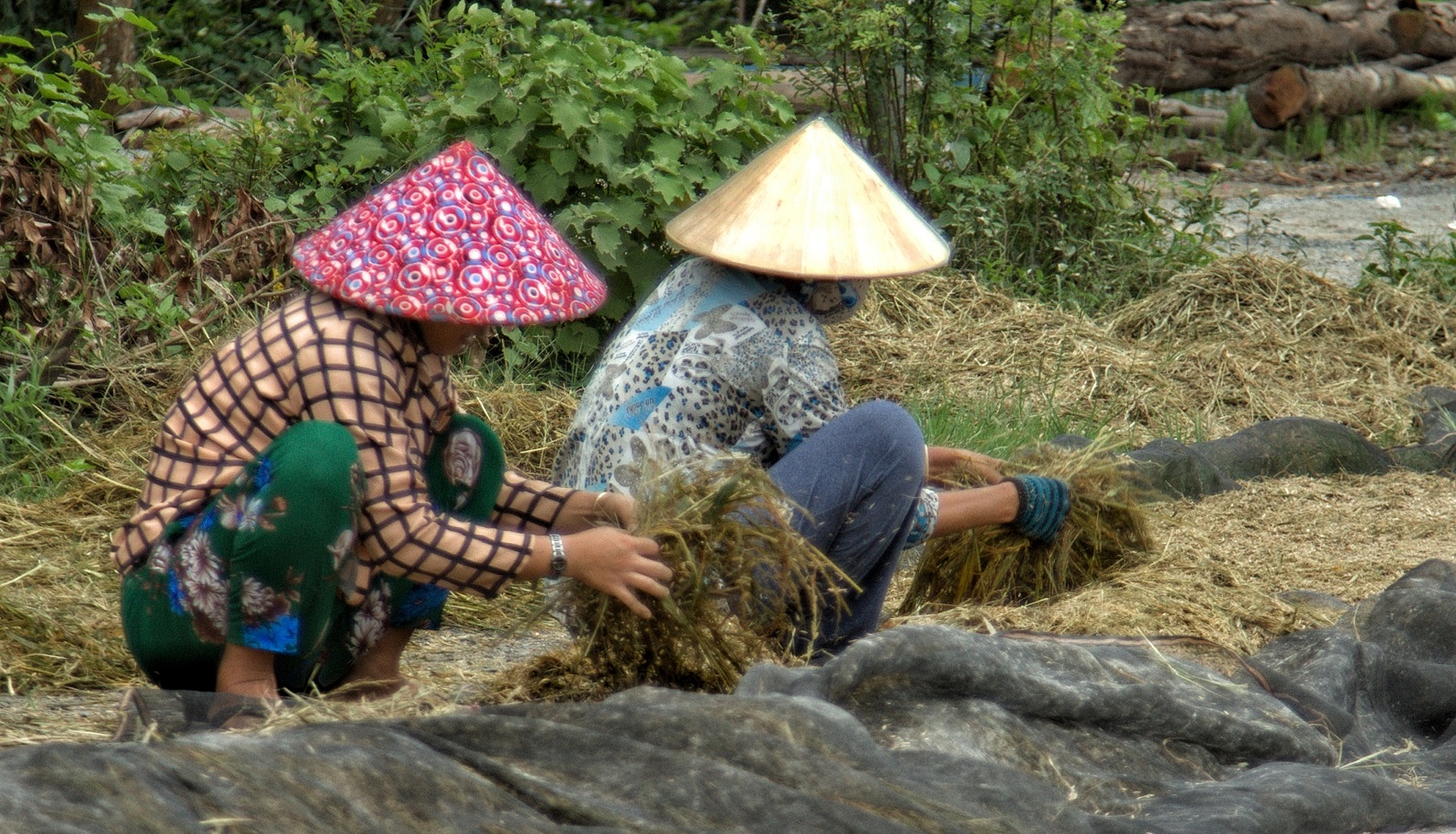
With the recent rain, we found that the farmers had no dry yards for drying their rice crops, so they used the road, forcing the vehicles over it for the thrashing.
We turned off the road to the Ba Chuc memorial, a grim reminder of the horrors perpetrated by the Khmer Rouge. In April 1978, the Khmer Rouge killed 3 157 villagers here; only two survived. It was a rather depressing visit. Outside, a lady sold what I would call Vietnamese pizza (Banh Trang Nuong). It consisted of rice paper grilled on coals and topped with chili paste, quail eggs, spring onions, and minced pork. It was delicious.
Afterwards, we tried to follow a small road to Chau Doc, but unfortunately, it petered out altogether, and we had to return to our original route. Caron was a star and never complained once about the detours or bad roads. Once in Chau Doc, we found a comfortable room at the Thuan Loi Hotel right on the river, after which we went in search of food.
27 August - Chau Doc – Cao Lanh- 75 km
The
delta is a watery world, and no less than four times
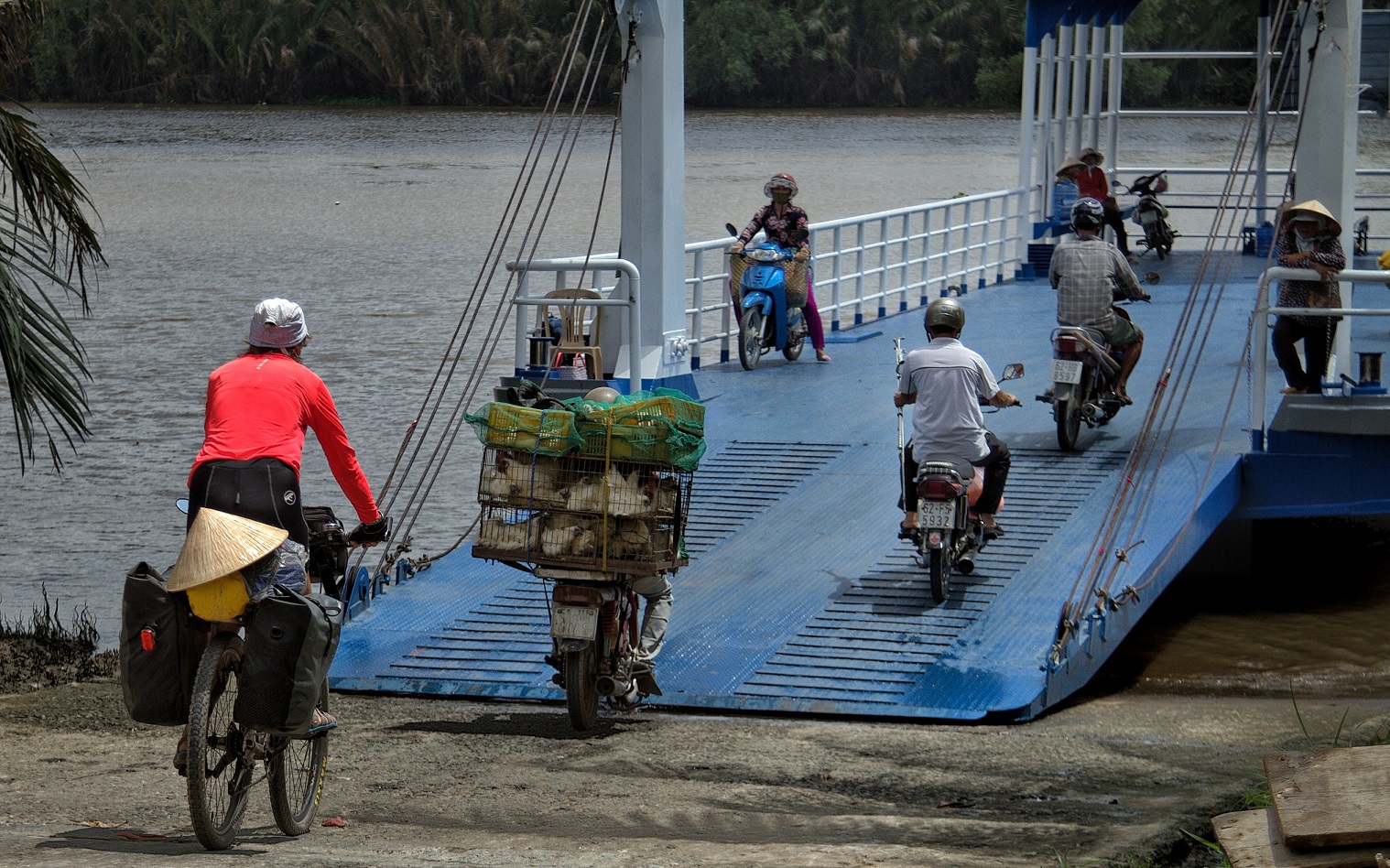
did we have to make use of a ferry to get across
rivers, all making for a fascinating day. The roads
were mostly tiny and the villages small and rural
but, from time to time, we came upon larger towns,
While having a quick bite to eat at a roadside restaurant, we were surprised to see a local man and his chicken also having lunch. I’m not kidding you. There he was, with his chicken sitting next to him on a chair. On leaving, he tucked it under his shirt, got on his motorbike, and off they went!
We managed to find the smallest of roads running flush next to rivers and canals, all making for a good day on the bike.
28 August - Cao Lanh – Vinh Long – 70 km
“I
think we have just doubled the tourist count for Cao
Lanh,” Caron said as we sat down to an excellent
bowl of pho. We ambled along a small road and were
perplexed at the drying of water hyacinth along the
way. As far as I was aware, there was
We came upon Xeo Quyt forest. A magnificent 52-hectare forest and swamp. I understand that it's one of the last natural forests left in the Mekong Delta. During the Vietnam War (1955-1975), the area was used as a base, and today it hides the remains of Viet Cong bunkers. We rented a canoe and were paddled through a thick canopy of trees past the remains of war relics. It was a fascinating visit and gave us a tiny glimpse into the lives of the Vietnamese during that time.
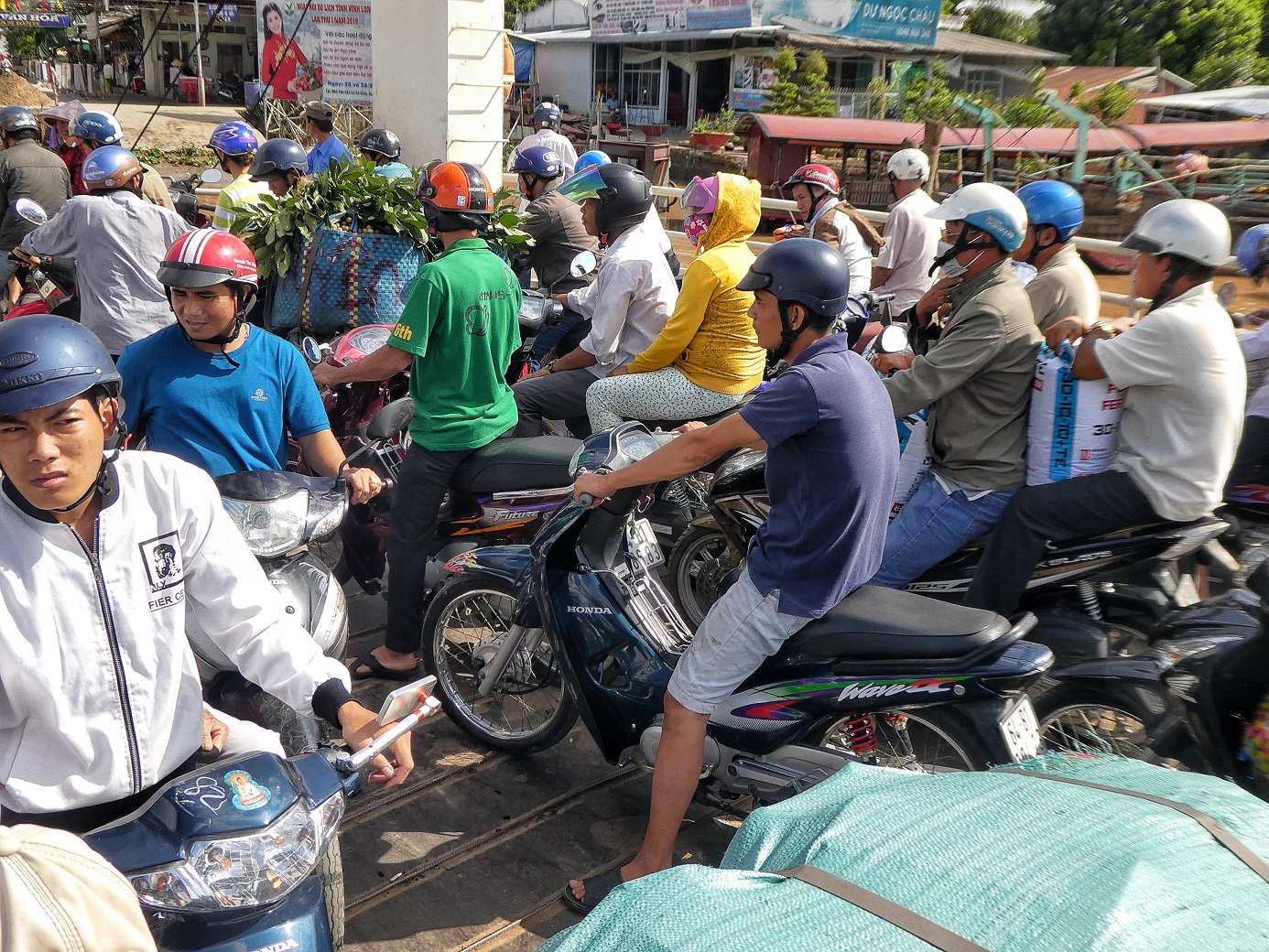
We also discovered the use of the dried hyacinth! The resourceful Vietnamese are using it for weaving baskets and various other products! After ice cream, it was back on the bikes to Vinh Long where we arrived together with trucks, buses, and what felt like thousands of motorbikes. Instead of staying in the city, we took a ferry to an island where we located a homestay for the night. It turned out an interesting evening as we landed up at a brand-new homestay, still in the process of being built.
29 August – Mekong River Homestay – My Tho – 85 km
We
had breakfast, which included a delicious cup of
Vietnamese coffee, the best I have had so far. We
wished the family good luck with their homestay and
crossed the river by ferry back to the mainland. The
boat was packed with farmers and traders
We cycled along a small road that ran next to the river, passing villagers selling their humble home-made nibbles along the route. Others were winnowing their rice the old-fashioned way or drying home-made sausage in the sun. We popped into beautiful temples and interesting-looking brick-making structures. Each area in the delta seems to produce a different crop, and we cycled past many a dragon fruit plantation.
As
can be expected in the delta, we crossed numerous
rivers, some by ferry and some by bridge. The rivers
were busy waterways, and each and every boat had
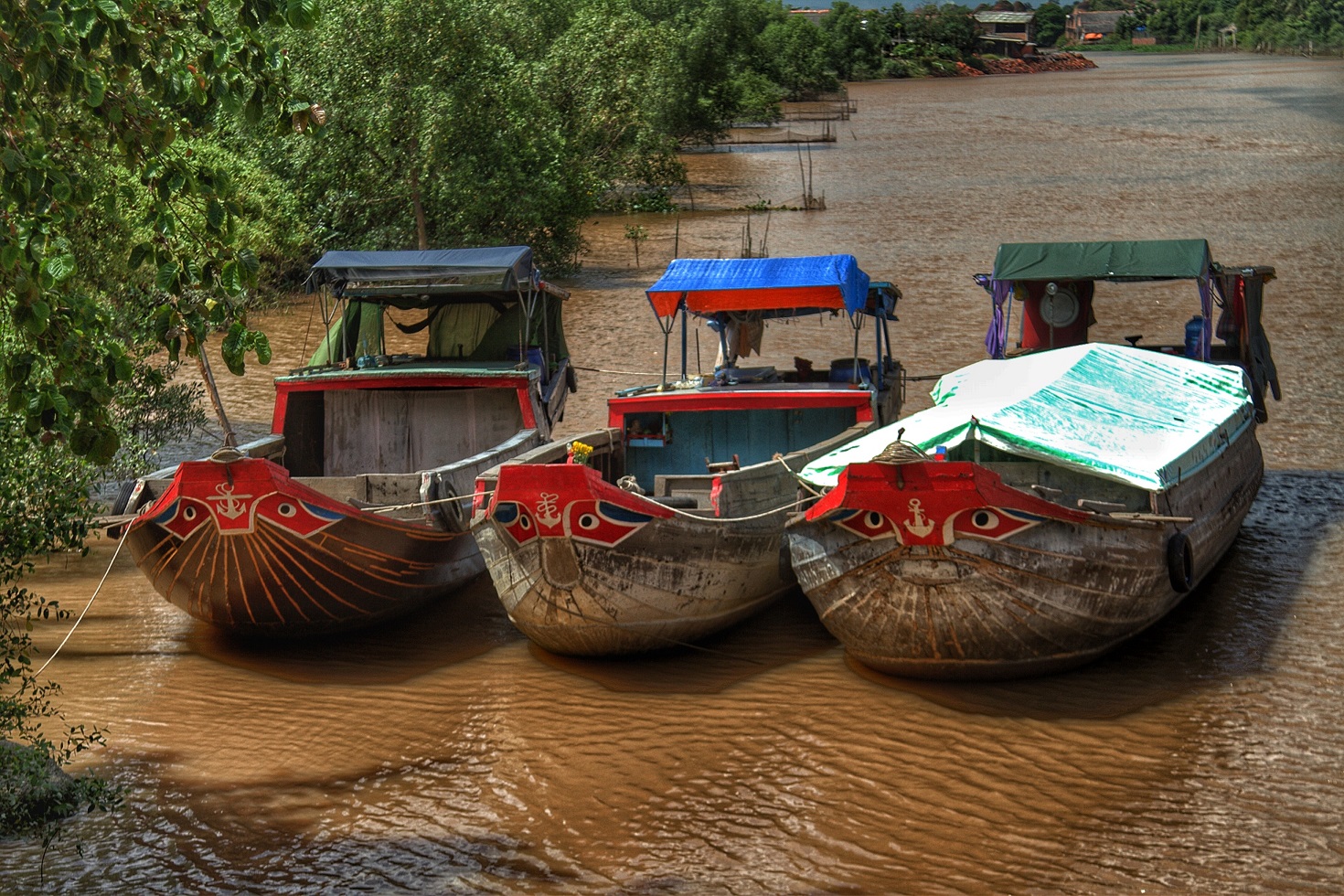
eyes painted on the bow. Fishermen and seafarers of
all
On arrival in My Tho, a helpful man pointed us to a budget hotel right across from the night market. It suited us just perfectly and, after a shower, we headed out to the food court, where we sat overlooking the river. It was a pleasant day of cycling, and watching the Mekong flow past was a suitable end to the day and our ride through the delta.
30 August - My Tho – Saigon – 75 km
We
enjoyed a pavement breakfast of bánh mì (Vietnamese
baguette). There are banh mi stalls on almost every
street in Vietnam. The baguette features a crispy
bread, with a tasty filling of sliced pork, pate,
chicken, egg, spicy chilli sauce and herbs. We ate
our baguette,
Our route led us through farming communities where women with conical hats sat on their haunches cooking food. Chickens pecked in the road and men carted huge piles of hay on small motorbikes. The aroma of home-made food drifted across the road as school children headed home for lunch. We crossed rivers by ferry and meandered through dragon fruit plantations until we reached the city limits. It was time to focus as we joined the eight million motorbikes in Saigon. We followed suit, not looking left or right, only following the traffic, ignoring red lights and road signs, eventually reaching downtown and in one of the allies located Hai Guesthouse with a spacious room and large balcony.
We have sadly reached the end of our journey as from Saigon, Caron leaves for home and I will make a beeline for Thailand where I plan on meeting my friend, Linda, at around 12 September for a cycle tour of Myanmar.
It was a pleasure cycling with Caron and I hope she enjoyed her time here. Go well, my friend! |